Winery
Ruinart
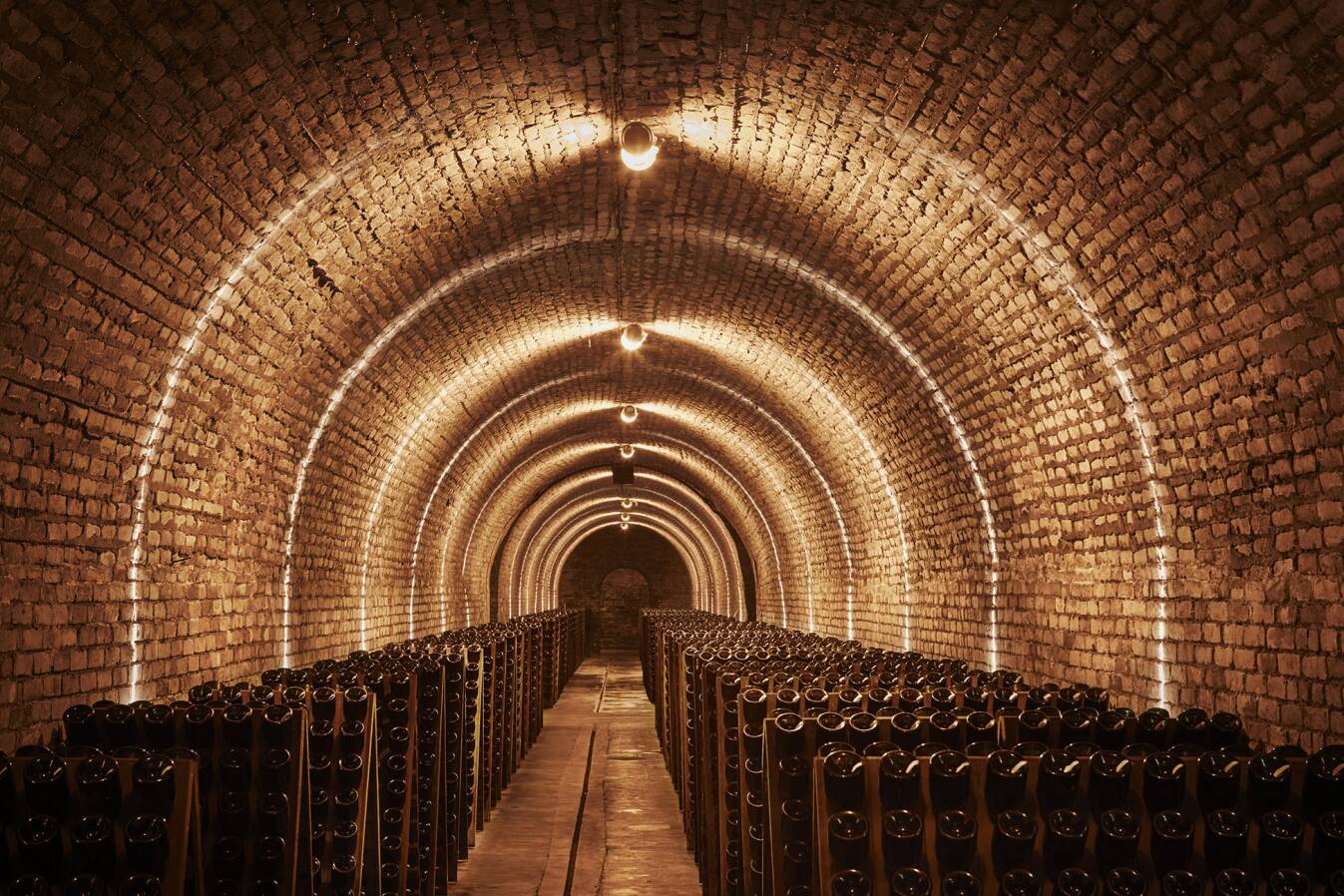
The oldest Champagne house in continuous operation, Ruinart has been producing Chardonnay-dominant cuvées from its address on the Rue des Crayères since 1729. The eight-kilometre chalk cave network beneath the house, lit by sustainable LED installations and classified as a UNESCO World Heritage site, is among the most atmospheric cellar visits in the Marne. Rated Pearl 4 Star Prestige by EP Club (2025).
- World's 50 Best · #6
At a glance
- Price
- $$$$
- Neighborhood
- Saint-Nicaise Hill
<h2>Below the Marne: What Ruinart's Chalk Caves Say About Champagne's Oldest Trade Route</h2><p>Reims sits on a geological accident that shaped an entire industry. Beneath the city runs a network of chalk galleries — crayères, in local parlance — originally quarried by the Romans and later commandeered by Champagne houses in the eighteenth century as natural cellars with near-constant temperatures and humidity. Few houses sit on as extensive a portion of that underground city as Ruinart. The eight kilometres of chalk caves beneath 4 Rue des Crayères represent not just practical storage but a physical record of how Champagne's premium tier established its identity: through geography, time, and the deliberate staging of both.</p><p>Founded in 1729, Ruinart carries the distinction of being the oldest Champagne house still in operation. That date matters not as a badge but as context. The house predates the codification of méthode champenoise, predates the consolidation of Reims as Champagne's commercial centre, and predates most of the regulatory architecture that now defines Appellation Champagne. Its Chardonnay-dominant orientation, maintained from the outset, placed it in a niche that the broader market only caught up with in the late twentieth century, when blanc de blancs and prestige cuvées built around Chardonnay became the dominant language of fine Champagne.</p><h2>The Cave Visit as Critical Infrastructure</h2><p>Among Reims's grand houses, the cave experience varies considerably. <a href="https://www.enprimeurclub.com/wineries/pommery">Pommery</a>'s galleries are famous for commissioned art installations embedded into the chalk. <a href="https://www.enprimeurclub.com/wineries/veuve-clicquot">Veuve Clicquot Ponsardin</a> trades on its industrial scale. <a href="https://www.enprimeurclub.com/wineries/charles-heidsieck">Charles Heidsieck</a> emphasises archival depth. Ruinart's crayères occupy a different register: classified as a UNESCO World Heritage Site along with other Champagne caves, the galleries here are among the tallest and most architecturally striking in the city, rising in some sections to eighteen metres and narrowing to passages that concentrate sound and temperature simultaneously. The sustainable LED lighting scheme introduced in recent years allows visitors to read the geological strata in the walls while avoiding the heat damage of older incandescent installations, a practical choice with a significant aesthetic outcome. The caves are no longer lit for drama but for legibility, and the difference is considerable.</p><p>The visit format at Ruinart is structured around guided access to the caves followed by a tasting. Given the house's Chardonnay focus and the work of chef de cave Frédéric Panaïotis, who has directed the cellar programme for over a decade and has an academic background in oenology from Bordeaux, the tasting component tends toward precision rather than ceremony. Champagne made with dominant Chardonnay rewards the kind of attention that temperature-controlled chalk rooms encourage. This is an appointment that benefits from morning scheduling, when the caves are freshest and the sensory conditions for evaluating delicate sparkling wine are most neutral.</p><h2>Chardonnay as House Argument</h2><p>Champagne's internal argument about grape dominance has never fully settled. The Marne's most commercially productive floor still runs on Pinot Noir and Pinot Meunier, and most non-vintage blends from the large houses use those varieties as their structural backbone. Ruinart's consistent Chardonnay positioning, sustained across its non-vintage, vintage, and prestige tiers, makes an implicit case for restraint and vertical texture over the fuller, yeast-forward profile that Pinot-dominant blends tend to produce. The house's prestige cuvée, Dom Ruinart, is a blanc de blancs , a choice that aligns it more closely with Champagne's Côte des Blancs producers than with the Montagne de Reims houses that anchor the northern end of the appellation.</p><p>For visitors arriving in Reims from other French wine regions, the contrast is instructive. Producers such as <a href="https://www.enprimeurclub.com/wineries/albert-boxler-niedermorschwihr-winery">Albert Boxler in Niedermorschwihr</a> represent a different regional argument about white wine precision through variety and terroir. At Ruinart, the argument is made through sparkling wine technique and the specific characteristics of Chardonnay grown in chalk-heavy soils. The geological substrate that makes the caves possible also directly influences the fruit the house sources. That connection, between the chalk underfoot and the wine above ground, is the central thesis of any serious visit.</p><h2>Where Ruinart Sits Among the Grandes Maisons</h2><p>Reims's grandes maisons now occupy distinct positions in the fine Champagne market, distinguished by grape philosophy, export mix, and the degree to which they emphasise experience infrastructure. <a href="https://www.enprimeurclub.com/wineries/bruno-paillard">Bruno Paillard</a> operates as an independent, récemment-founded (1981) house with a transparency-first approach to dosage disclosure and disgorgement dating. <a href="https://www.enprimeurclub.com/wineries/henriot">Henriot</a>, also Chardonnay-leaning, maintains a smaller production footprint with a concentration on prestige tiers. Ruinart, owned by LVMH since 1963, operates with the logistical scale that group membership enables while maintaining a portfolio architecture that is narrower and more coherent than most houses of comparable global distribution. The EP Club Pearl 4 Star Prestige rating (2025) positions it within the upper bracket of Champagne house experiences, where the combination of cellar depth, wine programme, and visit quality is assessed together.</p><p>Visitors who have toured other premium production sites elsewhere in France, whether the spirit infrastructure at <a href="https://www.enprimeurclub.com/wineries/chartreuse-voiron-winery">Chartreuse in Voiron</a> or classified Bordeaux estates such as <a href="https://www.enprimeurclub.com/wineries/chateau-bastor-lamontagne">Château Bastor-Lamontagne</a>, <a href="https://www.enprimeurclub.com/wineries/chateau-batailley-pauillac-winery">Château Batailley</a>, <a href="https://www.enprimeurclub.com/wineries/chateau-belair-monange-saint-emilion-winery">Château Bélair-Monange</a>, <a href="https://www.enprimeurclub.com/wineries/chateau-boyd-cantenac-cantenac-winery">Château Boyd-Cantenac</a>, or <a href="https://www.enprimeurclub.com/wineries/chateau-branaire-ducru-st-julien">Château Branaire Ducru</a>, will find the Ruinart experience distinct in format. The emphasis here is on underground architecture and geological context rather than on vineyard walks or winemaking equipment. That distinction is worth understanding before booking: this is a cellar experience more than a vineyard experience, and its power is proportional to how seriously you engage with the cave as an argument about place.</p><h2>Planning a Visit</h2><p>Ruinart is located at 4 Rue des Crayères in Reims, a short taxi or fifteen-minute walk from the city centre and cathedral district. Visits are by appointment and should be booked in advance through the house's official channels. The house does not currently publish open visiting hours in the way that smaller grower-producers might, and walk-in access to the caves is not available. Spring and autumn offer the most favourable conditions for cave visits, avoiding summer crowds and the compressed holiday schedules of August. For those building a broader Reims itinerary, the <a href="https://www.enprimeurclub.com/cities/reims">our full Reims restaurants guide</a> covers dining options that complement an afternoon spent underground. Visitors interested in comparing single-malt production to Champagne's precision-fermentation culture may also find value in reviewing the approach taken at <a href="https://www.enprimeurclub.com/wineries/aberlour-aberlour-winery">Aberlour</a> or <a href="https://www.enprimeurclub.com/wineries/accendo-cellars">Accendo Cellars in St. Helena</a> for context on how different premium drink categories stage heritage visits for serious collectors.</p><h2>Frequently Asked Questions</h2><dl><dt><strong>What should I expect atmosphere-wise at Ruinart?</strong></dt><dd>The atmosphere is defined by the caves rather than by above-ground architecture. Expect a quiet, cool (around 10–11°C) underground environment with cathedral-like vertical chalk galleries lit by a sustainable LED system that emphasises geological texture. The tone is scholarly rather than theatrical , there are no elaborate staging effects, and the visit rewards patience and attention. Given the house's EP Club Pearl 4 Star Prestige rating (2025), the overall experience is calibrated to a serious wine-traveller audience rather than a casual group tour.</dd><dt><strong>What wines should I try at Ruinart?</strong></dt><dd>Start with the R de Ruinart non-vintage blanc de blancs to understand the house's Chardonnay argument at its most accessible, then move to the Dom Ruinart prestige cuvée if available in your tasting tier. Chef de cave Frédéric Panaïotis has shaped the house's style toward precision and chalk-mineral character, so compare textures across the range rather than focusing on single bottles. The rosé expression, built on a Chardonnay base with Pinot Noir addition, offers a counterpoint that illuminates the role Chardonnay plays in the blend's architecture.</dd><dt><strong>What's the defining thing about Ruinart?</strong></dt><dd>The combination of age (founded 1729, making it the oldest house in continuous operation in Champagne) and a consistent Chardonnay-dominant philosophy sets Ruinart apart from most peers in Reims, where Pinot Noir-heavy blends remain commercially dominant. The UNESCO-classified chalk caves, at eight kilometres in length, add a physical dimension to that argument: the geology that flavours the wine is also the infrastructure that stores and presents it. EP Club rates the overall experience Pearl 4 Star Prestige (2025).</dd><dt><strong>Do I need a reservation for Ruinart?</strong></dt><dd>Yes. Ruinart does not offer open-door access to its caves or tasting facilities. Visits are by appointment and should be booked directly through the house. Given its prominence and the limited daily capacity of guided cave tours, advance booking of several weeks is advisable, particularly during the spring and harvest-season periods when Champagne tourism peaks. The house's website is the primary booking channel.</dd><dt><strong>How do Ruinart's chalk caves compare to other Reims cave systems open to visitors?</strong></dt><dd>Ruinart's crayères are among the tallest in Reims, reaching up to eighteen metres in some sections, and are classified as a UNESCO World Heritage Site alongside other Champagne cave networks. That classification distinguishes them from caves that are historically notable but not formally recognised. The house's sustained focus on Chardonnay-driven wines means the tasting that follows the cave visit is architecturally aligned with what you see in the geology, making the narrative coherence of the experience tighter than at houses where the cave tour and the wine programme feel like separate programmes bolted together.</dd></dl>
Know before you go
- Dress code
- smart_casual
- Reservations
- appointment_only
Frequently asked
What should I expect atmosphere-wise at Ruinart?
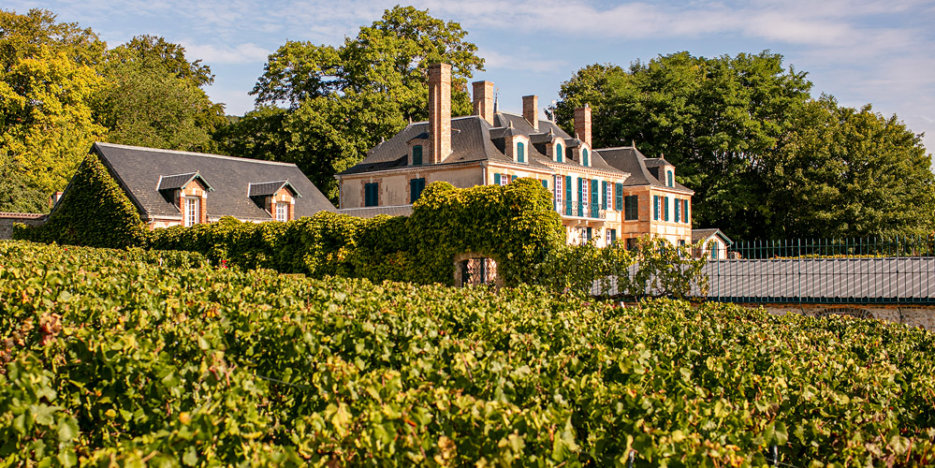
The atmosphere is defined almost entirely by geology. Ruinart's eight kilometres of chalk galleries — crayères carved from Gallo-Roman quarrying — are lit by sustainable LED systems that emphasise texture and depth rather than spectacle. Above ground, the house at 4 Rue des Crayères in Reims is measured and formal; the caves do the dramatic work.
What awards has Ruinart received?
Ruinart has received recognition including: Evocatively lit by sustainable LED lighting, guests to Champagne Ruinart mustn’t miss the eight kilometre-long chalk caves where the Chardonnay-dominant sparkli; Pearl 4 Star Prestige (2025); Evocatively lit by sustainable LED lighting, gue….
What wines should I try at Ruinart?
Ruinart's house philosophy is built around Chardonnay dominance, which sets it apart from most Marne négociants who default to Pinot Noir-led blends. Winemaker Frédéric Panaïotis oversees the range, so the blanc de blancs expressions are the logical starting point for any visit focused on understanding that house argument. The prestige R de Ruinart tier puts that philosophy under the greatest pressure.
What's the address for Ruinart?
Ruinart is located at 4 Rue des Crayères, 51100 Reims, Reims.
What's the defining thing about Ruinart?
The chalk caves. Ruinart holds Pearl 4 Star Prestige recognition (2025), but the experience that separates it from peer houses in Reims is the crayères: eight kilometres of galleries that serve as both active ageing cellars and a structured visit itinerary. No other grande maison in the city offers the same uninterrupted chalk corridor at that scale.
Do I need a reservation for Ruinart?
Yes. Ruinart operates by appointment; walk-in access to the chalk caves is not offered. The house is located at 4 Rue des Crayères, Reims, and visit formats vary in length and depth of tasting, so booking in advance through Ruinart's official channels is the only reliable way to secure access.
How does Ruinart's chalk cave visit compare to other Reims champagne house tours in terms of scale and format?
Ruinart's crayères run to eight kilometres, making them one of the more extensive chalk gallery networks open to visitors among Reims's grandes maisons. Where Pommery has leaned into commissioned art installations and Taittinger offers a more historic abbey context, Ruinart keeps the focus on the geology and the Chardonnay-dominant wines aged within it. The house received Pearl 4 Star Prestige recognition in 2025, and winemaker Frédéric Panaïotis has shaped a visit format that treats the cave as argument rather than backdrop.
Address
4 Rue des Crayères, 51100 Reims
Saint-Nicaise Hill · Champagne