Restaurant
Aca 1°
A 12-seat Spanish kaiseki counter in Nihonbashi that has held Tabelog Gold every year since 2022, scoring 4.67 in 2026 and ranking among Japan's top 26 restaurants on Opinionated About Dining. The format fuses Spanish culinary technique with Japanese seasonal discipline in a reservation-only room that prices dinner between JPY 60,000 and JPY 79,999.
At a glance
- Cuisine
- Modern Spanish Omakase
- Price
- $$$
- Per person
- $180
- Hours
- Mon: 5–11:30 PM; Tue: 5–11:30 PM; Wed: 5–11:30 PM; Thu: 5–11:30 PM; Fri: 5–11:30 PM; Sat: 5–11:30 PM; Sun: Closed
- Neighborhood
- Nakagyo-ku
- Rating
- 4.8 (44)
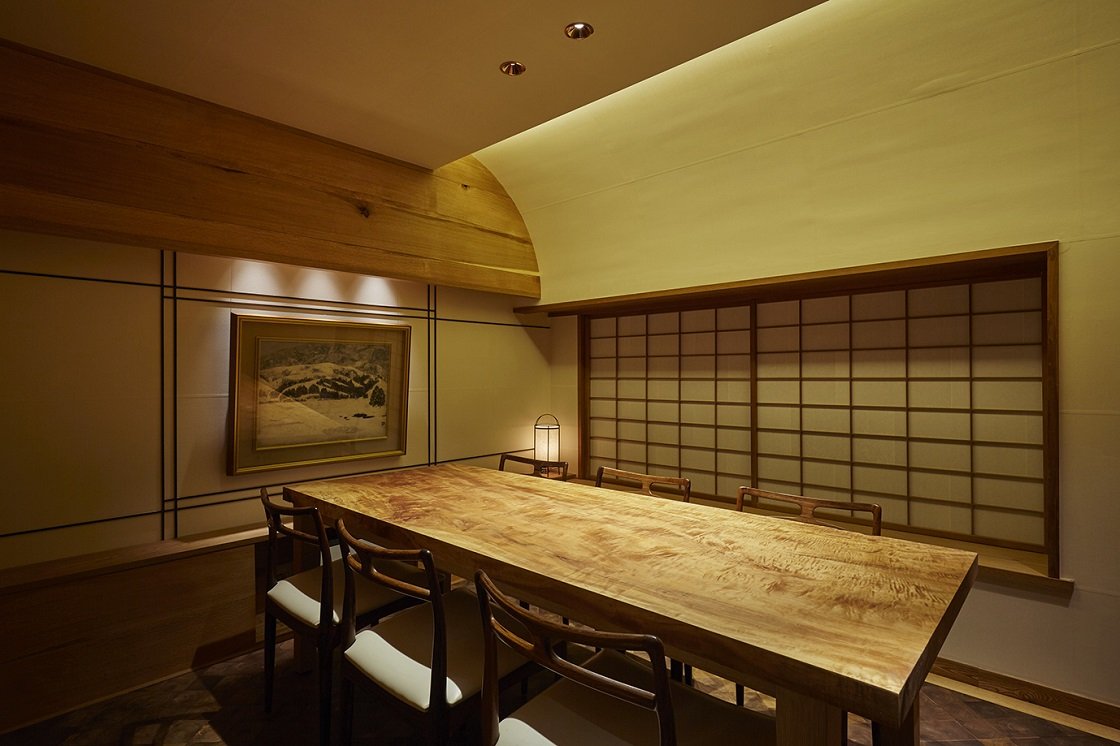
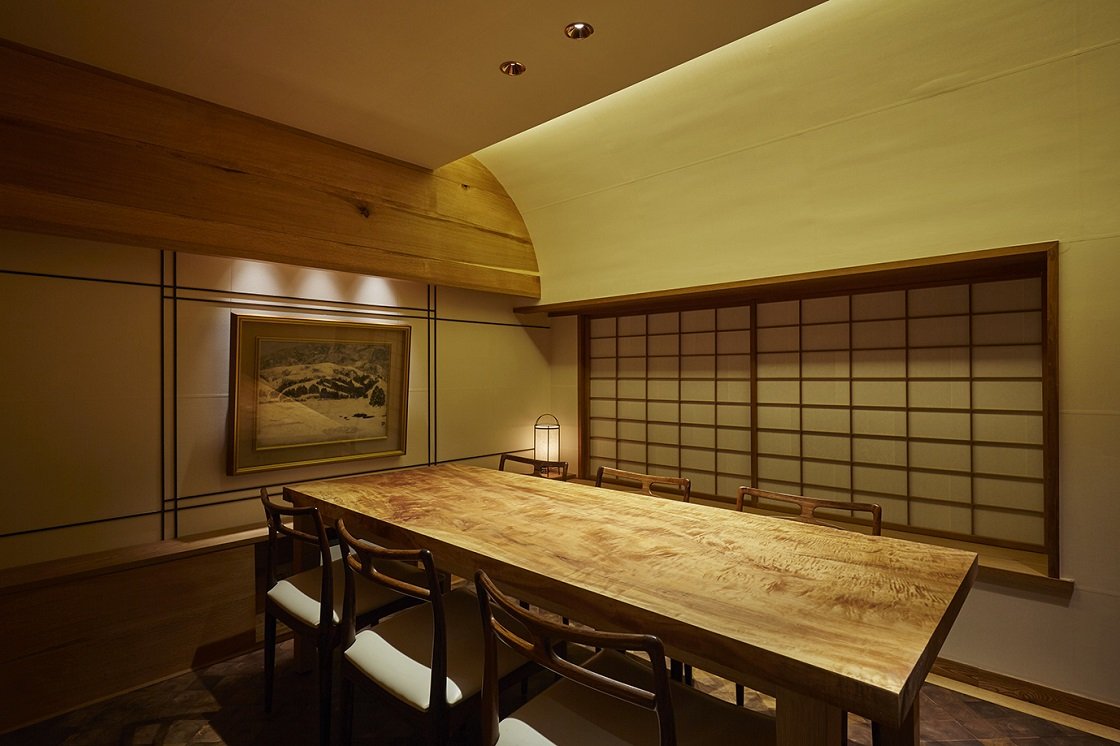
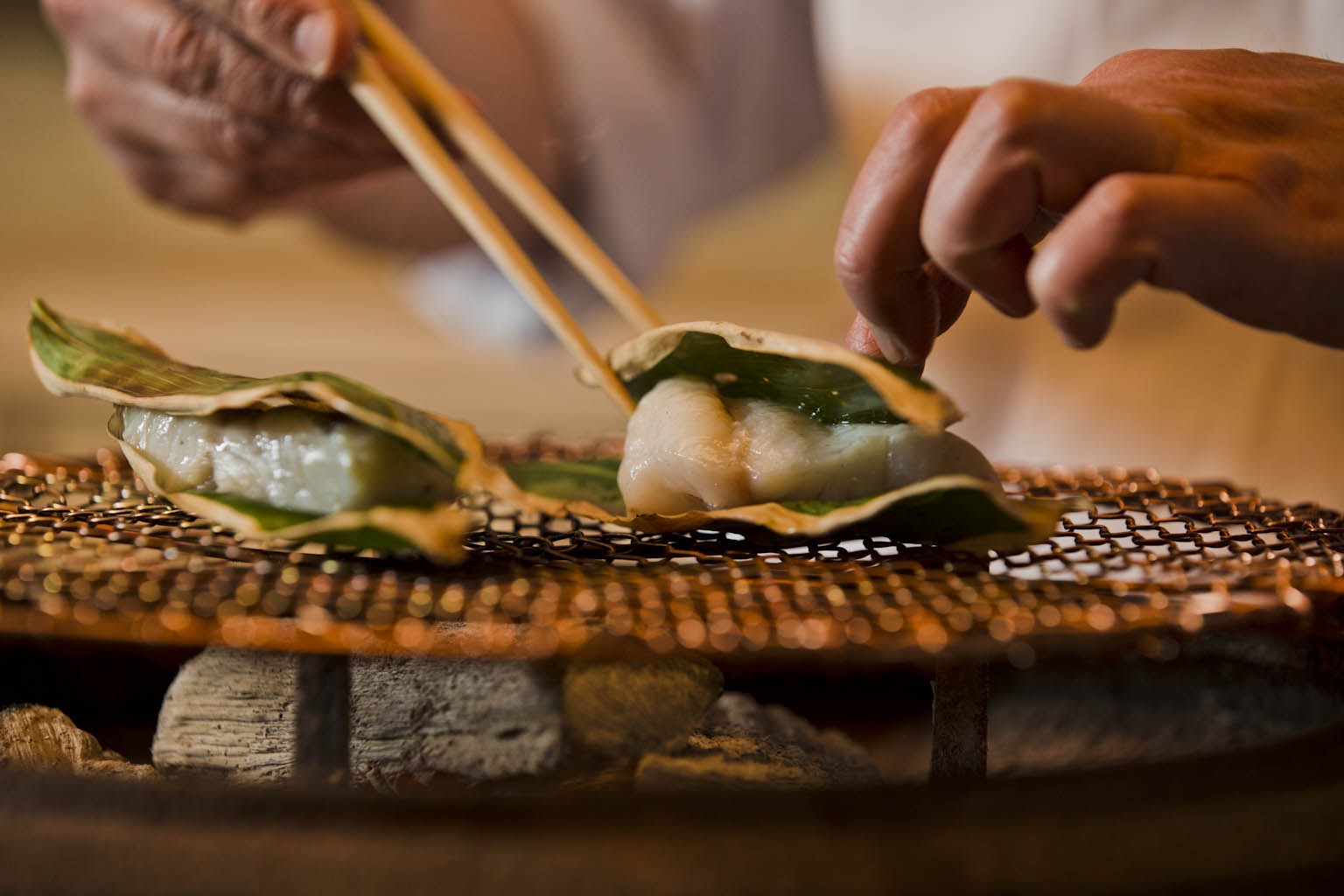
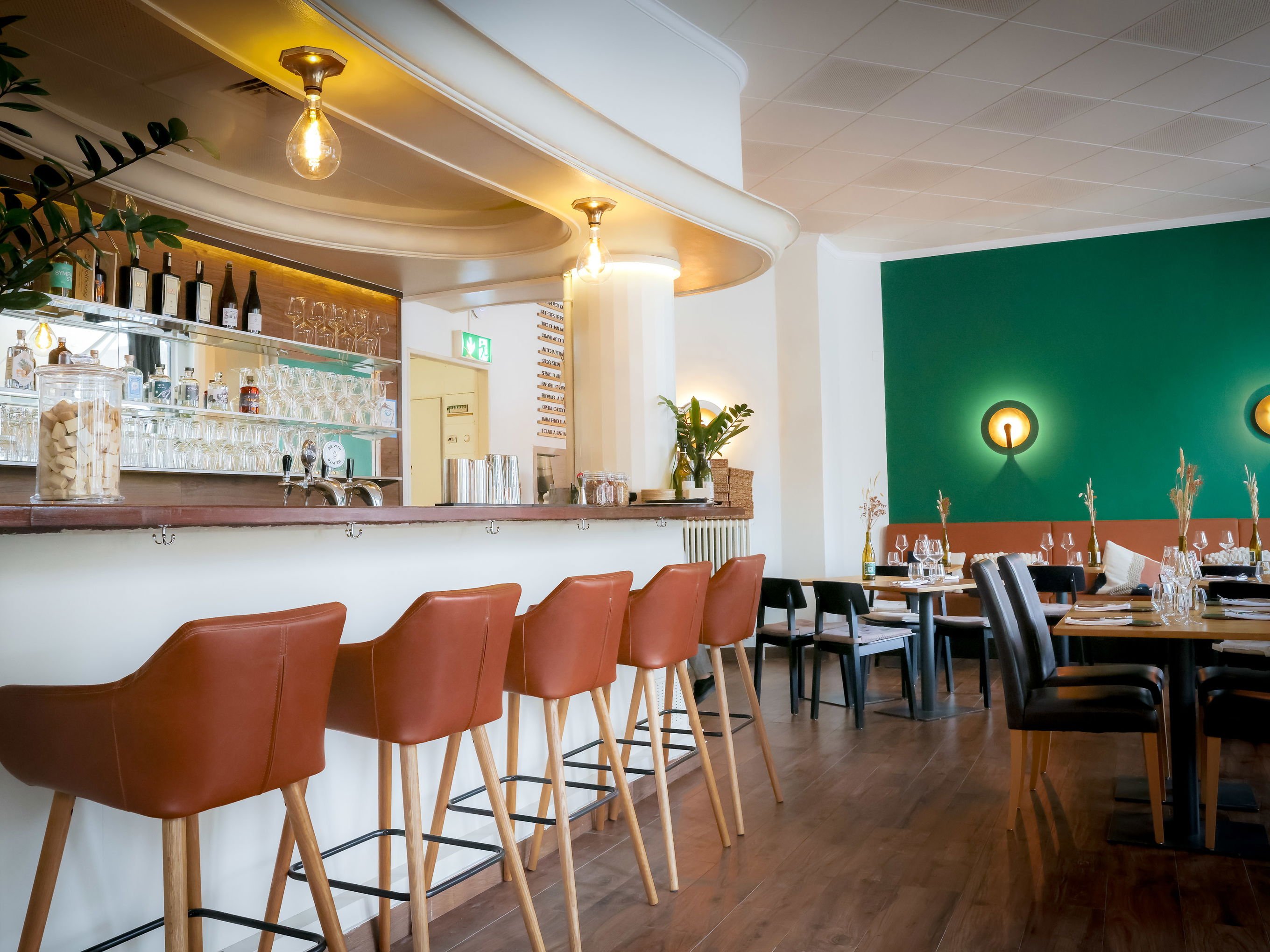
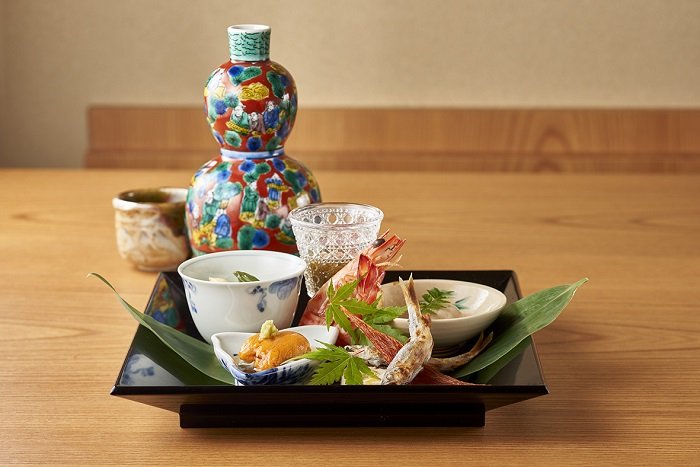
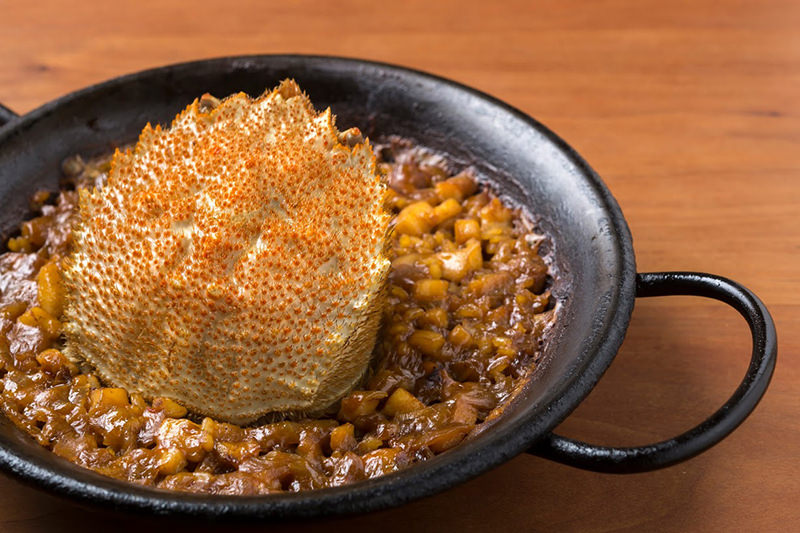
<h2>Where Spanish Technique Meets Kaiseki Discipline</h2><p>Tokyo's most interesting cross-cultural dining experiments rarely arrive with fanfare. The city's premium Spanish counter scene occupies a narrow but serious niche, sitting apart from both the Franco-Japanese fusion mainstream and the orthodox kaiseki rooms that line Kyoto's traditional quarters. In Nihonbashi, a short walk from Mitsukoshimae Station, <a href="https://www.enprimeurclub.com/restaurants/aoyagi-tokyo-restaurant">Aoyagi - 青柳 — Japanese Kaiseki in Tokyo</a> and its peers represent one end of this tradition, while aca inhabits a different register entirely: a 12-seat counter where Spanish culinary language is structured through the seasonal, course-by-course logic that Japan's dining culture has made its own. The room at the Mitsui No. 2 Building, opened in August 2020, keeps the format tight and the atmosphere focused. Twelve covers, private rooms available for groups of four, no smoking, no parking. The architecture of the experience is built around the counter itself.</p><p>This positioning connects to a broader pattern visible across Japan's premium dining cities. In Kyoto, houses like <a href="https://www.enprimeurclub.com/restaurants/gion-sasaki-kyoto-restaurant">Gion Sasaki (Kaiseki, Japanese)</a> and <a href="https://www.enprimeurclub.com/restaurants/hyotei-kyoto-restaurant">Hyotei (Kaiseki, Japanese)</a> anchor the orthodox end of multi-course seasonal cooking, while newer entrants have tested how far Western culinary frameworks can be absorbed into that same seasonal logic without losing coherence. aca belongs to this second group, executing the Spanish register at a price point, JPY 60,000 to JPY 79,999 for both lunch and dinner, that places it alongside Japan's most serious fine-dining counters regardless of national tradition.</p><h2>Five Consecutive Tabelog Gold Awards and What They Signal</h2><p>The award record here requires some unpacking. aca earned a Tabelog Silver in 2021, then converted to Gold in 2022 and has held that designation every year through 2026. In 2026, its Tabelog score sits at 4.67. For context, the Tabelog Gold tier represents the leading fraction of a percentage of all restaurants on Japan's largest dining review platform, where scores above 4.5 are rare and scores above 4.6 place a restaurant among a small national elite. Gold status is determined by a combination of user review scores and editorial assessment, and holding it across five consecutive award cycles indicates consistency rather than a single strong season.</p><p>Beyond Tabelog, the external validation is equally pointed. La Liste, which aggregates critical scores across multiple global systems, has rated aca at 92 points in both 2025 and 2026. Opinionated About Dining, a platform that tracks fine-dining performance among serious restaurant travellers, ranked aca 21st in Japan in 2023, 19th in 2024, and 26th in 2025 across all cuisine categories. A Pearl recommendation (2025) rounds out a recognition set that confirms aca's standing not just within Spanish cuisine in Japan but within the broader national fine-dining tier. Comparison restaurants in the Kyoto orbit, places like <a href="https://www.enprimeurclub.com/restaurants/kitcho-arashiyama-kyoto-restaurant">Kitcho Arashiyama - 京都 吉兆 嵐山本店</a> and <a href="https://www.enprimeurclub.com/restaurants/-maruyama-kyoto-restaurant">祇園 丸山 - Maruyama</a>, operate in a kaiseki tradition with decades of institutional weight behind them. aca has assembled a comparable recognition profile in roughly four years, opening in 2020 and ascending to Gold within eighteen months.</p><h2>The Spanish-Kaiseki Frame: A Discipline, Not a Gimmick</h2><p>The editorial angle here matters. Japanese kaiseki is not simply a sequence of dishes. It is a structured seasonal argument, where each course responds to the time of year, the provenance of ingredients, and the accumulated aesthetic judgments of a culinary tradition that prizes restraint, material honesty, and formal coherence. When a non-Japanese culinary language is run through that structure, the result can be superficial fusion or, if the kitchen is serious, something that uses the host tradition's discipline to clarify and focus the imported one.</p><p>The Spanish culinary register has its own deep grammar: the use of preserved, fermented, and cured ingredients; a relationship with seafood and legumes that differs structurally from Japanese treatment; and a history of avant-garde technique that has influenced fine dining globally since the early 2000s. Running that grammar through a multi-course seasonal frame, at 12 seats, reservation-only, at a price level that signals serious intent, is a coherent project. It is also one that requires the kitchen to make defensible choices at every course about where Spanish technique serves the seasonal ingredient and where Japanese logic should prevail. The sustained Tabelog scoring across five years suggests those choices are being made consistently.</p><p>For comparison, <a href="https://www.enprimeurclub.com/restaurants/akordu-nara-restaurant">akordu in Nara</a> pursues a related cross-cultural program in a different regional setting, and <a href="https://www.enprimeurclub.com/restaurants/hajime-osaka-restaurant">HAJIME in Osaka</a> operates at the intersection of French technique and Japanese seasonal produce with its own award-level pedigree. The pattern of Western culinary traditions being given structural form by Japanese seasonal discipline is one of the most active zones in Japanese premium dining today.</p><h2>The Counter Format and What It Asks of the Diner</h2><p>Twelve seats shapes the entire dynamic. At this scale, the room operates more like a private dinner than a restaurant service, and the kitchen's decisions about pacing, temperature, and sequencing reach every guest without dilution. The reservation-only policy, combined with a counter-based format and prices in the JPY 60,000 to JPY 79,999 band, puts aca in the same booking-discipline bracket as the most sought-after omakase counters in Tokyo and Kyoto. Chef Nicolas Gautier leads the kitchen, a credential that places a European-trained perspective at the center of a Japanese-framed format, which is precisely the tension the project is built around.</p><p>Business hours run Monday through Friday from 17:00 with a second seating from 20:30, and Saturday from 12:00 with both lunch and dinner sessions. The restaurant is closed on Sundays. A 10 percent service charge applies. Credit cards including VISA, Mastercard, JCB, American Express, and Diners are accepted. For readers building a Tokyo dining itinerary that extends across styles and traditions, <a href="https://www.enprimeurclub.com/restaurants/harutaka-tokyo-restaurant">Harutaka in Tokyo</a> represents the orthodox sushi-counter end of the same premium tier, and the contrast between the two formats tells you something useful about how far Tokyo's fine-dining range now extends.</p><p>Readers planning broader Japanese itineraries can also consult <a href="https://www.enprimeurclub.com/restaurants/goh-fukuoka-restaurant">Goh in Fukuoka</a>, <a href="https://www.enprimeurclub.com/restaurants/1000-yokohama-restaurant">1000 in Yokohama</a>, <a href="https://www.enprimeurclub.com/restaurants/6-okinawa-restaurant">6 in Okinawa</a>, and <a href="https://www.enprimeurclub.com/restaurants/enowa-yufuin-yufu-restaurant">Enowa Yufuin — Japanese Kaiseki in Yufu</a> for a fuller picture of how regional Japanese fine dining is developing outside the main urban centers.</p><h2>Planning Your Visit</h2><p>aca is located in the Mitsui No. 2 Building in Nihonbashi Muromachi, Chuo Ward, Tokyo, roughly three minutes on foot from Mitsukoshimae Station via Exit A8 on the Ginza and Hanzomon Lines. The restaurant operates on a reservation-only basis. Given the 12-seat capacity and the consistent Tabelog Gold recognition since 2022, forward planning is not optional at this price level. Contact is via phone at +81-3-6262-5090. The website is aca-kyoto.jp. Parking is not available at the venue.</p><p>For readers building a wider Kyoto and Japan dining list, <a href="https://www.enprimeurclub.com/restaurants/isshisoden-nakamura-kyoto-restaurant">Isshisoden Nakamura (Japanese)</a> provides an orthodox kaiseki reference point in Kyoto, and the full <a href="https://www.enprimeurclub.com/restaurants/kyoto">Kyoto restaurants guide</a> covers the range from traditional kaiseki to contemporary formats. For planning beyond the table, the <a href="https://www.enprimeurclub.com/hotels/kyoto">Kyoto hotels guide</a>, <a href="https://www.enprimeurclub.com/bars/kyoto">Kyoto bars guide</a>, <a href="https://www.enprimeurclub.com/wineries/kyoto">Kyoto wineries guide</a>, and <a href="https://www.enprimeurclub.com/experiences/kyoto">Kyoto experiences guide</a> provide coverage across the full travel scope.</p><h2>Frequently Asked Questions</h2><h3>What is the leading thing to order at Aca 1°?</h3><p>aca operates a set-course format rather than an à la carte menu, so the question of what to order resolves to: book the full sequence and trust the kitchen's seasonal decisions. The Tabelog description identifies the program as refined Spanish cuisine framed by Japanese aesthetic discipline, and five consecutive Gold awards from 2022 to 2026, alongside a 4.67 score, confirm that the kitchen's sequencing and ingredient choices are consistently rated among the strongest in Japan. At a price of JPY 60,000 to JPY 79,999 per person, both lunch and dinner sessions represent the same commitment level. Given the 12-seat format, there is no secondary or casual option within the room.</p><h3>Do I need a reservation for Aca 1°?</h3><p>Yes. aca accepts reservations only, with no walk-in service. With 12 seats, a price range of JPY 60,000 to JPY 79,999 placing it at the serious end of Tokyo fine dining, and a Tabelog Gold award held consecutively since 2022 alongside a 2025 ranking of 19th in all of Japan on Opinionated About Dining, demand at this counter significantly exceeds availability. Reservations can be made by phone at +81-3-6262-5090. Operating hours are Monday through Friday from 17:00 (second seating 20:30) and Saturday from 12:00, with Sunday closures. At this calibre in Tokyo, reserving several weeks or months in advance is standard practice.</p>
Know before you go
- Dress code
- smart_casual
- Reservations
- essential
- Payment
- credit_card
Frequently asked
Which chef is Aca 1° associated with?
The chef associated with Aca 1° is Nicolas Gautier.
Where is Aca 1° located?
Aca 1° is located at 麻布台ヒルズ ガーデンプラザA, 2F, 5 Chome-8-1 Toranomon, Minato City, Tokyo 105-0001, Japan, Kyoto.
What's the best thing to order at Aca 1°?
aca operates a set-course format only, so the decision is simply whether to book. The kitchen structures the meal as a single sequential argument, running JPY 60,000 to JPY 79,999 per person. That price point and the Tabelog Gold record since 2022 reflect a room where the full course is the product — arriving with specific dish requests would miss the point.
What style of cooking does Aca 1° do?
Aca 1° is categorized in our database as Japanese Kaiseki.
Is Aca 1° award-winning?
Aca 1° has received recognition including: {"Year":"2026","Award Source":"Tabelog","Award Type":"The Tabelog Award","Award Group":"gold","Award Group Rank":"1","Restaurant Name":"aca","Score":"4.67","Budget":"Dinner: JPY 60,000 - JPY 79,999; Lunch: JPY 60,000 - JPY 79,999","Budget D….
Do I need a reservation for Aca 1°?
Yes, reservations are mandatory. aca takes no walk-ins across its 12 seats, and the restaurant runs two sittings on weekdays from 17:00 and 20:30, with both lunch and dinner sessions available on Saturdays. Demand at this level — five consecutive Tabelog Gold Awards and a Tabelog score of 4.67 — means lead times should be assumed to be significant. check the venue's official channels at +81-3-6262-5090.
Address
麻布台ヒルズ ガーデンプラザA, 2F, 5 Chome-8-1 Toranomon, Minato City, Tokyo 105-0001, Japan
Nakagyo-ku
How it compares
- Cuisine
- Japanese Kaiseki
- Awards
- {"Year":"2026","Award Source":"Tabelog","Award Type":"The Tabelog Award","Award Group":"gold","Award Group Rank":"1","Restaurant Name":"aca","Score":"4.67","Budget":"Dinner: JPY 60,000 - JPY 79,999; Lunch: JPY 60,000 - JPY 79,999","Budget Dinner":"JPY 60,000 - JPY 79,999","Budget Lunch":"JPY 60,000 - JPY 79,999","Price":"JPY 60,000 - JPY 79,999 JPY 60,000 - JPY 79,999","Average Price":"JPY 60,000 - JPY 79,999 JPY 60,000 - JPY 79,999","Average Price (Based on reviews)":"JPY 60,000 - JPY 79,999 JPY 60,000 - JPY 79,999 View spending breakdown","Featured Item":"N/A","Full Address (with ZIP)":"東京都中央区日本橋室町2-1-1 三井2号館, 1030022, Japan","Address":"東京都中央区日本橋室町2-1-1 三井2号館","Postal Code":"1030022","City":"Nihonbashimuromachi Chuo Tokyo","State":"Tokyo","Country":"Japan","Phone":"+81362625090","Phone Raw":"+81-3-6262-5090","Website":"","Description":"Check out aca/aca 1° (Mitsukoshimae/Spanish) on Tabelog! Refined Spanish cuisine that shines with Japan's aesthetic sense and Chef To's creativity. [Private rooms available / No Smoking] Discover Japanese restaurants featuring detailed information such as menus and maps, along with user-posted reviews, ratings, and photos!","Categories":"Spanish","Awards & Recognitions":"The Tabelog Award 2026 Gold winner The Tabelog Award 2026 Gold winner The Tabelog Award 2025 Gold winner The Tabelog Award 2025 Gold winner The Tabelog Award 2024 Gold winner The Tabelog Award 2024 Gold winner The Tabelog Award 2023 Gold winner The Tabelog Award 2023 Gold winner The Tabelog Award 2022 Gold winner The Tabelog Award 2022 Gold winner The Tabelog Award 2021 Silver winner The Tabelog Award 2021 Silver winner Selected for Tabelog Spanish Cuisine \"Tabelog 100\" 2024 Selected for Tabelog Spanish Cuisine \"Tabelog 100\" 2024 受賞・選出歴 閉じる The Tabelog Award 受賞歴 2026年Gold受賞店 The Tabelog Award 2026 Gold 受賞店 2025年Gold受賞店 The Tabelog Award 2025 Gold 受賞店 2024年Gold受賞店 The Tabelog Award 2024 Gold 受賞店 2023年Gold受賞店 The Tabelog Award 2023 Gold 受賞店 2022年Gold受賞店 The Tabelog Award 2022 Gold 受賞店 2021年Silver受賞店 The Tabelog Award 2021 Silver 受賞店 百名店 選出歴 スペイン料理 百名店 2024 選出店 食べログ スペイン料理 百名店 2024 選出店","Reservation availability":"Reservation only","Business hours":"■Business hours [Mon - Fri] From 17:00 onwards 20:30 onwards [Sat] From 12:00 onwards 17:00 onwards *Both sessions available ■Closed on Sundays","Payment methods":"Credit card accepted (VISA, Master, JCB, AMEX, Diners) Electronic money not accepted QR code payments not accepted","Private rooms":"Available For 4 people","Non-smoking/smoking":"Non smoking","Number of seats":"12 seats","Private use":"Unavailable","Parking":"Unavailable","Space/facilities":"N/A","Drink":"N/A","Food":"N/A","Service":"N/A","Family friendly":"N/A","Service charge & fee":"Consumption tax and service charge of 10% Original text 消費税、サービス料10% This section has been automatically translated. Please check with the restaurant for accurate information.","Dress code":"N/A","Maximum party size":"N/A","Location":"N/A","Occasion":"N/A","Remarks":"N/A","The opening day":"2020.8.1","Receipt (Qualified simple invoice)":"N/A","Latitude":"35.686873637908946","Longitude":"139.7723526832755","Primary Image URL":"","Image URL Count":"20","Image URLs":"","Restaurant ID":"13249117","Source URL":"","Raw Details JSON":"{\"Restaurant name\":\"aca\",\"Awards & Recognitions\":\"The Tabelog Award 2026 Gold winner The Tabelog Award 2026 Gold winner The Tabelog Award 2025 Gold winner The Tabelog Award 2025 Gold winner The Tabelog Award 2024 Gold winner The Tabelog Award 2024 Gold winner The Tabelog Award 2023 Gold winner The Tabelog Award 2023 Gold winner The Tabelog Award 2022 Gold winner The Tabelog Award 2022 Gold winner The Tabelog Award 2021 Silver winner The Tabelog Award 2021 Silver winner Selected for Tabelog Spanish Cuisine \\\"Tabelog 100\\\" 2024 Selected for Tabelog Spanish Cuisine \\\"Tabelog 100\\\" 2024 受賞・選出歴 閉じる The Tabelog Award 受賞歴 2026年Gold受賞店 The Tabelog Award 2026 Gold 受賞店 2025年Gold受賞店 The Tabelog Award 2025 Gold 受賞店 2024年Gold受賞店 The Tabelog Award 2024 Gold 受賞店 2023年Gold受賞店 The Tabelog Award 2023 Gold 受賞店 2022年Gold受賞店 The Tabelog Award 2022 Gold 受賞店 2021年Silver受賞店 The Tabelog Award 2021 Silver 受賞店 百名店 選出歴 スペイン料理 百名店 2024 選出店 食べログ スペイン料理 百名店 2024 選出店\",\"Categories\":\"Spanish\",\"Phone number (for reservation and inquiry)\":\"03-6262-5090\",\"Reservation availability\":\"Reservation only\",\"Address\":\"東京都中央区日本橋室町2-1-1 三井2号館 Show larger map Find nearby restaurants Transportation Ginza Line and Hanzomon Line, a 3-minute walk from Mitsukoshimae Station, Exit A8. 227 meters from Mitsukoshimae.\",\"Business hours\":\"■Business hours [Mon - Fri] From 17:00 onwards 20:30 onwards [Sat] From 12:00 onwards 17:00 onwards *Both sessions available ■Closed on Sundays\",\"Average price\":\"JPY 60,000 - JPY 79,999 JPY 60,000 - JPY 79,999\",\"Average price (Based on reviews)\":\"JPY 60,000 - JPY 79,999 JPY 60,000 - JPY 79,999 View spending breakdown\",\"Payment methods\":\"Credit card accepted (VISA, Master, JCB, AMEX, Diners) Electronic money not accepted QR code payments not accepted\",\"Service charge & fee\":\"Consumption tax and service charge of 10% Original text 消費税、サービス料10% This section has been automatically translated. Please check with the restaurant for accurate information.\",\"Number of seats\":\"12 seats\",\"Private rooms\":\"Available For 4 people\",\"Private use\":\"Unavailable\",\"Non-smoking/smoking\":\"Non smoking\",\"Parking\":\"Unavailable\",\"Occasion\":\"None\",\"Website\":\"",\"The opening day\":\"2020.8.1\"}","Matched Location ID":"9e5445b6-d0d2-4ef7-9e7c-a336522292f3","Match Status":"matched","Match Method":"award_page_url_exact","Match Confidence":"high","Matched On URL":"","Matched DB Name":"Aca 1°","Matched DB Address":"麻布台ヒルズ ガーデンプラザA, 2F, 5-chōme-8-1 Toranomon, Minato City, Tokyo 105-0001, Japan","Needs Review":"no","Review Reason":"","Fallback Score":"","Fallback Name Sim":"","Fallback Addr Sim":"","Fallback Loc Sim":"","Fallback City Sim":"","Fallback Country Sim":"","Fallback Phone Match":"","Fallback Domain Match":"","Fallback Explanation":""}; La Liste Top Restaurants (2026): 92pts; Opinionated About Dining Top Restaurants in Japan Ranked #26 (2025); La Liste Top Restaurants (2025): 92pts; Tabelog Gold Award 2025 Score: 4.64 Cuisine: Spanish / Tokyo Phone: 03-6262-5090 Hours: ■Business hours[Mon - Fri]From 17:00 onwards20:30 onwards[Sat]From 12:00 onwards17:00 onwards*Both sessions available■Closed onSundays Address: Tokyo Chuo Ward Nihonbashi室 Town 211 三井2go 館 Tabelog:; Pearl Recommended Restaurant (2025); Opinionated About Dining Top Restaurants in Japan Ranked #19 (2024); Opinionated About Dining Top Restaurants in Japan Ranked #21 (2023)
- Notes
- This venue
- Cuisine
- Kaiseki, Japanese
- Price
- ¥¥¥¥
- Awards
- Michelin 3 Star
- Notes
- Kaiseki, Japanese, ¥¥¥¥
- Cuisine
- Italian
- Price
- ¥¥¥
- Awards
- Michelin 1 Star, World's 50 Best
- Notes
- Italian, ¥¥¥
- Cuisine
- Kaiseki
- Price
- ¥¥¥¥
- Awards
- Michelin 2 Star
- Notes
- Kaiseki, ¥¥¥¥
- Cuisine
- Japanese
- Price
- ¥¥¥¥
- Awards
- Michelin 2 Star
- Notes
- Japanese, ¥¥¥¥
- Cuisine
- Chinese
- Price
- ¥¥¥
- Awards
- Michelin 1 Star
- Notes
- Chinese, ¥¥¥