Restaurant
Ambivium
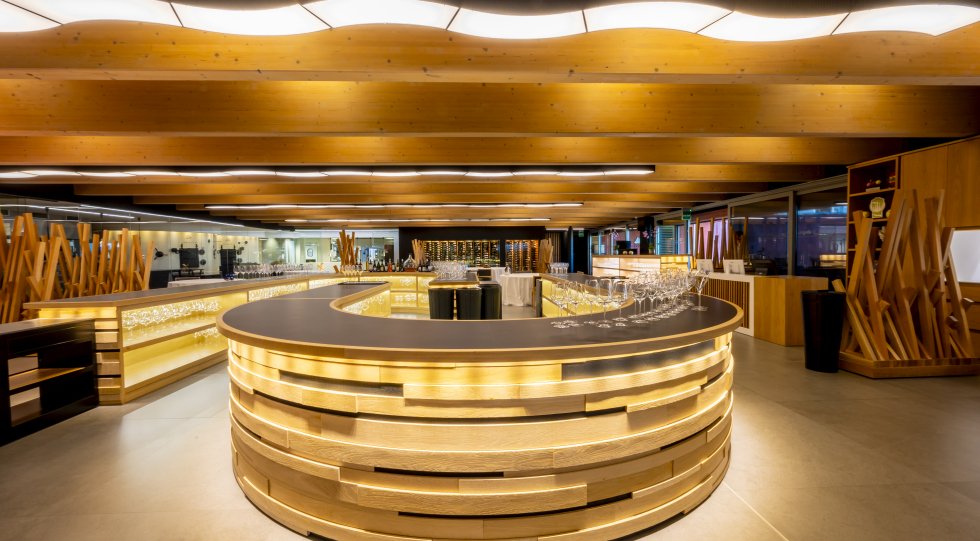
Set within the Pago de Carraovejas wine estate in Ribera del Duero, Ambivium holds a Michelin star and ranks #446 on Opinionated About Dining's 2025 European list. Chef Cristóbal Muñoz's tasting menu, Cellarium: Roots and Future, frames preservation and curing as its central theme, backed by a cellar of approximately 4,000 labels and direct vineyard views from the dining room.
- 1 Michelin Star
At a glance
- Cuisine
- Modern Castilian Fine Dining
- Price
- $$$$
- Per person
- $180
- Hours
- Mon: Closed; Tue: Closed; Wed: 11 AM–7 PM; Thu: 11 AM–7 PM; Fri: 11 AM–7 PM; Sat: 11 AM–7 PM; Sun: 11 AM–7 PM
- Neighborhood
- Peñafiel
- Rating
- 4.8 (327)
<h2>Vines, Stone, and the Architecture of Preservation</h2><p>The drive from Valladolid takes roughly an hour along the Duero valley, and the approach to Peñafiel does most of the scene-setting before you arrive. The Castillo de Peñafiel occupies a narrow ridge above the town, its silhouette unchanged for centuries, and the Pago de Carraovejas estate sits at its foot among the oldest planted rows in this stretch of Ribera del Duero. Arriving at Ambivium means arriving at a working winery first, a restaurant second — a sequencing that tells you something important about what the kitchen is trying to do.</p><p>That physical context matters because it shapes everything about the meal. The restaurant occupies a purpose-built space within the estate, with direct views across the vineyard from the bar. This is not a dining room that happens to have wine on the list; it is a room whose entire logic follows from the surrounding vines, the cellars below, and the argument that time is as much an ingredient as anything the kitchen buys at market. For broader context on dining and hospitality in the region, see <a href="https://www.enprimeurclub.com/restaurants/penafiel">our full Peñafiel restaurants guide</a>.</p><h2>Cellarium: Roots and Future — Preservation as a Culinary Argument</h2><p>Spanish cuisine has always had an unusually sophisticated relationship with preservation. The jamón tradition alone represents centuries of accumulated knowledge: the selection of Ibérico pigs, the salt rooms, the drying halls, the two- to four-year curing cycles in which humidity and airflow produce flavour complexity no kitchen technique can replicate in an afternoon. That tradition runs deeper than ham. Escabeche, salazones, encurtidos , pickling, salt-curing, vinegar-preservation , are woven through the Spanish table from the Atlantic coast to the Meseta, and they carry the same underlying logic: time, properly managed, is a creative force rather than a constraint.</p><p>Ambivium's tasting menu, titled Cellarium: Roots and Future, places that logic at the centre of the table. Chef Cristóbal Muñoz frames the menu around food conservation methods, moving between ancestral techniques and contemporary applications of the same principles. Where a traditional Spanish bodeguero monitors a curing room's microclimate over months or years, a modern kitchen might apply controlled fermentation, slow drying, or temperature manipulation across a much shorter arc , but the conceptual lineage is continuous. The menu's title is not decorative: a cellarium was a medieval storage space, typically within a monastery or estate, where preserved goods were kept against scarcity. At Ambivium, that etymology does real work.</p><p>This framing places Ambivium in a specific category within contemporary Spanish fine dining , one that uses historical craft as an intellectual scaffold rather than as nostalgia. It is a different posture from the high-technique coastal restaurants like <a href="https://www.enprimeurclub.com/restaurants/aponiente-el-puerto-de-santa-maria-restaurant">Aponiente in El Puerto de Santa María</a>, where Chef Ángel León's marine-led creativity operates in a more forward-facing register, or from the Basque axis at <a href="https://www.enprimeurclub.com/restaurants/arzak-san-sebastian-restaurant">Arzak in San Sebastián</a> and <a href="https://www.enprimeurclub.com/restaurants/mugaritz-errenteria-restaurant">Mugaritz in Errenteria</a>, where identity is rooted in terroir but expressed through formal experimentation. Ambivium's argument is more interior: that preservation itself is a form of creativity, and that the Meseta's culinary inheritance , its salting, curing, fermenting traditions , deserves the same serious treatment that Basque or Catalan regional cooking has long received.</p><h2>The Dessert Course and the Bodega's Beehives</h2><p>One detail from the meal draws consistent attention from critics: a dessert called Miel, built as a direct reference to the estate's own beehives. Honey occupies an interesting position in Spanish preservation culture , it has been used as a preserving agent since antiquity, and its symbolic weight in a menu about conservation is clear. Critics have singled out the visual presentation and formal construction of the dessert courses as among the most considered moments in the sequence. This kind of end-of-menu statement is harder to pull off than it sounds: dessert courses at tasting menu restaurants frequently lose conceptual thread, defaulting to sweetness as relief rather than continuation. That Ambivium's Miel functions as a closing argument for the menu's preservation theme suggests a kitchen working with structural discipline.</p><h2>Wine Integration at This Scale</h2><p>A cellar of approximately 4,000 labels is not merely a list; it represents a curatorial position. At most Michelin-starred restaurants, the wine programme is an accompaniment to the food. At an estate restaurant built within a working bodega, the dynamic inverts: the wine has equal claim on the evening's attention, and the food is partly designed to demonstrate what Ribera del Duero's age-worthy reds can do alongside a serious kitchen.</p><p>Pago de Carraovejas has built its reputation on wines of concentration and structure, and Ribera del Duero as an appellation produces some of Spain's most cellar-worthy Tempranillo-based bottles. The estate's integration into Ambivium means the pairing programme draws on years of winery knowledge rather than a sommelier working from a general list. The Star Wine List rankings , Ambivium has held positions across the leading five in its category in both 2025 and 2026 , confirm that the wine side of the operation meets the same standard of scrutiny as the food. This is a rare alignment: a kitchen serious enough to earn a Michelin star and a wine programme serious enough to place consistently at the leading of specialist rankings in consecutive years.</p><p>For those planning around wine rather than food, <a href="https://www.enprimeurclub.com/wineries/penafiel">our full Peñafiel wineries guide</a> maps the region's key estates.</p><h2>Placing Ambivium in the Spanish Fine Dining Conversation</h2><p>Spain's top tier of Michelin-starred restaurants is concentrated on the coasts and in the major cities. The three-star operations , <a href="https://www.enprimeurclub.com/restaurants/el-celler-de-can-roca-girona-restaurant">El Celler de Can Roca in Girona</a>, <a href="https://www.enprimeurclub.com/restaurants/azurmendi-larrabetzu-restaurant">Azurmendi in Larrabetzu</a>, <a href="https://www.enprimeurclub.com/restaurants/martin-berasategui-lasarte-oria-restaurant">Martin Berasategui in Lasarte-Oria</a>, <a href="https://www.enprimeurclub.com/restaurants/diverxo-madrid-restaurant">DiverXO in Madrid</a>, <a href="https://www.enprimeurclub.com/restaurants/cocina-hermanos-torres-barcelona-restaurant">Cocina Hermanos Torres in Barcelona</a>, and <a href="https://www.enprimeurclub.com/restaurants/quique-dacosta-denia-restaurant">Quique Dacosta in Dénia</a> , cluster in the Basque Country, Catalonia, the Levante coast, and Madrid. The interior Meseta, historically associated with arable agriculture, livestock, and wine rather than gastronomic tourism, has fewer flagship restaurants by volume. Ambivium's placement at #446 on Opinionated About Dining's 2025 European list and its Michelin star, awarded in 2024, signal that the restaurant has broken through the visibility gap that typically affects estate restaurants outside the main circuits.</p><p>The Opinionated About Dining trajectory is worth noting: OAD listed Ambivium among its leading new European restaurants in 2023, moved it to #410 in 2024, and placed it at #446 in 2025. The slight positional shift in 2025 does not indicate decline , OAD's list expands as more restaurants enter the survey pool , and the consistent presence at that level for a restaurant in its early years, in a region not traditionally associated with destination dining, reflects a genuine critical mass of informed diners making the journey. For reference, <a href="https://www.enprimeurclub.com/restaurants/ricard-camarena-valencia-restaurant">Ricard Camarena in València</a> represents another example of serious fine dining establishing itself outside the traditional Spanish capital cities. Ambivium's peer set is similar: restaurants that earn their audience through food and programme quality rather than proximity to established dining circuits.</p><p>In Peñafiel itself, <a href="https://www.enprimeurclub.com/restaurants/curioso-penafiel-restaurant">Curioso</a> offers a contemporary dining option for those building a longer stay around the town. The area's bar and hospitality scene is documented in <a href="https://www.enprimeurclub.com/bars/penafiel">our full Peñafiel bars guide</a>, <a href="https://www.enprimeurclub.com/hotels/penafiel">our full Peñafiel hotels guide</a>, and <a href="https://www.enprimeurclub.com/experiences/penafiel">our full Peñafiel experiences guide</a>.</p><h2>Planning the Visit</h2><p>Ambivium sits at the €€€€ price tier, consistent with its Michelin-starred tasting menu format. The estate address is Camino de Carraovejas s/n, 47300 Peñafiel, Valladolid , roughly two hours from Madrid by car, making it a practical day trip or a natural anchor for a longer Ribera del Duero itinerary. Given the wine programme's depth and the drive involved, most visitors stay overnight in the region. The restaurant's Google rating of 4.8 across 306 reviews reflects consistent satisfaction at this price point, which is meaningfully harder to sustain for a tasting menu format than for a casual restaurant where meal-to-meal variation is expected. Booking in advance is advisable given the destination nature of the visit; arriving without a reservation at an estate restaurant of this profile is not a reasonable strategy.</p><hr></hr><h2>Frequently Asked Questions</h2><h3>What is the overall feel of Ambivium?</h3><p>Ambivium sits at the serious end of the dining spectrum. The €€€€ price point, tasting menu format, Michelin star, and estate setting all signal a formal occasion rather than a casual dinner. The physical environment has an architectural coherence , the vineyard views, the cellar scale, the designed interior , that makes the experience feel considered rather than theatrical. Peñafiel as a setting adds weight: you are eating within a working wine estate in one of Spain's most important Tempranillo appellations, and the meal is structured to make that connection explicit rather than decorative. OAD's sustained recognition since 2023 and the consecutive Star Wine List placements confirm that the experience lands with sophisticated diners who travel specifically for it.</p><h3>Is Ambivium child-friendly?</h3><p>At €€€€ and with a tasting menu built around preservation techniques and wine pairing, Ambivium is primarily designed for adult diners with a serious interest in food and wine. The format , a single multi-course sequence with a conceptual through-line and extensive wine integration , does not lend itself to flexible ordering or abbreviated sittings. Families travelling with young children would find the format and price point misaligned with practical needs. For a town-based alternative at a more flexible price point, <a href="https://www.enprimeurclub.com/restaurants/curioso-penafiel-restaurant">Curioso</a> in Peñafiel offers contemporary dining in a different register.</p><h3>What do regulars order at Ambivium?</h3><p>The format is a set tasting menu , Cellarium: Roots and Future , so ordering in the conventional sense does not apply. The Miel dessert, built around honey from the estate's own beehives, has drawn specific mention from critics and is consistently highlighted as a structurally and visually strong close to the sequence. Chef Cristóbal Muñoz's menu centres on conservation and preservation methods, meaning the full sequence is the product rather than any individual dish. The wine pairing, drawn from a cellar of approximately 4,000 labels and informed by the estate's own Ribera del Duero production, is the logical accompaniment given the setting , comparable international fine dining wine programmes, such as those at <a href="https://www.enprimeurclub.com/restaurants/le-bernardin">Le Bernardin in New York City</a> or <a href="https://www.enprimeurclub.com/restaurants/atomix">Atomix in New York City</a>, tend to be strong at the top tier, but few operate with the direct estate provenance that Pago de Carraovejas provides here.</p>
Know before you go
- Dress code
- smart_casual
- Reservations
- essential
- Parking
- on_site_lot
- Outdoor seating
- Yes
Frequently asked
Is Ambivium child-friendly?
Ambivium is designed around a structured tasting menu — Cellarium: Roots and Future — at the €€€€ price tier, with a Michelin star and a format built on preservation techniques paired against a 4,000-label wine cellar. That combination points firmly toward adult diners with a specific interest in the food and wine programme. Families with young children would find the format a poor match.
What's the overall feel of Ambivium?
Formal and estate-rooted. Ambivium occupies the Pago de Carraovejas wine estate outside Peñafiel, with views across the vineyards and a setting shaped by the Castillo de Peñafiel on the ridge above. The Michelin star, €€€€ pricing, and a tasting menu format centred on food conservation place this firmly in Spain's serious fine-dining tier, ranked #410 in Opinionated About Dining's Europe list in 2024.
What kind of recognition has Ambivium received?
Ambivium has received recognition including: Star Wine List #3 (2026); Star Wine List #2 (2026); Star Wine List #1 (2026); On this occasion, I would like to take you outside of Madrid, just about two hours away by car, but believe me, it will be a very worthwhile journey. Ambivium res….
What do regulars order at Ambivium?
There is no à la carte: the kitchen runs a single tasting menu, Cellarium: Roots and Future, built around food conservation methods from traditional to contemporary. The dessert course called Miel — a reference to the estate's own beehives — draws consistent attention from critics and is the sequence's most discussed moment. Wine pairing is integral, with the cellar running to approximately 4,000 labels.
Is Ambivium focused on a specific cuisine style?
Ambivium is categorized in our database as Spanish Regional, Modern Cuisine.
Address
Camino de Carraovejas s/n, 47300 Peñafiel, Valladolid, Spain
Peñafiel
How it compares
- Price
- €€€€
- Awards
- Star Wine List #3 (2026); Star Wine List #2 (2026); Star Wine List #1 (2026); On this occasion, I would like to take you outside of Madrid, just about two hours away by car, but believe me, it will be a very worthwhile journey. Ambivium restaurant is located in Peñafiel villag...; The Pago de Carraovejas wine estate (Ribera del Duero), guarded over by the iconic Castillo de Peñafiel, has built its prestige around wines teeming with personality. The same philosophy applies to Ambivium, a dining space created to ensure the same harmony and end result. Featuring cutting-edge designer detail, splendid service and idyllic views of the vineyards from the bar, the restaurant conjures up exquisite dishes that you can enjoy while admiring this glorious setting. Chef Cristóbal Muñoz offers a tasting menu (Cellarium: Roots and future) on which everything revolves around food conservation methods, ranging from time-honoured techniques to the latest innovative trends, superbly complemented by the 4,000 or so labels in the extraordinary wine cellar! The meticulous presentation and visual impact of the desserts stand out, in particular the one simply called Miel (Honey) a homage to the bodega’s beehives, which we found especially impressive.; Star Wine List #5 (2025); Star Wine List #4 (2025); Star Wine List #3 (2025); Star Wine List #2 (2025); Star Wine List #1 (2025); Opinionated About Dining Top Restaurants in Europe Ranked #446 (2025); The Pago de Carraovejas wine estate (Ribera del Duero), guarded over by the iconic Castillo de Peñafiel, has built its prestige around wines teeming with personality. The same philosophy applies to Ambivium, a dining space created to ensure the same harmony and end result. Featuring cutting-edge designer detail, splendid service and idyllic views of the vineyards from the bar, the restaurant conjures up exquisite dishes that you can enjoy while admiring this glorious setting. Chef Cristóbal Muñoz offers a tasting menu (Cellarium: Roots and future) on which everything revolves around food conservation methods, ranging from time-honoured techniques to the latest innovative trends, superbly complemented by the 4,000 or so labels in the extraordinary wine cellar! The meticulous presentation and visual impact of the desserts stand out, in particular the one simply called Miel (Honey) a homage to the bodega’s beehives, which we found especially impressive.; Opinionated About Dining Top Restaurants in Europe Ranked #410 (2024); Michelin 1 Star (2024); Opinionated About Dining Top New Restaurants in Europe Recommended (2023)
- Notes
- This venue
- Price
- €€€€
- Awards
- Michelin 3 Star, World's 50 Best
- Notes
- Progressive - Seafood, Creative, €€€€
- Price
- €€€€
- Awards
- Michelin 3 Star, World's 50 Best
- Notes
- Modern Basque, Creative, €€€€
- Price
- €€€€
- Awards
- Michelin 3 Star, World's 50 Best
- Notes
- Progressive - Asian, Creative, €€€€
- Price
- €€€€
- Awards
- Michelin 3 Star, World's 50 Best
- Notes
- Progressive Spanish, Creative, €€€€
- Price
- €€€€
- Awards
- Michelin 3 Star, World's 50 Best
- Notes
- Creative, €€€€