Winery
Delamotte
Delamotte has been producing Champagne in Le Mesnil-sur-Oger since 1760, making it one of the Côte des Blancs' oldest surviving houses. Under winemaker Michel Fauconnet, the house draws directly on Grand Cru Chardonnay from one of Champagne's most consistently argued-over villages. EP Club awarded it a Pearl 4 Star Prestige rating in 2025.
At a glance
- Price
- $$$
- Neighborhood
- Le Mesnil-sur-Oger
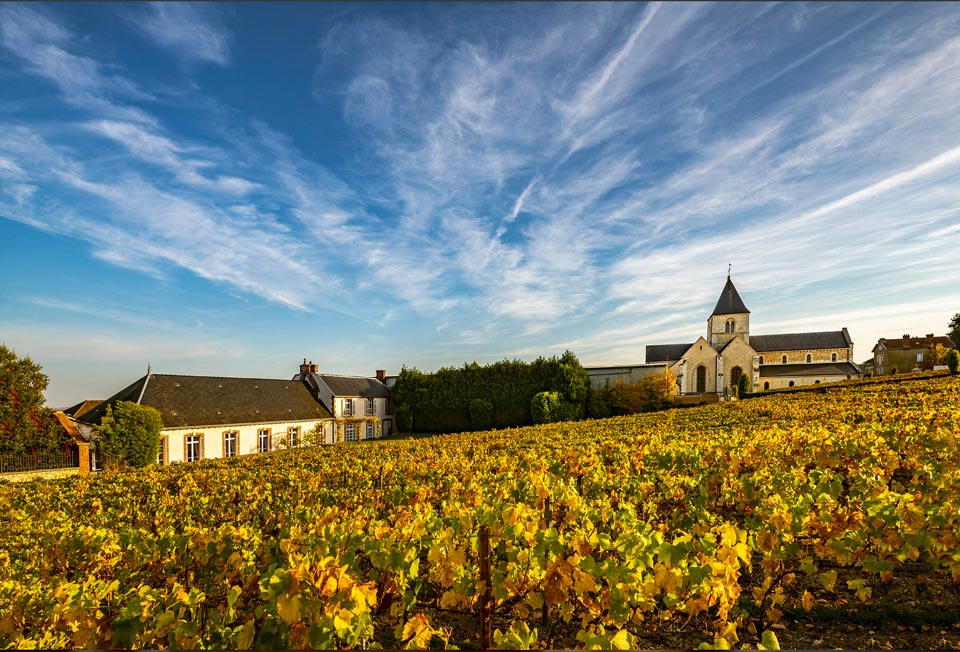
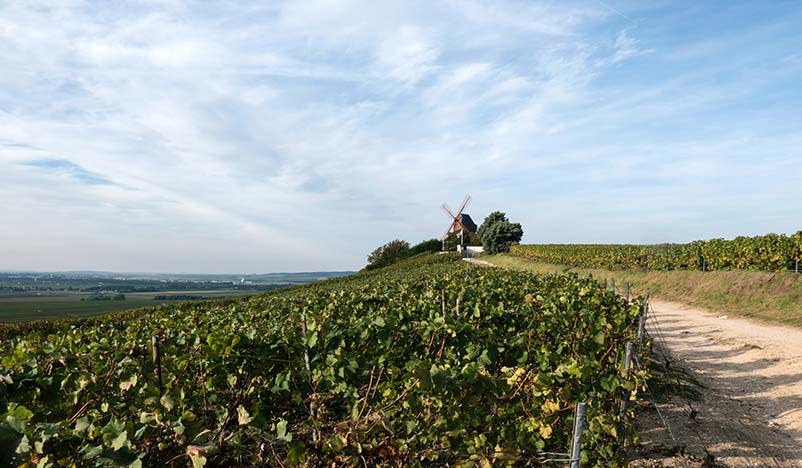
<h2>A Village That Defines the Argument</h2><p>Le Mesnil-sur-Oger sits at the southern end of the Côte des Blancs, a stretch of east-facing chalk escarpment that produces some of the most debated Chardonnay in the world. The village itself is compact and understated: a few hundred residents, a church, vineyards pressing close to the houses. What it generates in wine terms is disproportionate to its size. The Grand Cru designation here carries specific weight because the chalk subsoil is unusually deep and the drainage exceptional, producing a mineral tension in Chardonnay that winemakers across the appellation treat as a benchmark. Delamotte sits directly in that context, with an address on the Rue de la Brèche d'Oger and a production history running back to 1760. For reference, <a href="https://www.enprimeurclub.com/wineries/champagne-salon">Champagne Salon</a> — the village's other dominant name — did not release its first vintage until 1921. Delamotte's roots in the appellation predate almost every contemporary reference point by generations.</p><h2>How Winemaker Michel Fauconnet Reads the Terroir</h2><p>The editorial angle on Delamotte that matters most is not the house's age but the sensibility that guides its production. In Champagne, winemaker philosophy splits along a recognisable fault line: houses that blend across villages and vintages to achieve house style consistency, and those that work from a specific terroir with the goal of expression rather than standardisation. Delamotte, under Michel Fauconnet, sits firmly in the latter camp. The house's access to Le Mesnil Grand Cru fruit means the winemaking question is less about building complexity through blending geography and more about how to let chalk-driven Chardonnay speak without overworking it. This is a discipline that parallels what producers like <a href="https://www.enprimeurclub.com/wineries/pierre-peters">Pierre Peters</a> , also based in Le Mesnil , have made their signature, though the two houses occupy different positions in terms of scale and house style.</p><p>Fauconnet's approach is grounded in an understanding that Le Mesnil Chardonnay has a particular arc: tightly wound in youth, it requires patience. The tension between early austerity and what the wine becomes with time is the central winemaking challenge in the village. Houses that understand this tend to resist the temptation to sweeten the dosage or accelerate the release timeline. The result, when the discipline holds, is Champagne with genuine age-worthiness , something the market increasingly prices accordingly.</p><h2>What the 2025 Pearl 4 Star Prestige Rating Signals</h2><p>EP Club's Pearl 4 Star Prestige rating, awarded in 2025, places Delamotte in a tier defined by consistent quality at the intersection of terroir specificity and house craft. The rating is relevant not just as a credential but as a marker of peer set. Houses operating at this level in Champagne are not necessarily the loudest names at auction; they are the ones serious collectors return to across multiple vintages because the winemaking logic holds year over year. That consistency is harder to achieve in Champagne than in still wine regions because the assemblage and disgorgement decisions compound , an off call at any stage affects the final product in ways that are difficult to reverse.</p><p>The Prestige tier designation also signals something about format: these are houses whose leading cuvées reward cellaring rather than immediate consumption. For a buyer planning a collection rather than a single occasion, that distinction matters considerably. It is worth comparing this posture to estates like <a href="https://www.enprimeurclub.com/wineries/chateau-belair-monange-saint-emilion-winery">Château Bélair-Monange in Saint-Emilion</a> or <a href="https://www.enprimeurclub.com/wineries/chateau-batailley-pauillac-winery">Château Batailley in Pauillac</a>, where similar prestige-tier ratings reflect a comparable logic of measured quality over extended production histories.</p><h2>The Physical Place and What It Means to Visit</h2><p>Visiting a Champagne house in Le Mesnil is a different proposition than visiting the grande maison cellars in Reims or Épernay. There is no avenue of plane trees, no neoclassical facade built to impress trade buyers. What you get instead is a working production environment in a quiet agricultural village, where the relationship between the vines visible outside and the wine in the cellar is geographically immediate. The address at 7 Rue de la Brèche d'Oger places Delamotte within walking distance of the village centre. The Côte des Blancs is accessible by road from Épernay in roughly twenty minutes, making it a practical half-day from the regional hub. For those building an itinerary around the southern end of the Côte, <a href="https://www.enprimeurclub.com/cities/le-mesnil-sur-oger">our full Le Mesnil-sur-Oger guide</a> covers the broader context of the village and its producers.</p><p>Visits to the house are recommended to be booked in advance given the small-scale, focused nature of production in Le Mesnil relative to the larger houses elsewhere in Champagne. Contact via the official website is the appropriate route; phone and hours data are not confirmed in this record.</p><h2>Le Mesnil in the Wider Context of Prestige Wine Regions</h2><p>The logic of place-specific, terroir-driven production that defines Le Mesnil's leading houses has parallels across France and beyond. In Alsace, <a href="https://www.enprimeurclub.com/wineries/albert-boxler-niedermorschwihr-winery">Albert Boxler in Niedermorschwihr</a> operates with a comparable emphasis on Grand Cru parcels and minimal intervention. In Sauternes, <a href="https://www.enprimeurclub.com/wineries/chateau-d-arche-sauternes-winery">Château d'Arche</a> and <a href="https://www.enprimeurclub.com/wineries/chateau-bastor-lamontagne">Château Bastor-Lamontagne in Preignac</a> represent the Bordeaux end of the prestige-tier spectrum in sweet wine, where appellation identity and production discipline converge in a similar way. Further afield, <a href="https://www.enprimeurclub.com/wineries/accendo-cellars">Accendo Cellars in St. Helena</a> occupies an analogous position in Napa: small production, specific site focus, premium pricing that reflects collector demand rather than volume. What connects these estates across regions is a shared rejection of the idea that house style requires geographic averaging. Each is, in its own category, an argument for the opposite.</p><p>For those whose interests extend beyond wine entirely, the broader EP Club network covers premium producers in other categories: <a href="https://www.enprimeurclub.com/wineries/chartreuse-voiron-winery">Chartreuse in Voiron</a> represents the prestige spirits tier with a similar emphasis on heritage and production discipline, while <a href="https://www.enprimeurclub.com/wineries/aberlour-aberlour-winery">Aberlour in Aberlour</a> occupies a comparable position in Speyside single malt. The collector logic that applies to Delamotte's leading cuvées translates directly to these categories.</p><h2>Bordeaux Context for Multi-Region Collections</h2><p>Buyers who hold Delamotte alongside a Bordeaux cellar will find relevant peers across the EP Club coverage: <a href="https://www.enprimeurclub.com/wineries/chateau-branaire-ducru-st-julien">Château Branaire Ducru in St-Julien</a>, <a href="https://www.enprimeurclub.com/wineries/chateau-boyd-cantenac-cantenac-winery">Château Boyd-Cantenac in Cantenac</a>, <a href="https://www.enprimeurclub.com/wineries/chateau-cantemerle-haut-medoc">Château Cantemerle in Haut-Médoc</a>, and <a href="https://www.enprimeurclub.com/wineries/chateau-clinet-pomerol">Château Clinet in Pomerol</a> are all estates at the prestige tier where production philosophy and appellation identity carry the same weight as in Le Mesnil. The common denominator is that each estate's reputation is built on a specific place and a consistent production logic rather than brand marketing.</p><h2>Planning a Visit</h2><p>Le Mesnil-sur-Oger is most comfortably visited between April and October, when the Côte des Blancs is accessible without winter road complications and the vines provide visual context for understanding what the winemaking is working with. A visit to Delamotte pairs naturally with time in Épernay and, for those focused on the Blanc de Blancs category specifically, a walk through the Grand Cru vineyards on the village's eastern edge. Booking directly through the house's website is the standard approach; given the scale of production relative to the grandes maisons, availability should be confirmed early, particularly for harvest period visits in September and October.</p><h2>Frequently Asked Questions</h2><h3>Is Delamotte more low-key or high-energy?</h3><p>Delamotte is emphatically low-key. The house operates in a small Champagne village with no tourist infrastructure to speak of; the experience is closer to visiting a grower-producer than a grande maison. EP Club's Pearl 4 Star Prestige rating reflects quality, not scale or spectacle. Those expecting the cellar theatrics of the large Reims houses will find Le Mesnil a quieter, more concentrated proposition , which is precisely the point for a significant portion of its audience.</p><h3>What is the wine to focus on at Delamotte?</h3><p>Delamotte's identity is built on Blanc de Blancs Champagne from Le Mesnil-sur-Oger Grand Cru fruit, and that is the category to prioritise. Under Michel Fauconnet's direction, the house has sustained a consistent winemaking approach centred on Chardonnay from one of the Côte des Blancs' most closely watched villages. The EP Club Pearl 4 Star Prestige rating awarded in 2025 applies to the house's overall output, but the Blanc de Blancs format is where the terroir case is made most directly.</p><h3>What is the standout thing about Delamotte?</h3><p>Age combined with specificity. A founding date of 1760 is one data point; operating continuously from a single Grand Cru village for that period is the more telling one. Most Champagne houses at this level of recognition have diversified their sourcing geography over time. Delamotte's continued grounding in Le Mesnil, reinforced by the 2025 Pearl 4 Star Prestige rating, makes it one of the more coherent arguments for what appellation-specific Champagne production looks like over a multi-century timeframe.</p>
Know before you go
- Dress code
- smart_casual
- Reservations
- appointment_only
- Parking
- street
Frequently asked
Is Delamotte more low-key or high-energy?
Firmly low-key. Delamotte operates from 7 Rue de la Brèche d'Oger in a small Champagne village with no surrounding tourist infrastructure, and the experience reflects that — closer to a domain visit than a grand maison spectacle. The EP Club Pearl 4 Star Prestige rating (2025) signals serious quality, not a lifestyle operation.
Where is Delamotte located?
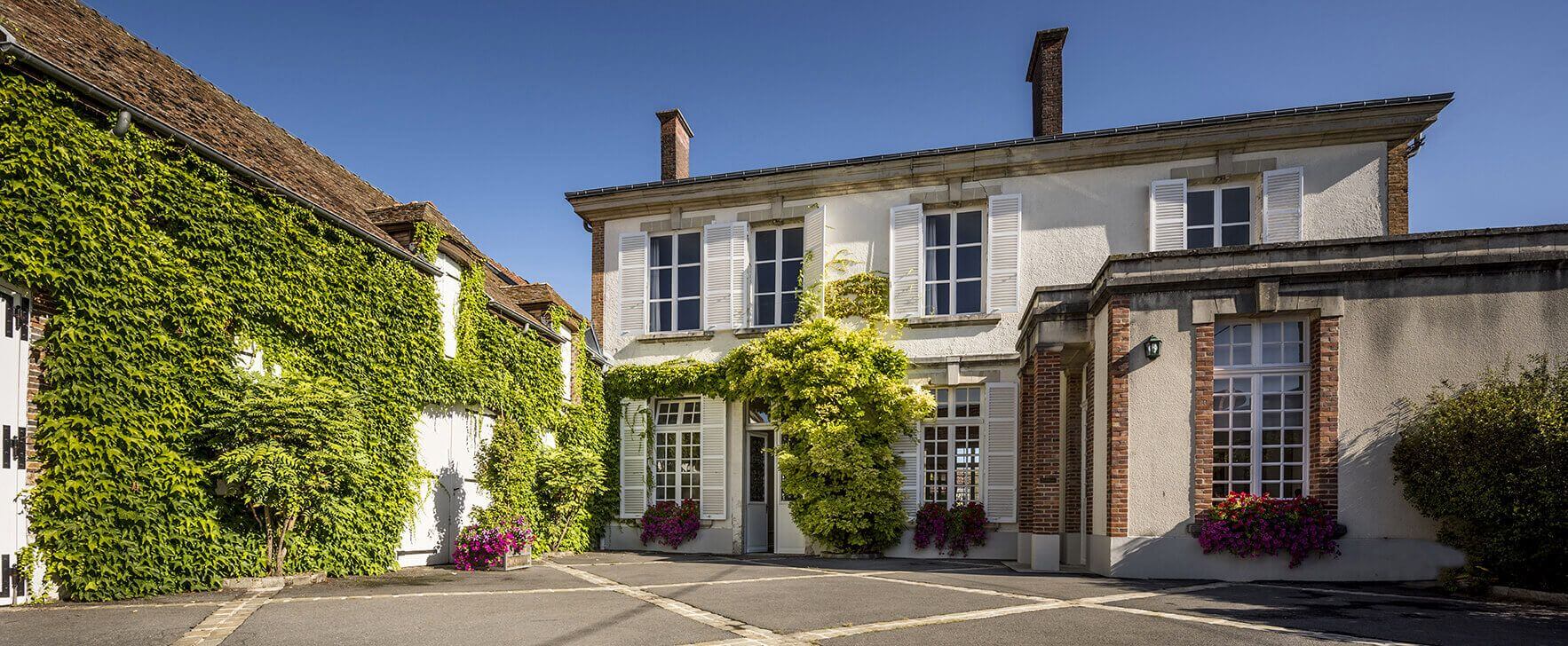
Delamotte is located at 7 Rue de la Brèche d'Oger, 51190 Le Mesnil-sur-Oger, Le Mesnil-sur-Oger.
Is Delamotte award-winning?
Delamotte has received recognition including: Pearl 4 Star Prestige (2025).
What's the best wine to try at Delamotte?
The Blanc de Blancs is the house's defining expression and the category to prioritise. Le Mesnil-sur-Oger Grand Cru Chardonnay fruit sits at the core of Delamotte's identity, and winemaker Michel Fauconnet has shaped that into one of the Côte des Blancs' more closely watched prestige cuvées.
What's the standout thing about Delamotte?
Continuity from a single Grand Cru address. A founding date of 1760 carries weight in Champagne, but what distinguishes Delamotte is that the house has remained rooted in Le Mesnil-sur-Oger specifically, with winemaker Michel Fauconnet maintaining a production philosophy tied directly to that village's chalk terroir. The 2025 Pearl 4 Star Prestige rating reflects that consistency.
Address
7 Rue de la Brèche d'Oger, 51190 Le Mesnil-sur-Oger
Le Mesnil-sur-Oger · Champagne