Winery
Domaine de la Romanée-Conti
Domaine de la Romanée-Conti occupies a singular position in Burgundy's Côte de Nuits, producing grand cru wines from Vosne-Romanée's most closely watched parcels. The domaine, guided by Aubert de Villaine and Bertrand de Villaine, holds EP Club's Pearl 5 Star Prestige rating for 2025. Access is by allocation only, and bottles rarely trade at release price.
At a glance
- Price
- $$$$
- Neighborhood
- Vosne-Romanée
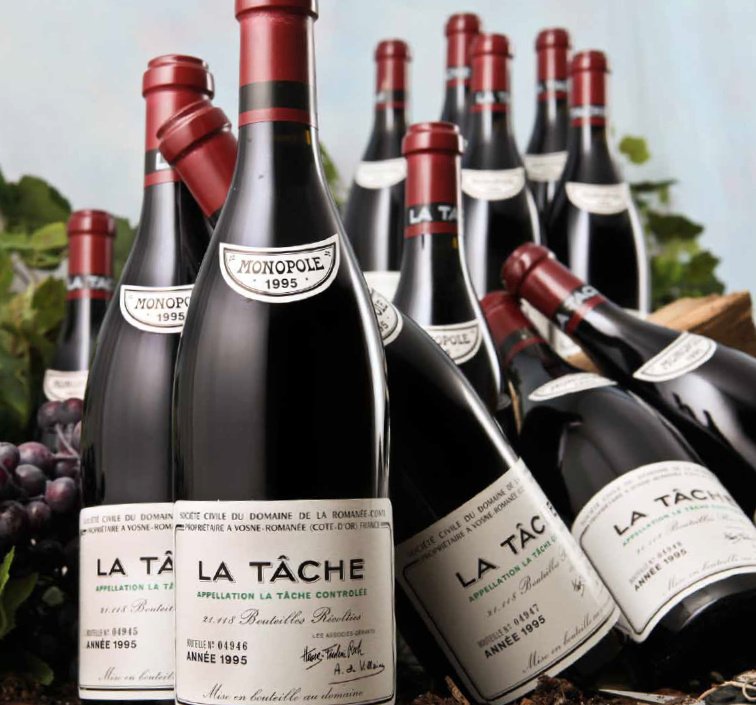
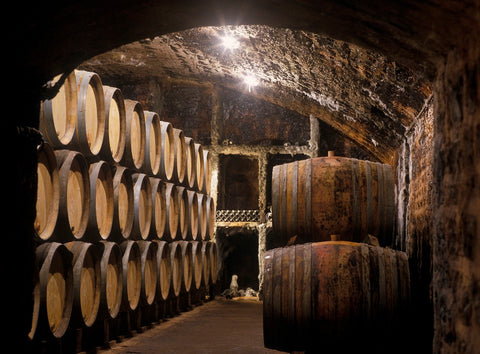
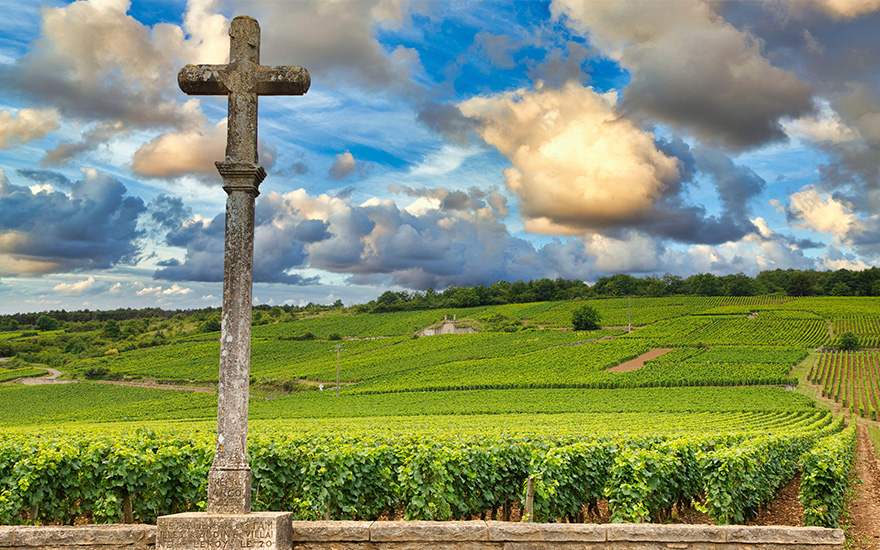
<h2>Where Burgundy's Ceiling Sits</h2><p>Stand at the stone cross marking the monopole of Romanée-Conti itself, on the gentle eastern slope above Vosne-Romanée village, and the geography makes an argument without words. The parcel is 1.81 hectares of Pinot Noir planted in soils that slope almost imperceptibly toward the Route des Grands Crus. No dramatic elevation, no obvious theatre — just a low wall, old vines, and the specific combination of Comblanchien limestone subsoil and brown clay topsoil that Burgundians have been arguing about for eight centuries. Domaine de la Romanée-Conti does not need to announce itself. The address alone — 1 Place de l'Église, 21700 Vosne-Romanée , carries a weight that most wine estates spend generations trying to build.</p><p>Within Burgundy's tiered grand cru hierarchy, DRC occupies a position that has no direct peer. It holds EP Club's Pearl 5 Star Prestige rating for 2025, and the domaine's allocation system is the subject of more collector correspondence and trade negotiation than perhaps any other single producer in the wine world. Under Aubert de Villaine and Bertrand de Villaine, the domaine has maintained a consistency of approach across decades that other producers in the Côte de Nuits point to as a benchmark rather than a rival. For context on the broader Vosne-Romanée producer scene, see <a href="https://www.enprimeurclub.com/cities/vosne-romanee">our full Vosne-Romanée restaurants and producers guide</a>.</p><h2>After Harvest: The Work That Defines the Wine</h2><p>The story of any grand cru is partly a story of terroir, but it is more precisely a story of what the cellar does , or chooses not to do , with what the vineyard provides. At DRC, the cellar philosophy has long prioritised minimal intervention in barrel, with whole-cluster fermentation used at varying proportions depending on vintage. The decision on how much whole-cluster to include is not fixed by formula; it reflects the harvest's character in that specific year, a judgment call rather than a recipe.</p><p>Barrel aging at DRC runs to approximately 18 months in predominantly new oak, though the domaine has at times adjusted new oak percentages in response to vintage conditions and the evolving critical conversation about integration. The underlying principle is that oak should function as a vessel and a slow oxidative environment, not as a flavour source. Wines from the monopole parcels , Romanée-Conti and La Tâche , typically emerge from barrel with more structural density than the domaine's other holdings at Richebourg, Romanée-St-Vivant, Grands Échézeaux, and Échézeaux, which have their own distinct aging trajectories.</p><p>What happens between harvest and bottling at this scale of ambition is not simply a technical process. The blending decisions , which barrels go into the final bottling, which are set aside , represent the moment where the vintage year, the specific parcel, and the cellar team's judgment converge. DRC bottles without fining and with minimal filtration, a practice consistent with the domaine's broader stance on preserving what the vineyard produced rather than correcting it. Collectors and critics who follow the wines closely often note that the bottling date and the specific batch can introduce variation even within a single vintage, a reality that adds complexity to secondary market assessment.</p><h2>The Vosne-Romanée Peer Context</h2><p>Vosne-Romanée is the most densely starred village in Burgundy's Côte de Nuits, and DRC sits at the leading of a producer tier that includes estates of genuine seriousness. <a href="https://www.enprimeurclub.com/wineries/domaine-jean-grivot">Domaine Jean Grivot</a> works parcels in Échézeaux and Clos de Vougeot with a precision that earns it consistent critical attention. <a href="https://www.enprimeurclub.com/wineries/domaine-rene-engel-vosne-romanee">Domaine René Engel</a>, whose holdings eventually passed to what became <a href="https://www.enprimeurclub.com/wineries/domaine-deugnie-vosne-romanee-winery">Domaine d'Eugénie</a>, represents the historical depth of the village's family-domaine tradition. <a href="https://www.enprimeurclub.com/wineries/domaine-bizot-vosne-romanee-winery">Domaine Bizot</a> and <a href="https://www.enprimeurclub.com/wineries/domaine-cecile-tremblay-vosne-romanee-winery">Domaine Cécile Tremblay</a> occupy a newer wave of micro-production producers whose allocation scarcity now rivals much larger estates in secondary market terms.</p><p>None of these producers operate at DRC's price tier or output scale in terms of secondary market valuation. A single bottle of Romanée-Conti routinely trades at multiples of what a comparable Richebourg from another leading producer commands, even accounting for the shared appellation. The gap is not simply about quality in any reductive sense , it is about the monopole status of the flagship parcel, the historical record, the bottling's scarcity, and the compounding effect of decades of collector demand. Wines from Richebourg, La Tâche, and Romanée-St-Vivant trade at prices that would be extraordinary from virtually any other producer; from DRC, they represent the lower end of the domaine's own internal hierarchy.</p><h2>Practical Realities of Access</h2><p>Visiting Vosne-Romanée is direct from Beaune, approximately 15 kilometres to the south along the D974. The village itself is small, with the church square and the Romanée-Conti cross among the most photographed sites in wine tourism. The cellar and the domaine's offices at Place de l'Église are not open to casual visitors. DRC does not maintain a public tasting room, and the domaine's allocation is distributed through a small number of authorised négociants and specialist merchants globally. There is no walk-in or appointment-based tasting available to the general public, and the domaine does not publicise a phone number or consumer-facing website for booking purposes.</p><p>For those travelling through the Côte de Nuits in the autumn months, harvest season in Burgundy typically runs from late September into early October depending on the year, and the village takes on a working intensity that is worth observing even from the road. The vines surrounding the Romanée-Conti cross are harvested by hand, entirely by the domaine's own team, with timing decisions made on a parcel-by-parcel basis rather than appellation-wide. This level of granular harvest management is consistent across the domaine's holdings but is most visible to the passing visitor at the monopole parcel itself.</p><p>For collectors seeking allocations, the accepted route is through established relationships with merchants who hold annual DRC allocations. These allocations are typically sold as mixed cases that include wines from multiple appellations within the domaine's portfolio, meaning that access to the flagship bottles generally requires taking the broader range. Secondary market prices reflect this allocation structure, with the lower-tier domaine wines trading at premiums that exist partly because of their association with the leading bottlings rather than their appellation standing alone.</p><h2>Beyond the Village: Wider French Producer Context</h2><p>France's producer depth extends well beyond Burgundy's Côte de Nuits. In Alsace, <a href="https://www.enprimeurclub.com/wineries/albert-boxler-niedermorschwihr-winery">Albert Boxler in Niedermorschwihr</a> represents the kind of serious, small-production Alsatian work that rarely reaches the attention it merits outside the region. In Bordeaux, the classification system produces a different kind of hierarchy: <a href="https://www.enprimeurclub.com/wineries/chateau-batailley-pauillac-winery">Château Batailley in Pauillac</a>, <a href="https://www.enprimeurclub.com/wineries/chateau-belair-monange-saint-emilion-winery">Château Bélair-Monange in Saint-Emilion</a>, <a href="https://www.enprimeurclub.com/wineries/chateau-boyd-cantenac-cantenac-winery">Château Boyd-Cantenac in Cantenac</a>, <a href="https://www.enprimeurclub.com/wineries/chateau-branaire-ducru-st-julien">Château Branaire-Ducru in St-Julien</a>, and <a href="https://www.enprimeurclub.com/wineries/chateau-bastor-lamontagne">Château Bastor-Lamontagne in Preignac</a> each occupy distinct positions within that system, from classified growths to consistently over-performing Sauternes. Outside France entirely, <a href="https://www.enprimeurclub.com/wineries/accendo-cellars">Accendo Cellars in St. Helena</a> works in a Napa idiom with production constraints that mirror Burgundy's allocation dynamic more than Bordeaux's. And for a non-wine French producer of comparable historical weight, <a href="https://www.enprimeurclub.com/wineries/chartreuse-voiron-winery">Chartreuse in Voiron</a> and <a href="https://www.enprimeurclub.com/wineries/aberlour-aberlour-winery">Aberlour in Aberlour</a> represent different categories entirely but share the characteristic of deep archival identity that defines how connoisseurs engage with a producer over time.</p><h2>Frequently Asked Questions</h2><dl><dt><strong>What wine is Domaine de la Romanée-Conti famous for?</strong></dt><dd>DRC is most associated with the Romanée-Conti monopole, a 1.81-hectare grand cru parcel in Vosne-Romanée producing Pinot Noir from one of Burgundy's most closely studied single plots. The domaine also produces La Tâche (another monopole), Richebourg, Romanée-St-Vivant, Grands Échézeaux, and Échézeaux, all from grand cru appellations. Aubert de Villaine and Bertrand de Villaine oversee the portfolio, which holds EP Club's Pearl 5 Star Prestige rating for 2025. Secondary market prices for the flagship bottling regularly rank among the highest recorded for any single wine globally.</dd><dt><strong>What should I know about Domaine de la Romanée-Conti before I go?</strong></dt><dd>DRC is not open to the public. The domaine's cellars and offices in Vosne-Romanée do not accept casual visits or consumer appointments, and there is no public tasting programme. Travellers to the village can view the Romanée-Conti parcel and its stone cross from the Route des Grands Crus , this is the closest most visitors will get. Access to the wines themselves runs exclusively through allocated merchants. The domaine holds EP Club's Pearl 5 Star Prestige rating for 2025.</dd><dt><strong>Can I walk in to Domaine de la Romanée-Conti?</strong></dt><dd>No. DRC operates no walk-in tasting facility and does not publish a phone number or consumer website for visit bookings. The domaine's physical address in Vosne-Romanée is accessible, but the estate itself is not open to the public. Wine access is entirely through allocated trade channels. Visitors to the village can walk the vineyard's exterior and view the historic cross marking the monopole parcel without advance arrangement.</dd><dt><strong>Is Domaine de la Romanée-Conti better for first-timers or repeat visitors?</strong></dt><dd>The question almost inverts the usual framing. First-time visitors to Vosne-Romanée will find the village and its vineyards worth the detour from Beaune or Dijon for the visual and historical context alone. Engaging with DRC as a wine, however, typically requires a prior relationship with the secondary market or a long-standing account with an allocated merchant. The domaine's EP Club Pearl 5 Star Prestige standing for 2025 reflects a body of work that rewards depth of study rather than a single introductory bottle.</dd><dt><strong>How does DRC's allocation system work, and why does it affect which bottles you can buy?</strong></dt><dd>DRC distributes its wines as mixed allocations through a small number of authorised négociants and specialist merchants, meaning buyers typically receive a combination of grand cru bottlings , including the less scarce Échézeaux and Grands Échézeaux alongside the flagship Romanée-Conti and La Tâche , rather than selecting individual wines. This structure means that access to the most sought-after bottles is contingent on a pre-existing merchant relationship and willingness to take the full allocated case. Bottles carrying the EP Club Pearl 5 Star Prestige credential for 2025 command secondary market premiums that reflect both the domaine's historical depth and the structural scarcity built into this distribution model.</dd></dl>
Know before you go
- Dress code
- smart_casual
- Reservations
- appointment_only
- Parking
- on_site_lot
Frequently asked
Where is Domaine de la Romanée-Conti located?
Domaine de la Romanée-Conti is located at 1 Pl. de l'Église, 21700 Vosne-Romanée, Vosne-Romanée.
What recognition does Domaine de la Romanée-Conti have?
Domaine de la Romanée-Conti has received recognition including: Pearl 5 Star Prestige (2025).
What wine is Domaine de la Romanée-Conti famous for?
The estate holds the monopole on the Romanée-Conti grand cru vineyard itself, a 1.8-hectare plot in Vosne-Romanée that produces one of Burgundy's scarcest and most analysed wines. Beyond the flagship, DRC also produces La Tâche (another monopole), Richebourg, Romanée-Saint-Vivant, Grands Échézeaux, and Échézeaux, all under the same stewardship that earned the domaine a Pearl 5 Star Prestige rating in 2025. Each label shares the same philosophy of minimal intervention in vineyard and cellar, with Aubert de Villaine and Bertrand de Villaine overseeing production.
What should I know about Domaine de la Romanée-Conti before I go?
The domaine is located at 1 Place de l'Église in Vosne-Romanée, a small village approximately 15 kilometres north of Beaune along the D974. Access to the cellar and estate is by private appointment only and is not extended to the general public; the experience is reserved for trade and allocation clients. Walking the vineyard boundaries and viewing the stone cross marking the Romanée-Conti monopole is possible without an appointment, and that alone draws visitors from across the wine world.
Can I walk in to Domaine de la Romanée-Conti?
The domaine does not accept walk-in visits; there is no public tasting room or open-door policy. Cellar access requires a prior relationship with the estate, typically through allocation or the trade. What visitors can do freely is stand in the vineyard itself — the Romanée-Conti plot is unfenced and the stone cross at its centre has become one of Burgundy's most photographed landmarks.
Who manages Domaine de la Romanée-Conti and how has ownership shaped its winemaking philosophy?
The domaine is co-managed by Aubert de Villaine and Bertrand de Villaine, continuing a family stewardship model that has kept the estate under consistent philosophical direction across decades. That continuity is reflected in the Pearl 5 Star Prestige rating awarded in 2025, a credential that accounts for production consistency as much as individual vintage performance. The Vosne-Romanée address — 1 Place de l'Église — places the cellar at the heart of the village, physically inseparable from the vineyards it works.
Is Domaine de la Romanée-Conti better for first-timers or repeat visitors?
For a first visit to Vosne-Romanée, the primary draw is the vineyard itself: the geography, the cross, and the sense of scale when you realise how small the Romanée-Conti plot actually is. Repeat visitors tend to arrive with a deeper interest in the peer context — comparing the adjacent holdings of Leroy, Méo-Camuzet, and others that share the same grand cru corridor. The Pearl 5 Star Prestige recognition (2025) reflects the domaine's position at the top of that peer tier, which rewards study over time.
Address
1 Pl. de l'Église, 21700 Vosne-Romanée
Vosne-Romanée · Burgundy