Winery
Domaine Fourrier
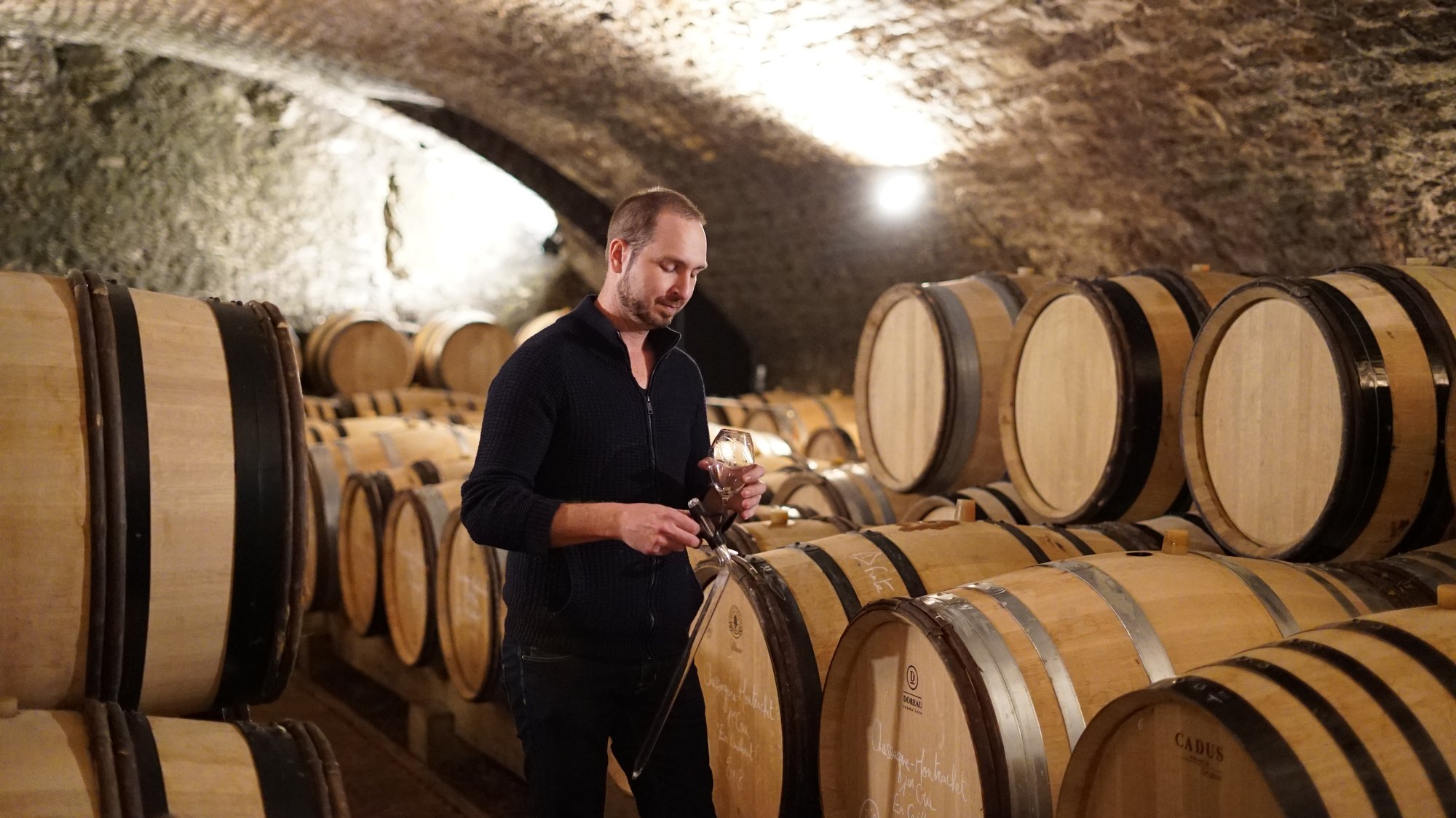
Domaine Fourrier has produced Gevrey-Chambertin from the same address since 1945, with Jean-Marie Fourrier directing a cellar programme built on extended élevage and restraint across a range of village, premier cru, and grand cru Pinot Noir. The domaine holds a Pearl 4 Star Prestige rating for 2025, placing it firmly within Gevrey's upper tier of allocation-led producers.
At a glance
- Price
- $$$$
- Neighborhood
- Gevrey-Chambertin
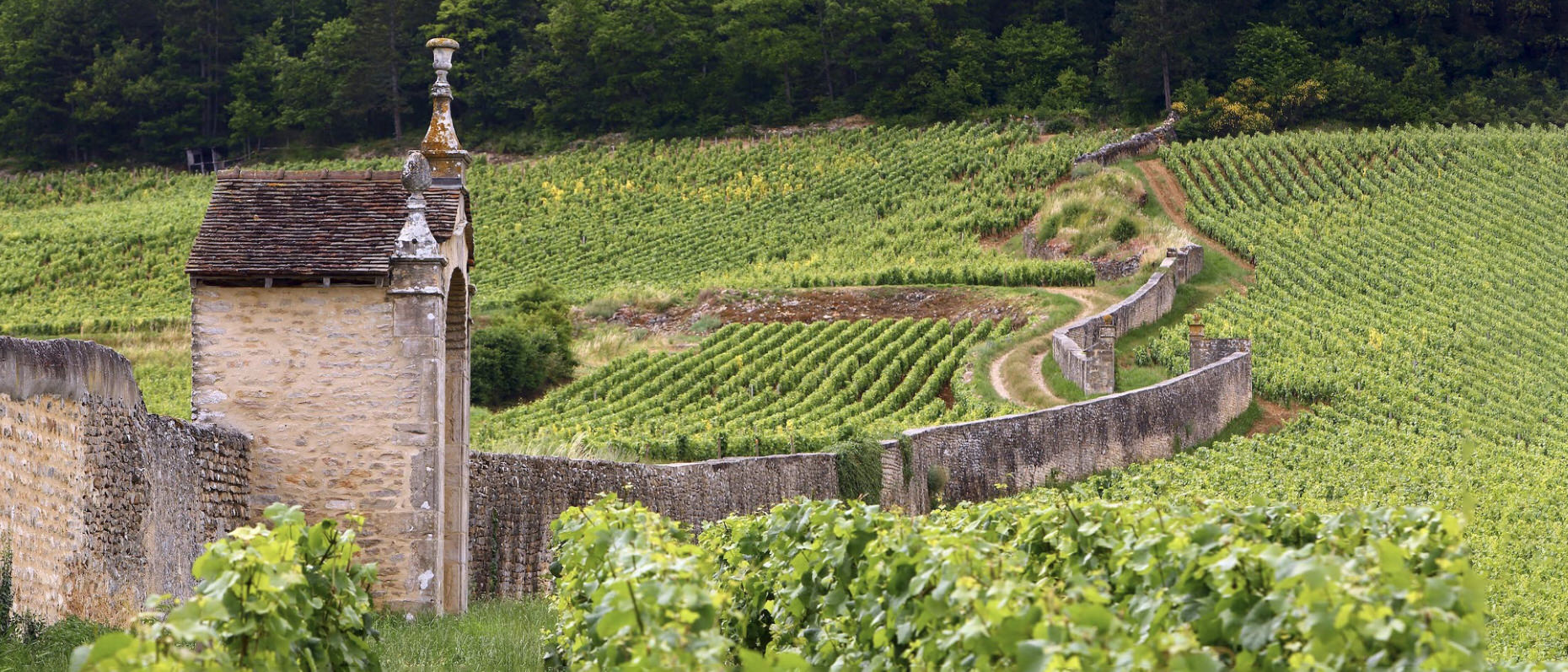
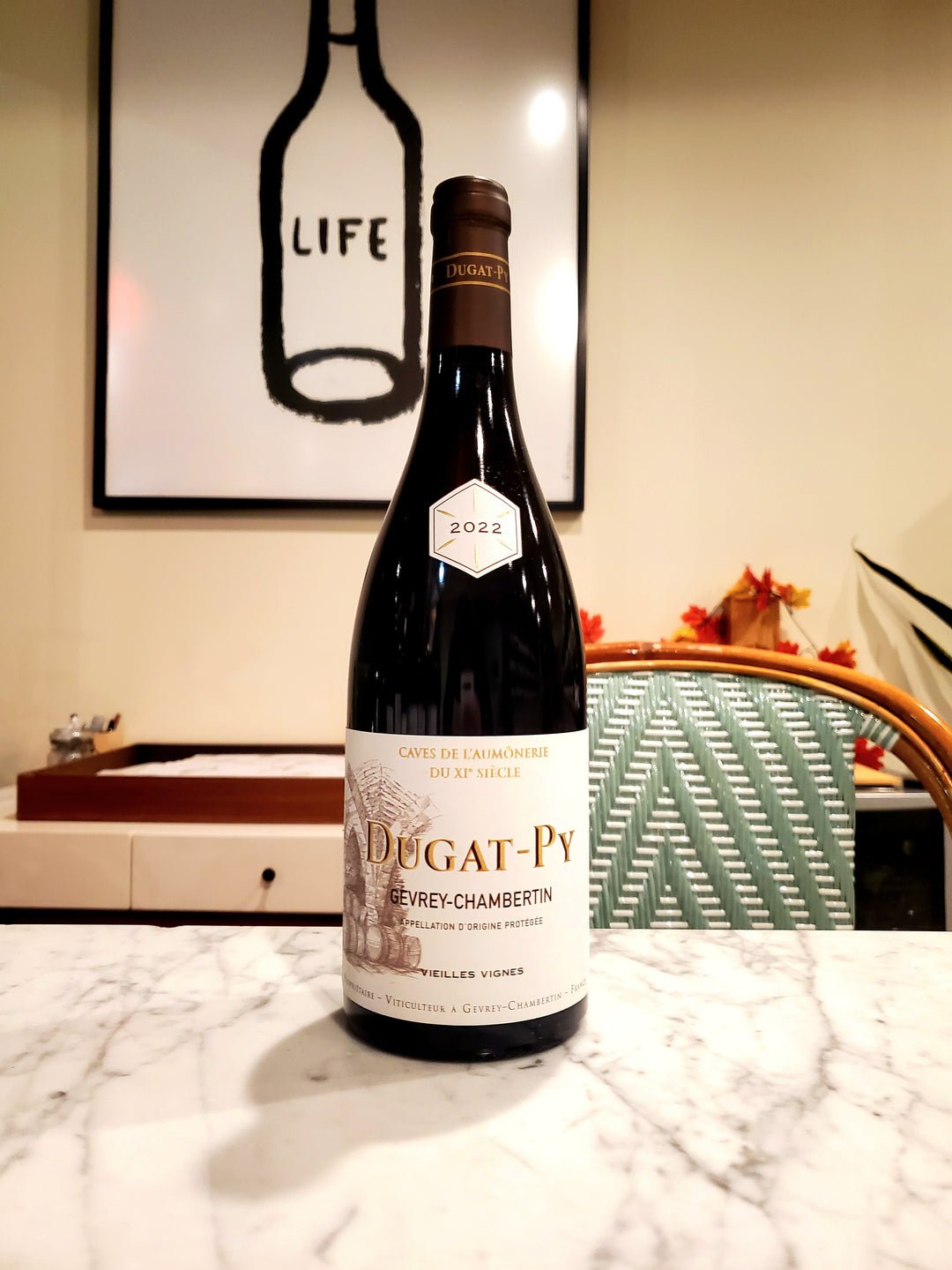
<h2>Where the Côte de Nuits Takes Its Time</h2><p>The Route de Dijon entering Gevrey-Chambertin from the north passes a sequence of low stone walls, metal gates, and unmarked doorways that conceal some of the most closely watched cellars in Burgundy. The village itself is compact — a few thousand residents, a single main road, the Romanesque church tower — but the density of serious domaines per hectare is unlike almost anywhere else in France. Domaine Fourrier sits on that approach road, at number 7, in a setting that gives nothing away. The exterior is quiet in the way that serious Burgundian cellars tend to be: the work happens below ground, and the wine does the communicating.</p><p>That quietness is not incidental. Gevrey-Chambertin produces more grand cru wine than any other appellation on the Côte de Nuits, and the village's reputation pulls a wide range of producers into the same postal code. Within that range, a smaller cohort has built its identity around what happens after harvest rather than marketing volume: long aging, minimal intervention, and allocation lists that move slowly. Domaine Fourrier belongs to that cohort, and its 2025 Pearl 4 Star Prestige rating positions it inside the appellation's upper tier alongside estates including <a href="https://www.enprimeurclub.com/wineries/domaine-dugat-py-gevrey-chambertin-winery">Domaine Dugat-Py</a>, <a href="https://www.enprimeurclub.com/wineries/domaine-drouhin-laroze-gevrey-chambertin-winery">Domaine Drouhin-Laroze</a>, and <a href="https://www.enprimeurclub.com/wineries/domaine-duroché-gevrey-chambertin-winery">Domaine Duroché</a>.</p><h2>Eighty Years of Continuous Harvest</h2><p>The domaine's first vintage dates to 1945, which places it among the longer-running family operations in a village where continuity is itself a credential. In Gevrey-Chambertin, depth of archive matters: it means the vines are older, the cellar has more reference points, and the producer has made decisions across enough vintages to understand what the specific parcels actually do rather than what the appellation theoretically produces. Jean-Marie Fourrier now directs the cellar, working with that accumulated parcel knowledge and a production philosophy oriented around the élevage period rather than the harvest itself.</p><p>That orientation is common among Burgundy's most closely followed smaller domaines, but it requires discipline to execute consistently. The temptation in high-demand appellations is to shorten aging in response to commercial pressure. The estates that resist that pressure, including <a href="https://www.enprimeurclub.com/wineries/domaine-henri-rebourseau-gevrey-chambertin-winery">Domaine Henri Rebourseau</a> and <a href="https://www.enprimeurclub.com/wineries/domaine-joseph-roty-gevrey-chambertin-winery">Domaine Joseph Roty</a> at the village level, tend to build longer mailing lists and draw the kind of collector attention that compounds over time.</p><h2>The Cellar Logic: Barrel Selection and Élevage</h2><p>In a cellar programme built around aging decisions, the barrel selection process functions as the first critical editorial choice. Gevrey's leading producers generally work with a combination of new and used oak, calibrating the proportion by parcel and vintage weight. At domaines of this tier, the grand cru parcels typically see a higher proportion of new wood, while village and premier cru wines age in older barrels where the fruit rather than the oak carries the argument. The aging period itself at serious Gevrey estates tends to run between 16 and 22 months, with the exact timeline responding to the structure of the individual vintage.</p><p>What distinguishes the post-harvest programme at allocation-tier Burgundy producers is not any single decision but the consistency of the logic applied across the range. A village Gevrey-Chambertin and a premier cru Cherbaudes from the same producer should read as part of the same conversation, with the village wine offering access to the house style and the premier cru adding site specificity. Fourrier's range operates across that hierarchy, from village appellation through named premier cru parcels, with the full range expressing what a single cellar intelligence can produce across different land classifications within the same commune.</p><p>For context on how this cellar approach compares across French wine regions, producers such as <a href="https://www.enprimeurclub.com/wineries/albert-boxler-niedermorschwihr-winery">Albert Boxler in Niedermorschwihr</a> apply analogous patience to Alsatian grand cru, while in the Sauternes appellation, <a href="https://www.enprimeurclub.com/wineries/chateau-bastor-lamontagne">Château Bastor-Lamontagne in Preignac</a> represents a different set of barrel and aging decisions shaped by botrytis and sweetness rather than tannin and reduction. Left Bank Bordeaux producers including <a href="https://www.enprimeurclub.com/wineries/chateau-batailley-pauillac-winery">Château Batailley in Pauillac</a> and <a href="https://www.enprimeurclub.com/wineries/chateau-branaire-ducru-st-julien">Château Branaire Ducru in St-Julien</a> operate élevage programmes of comparable length, though within a Cabernet Sauvignon-dominant framework that demands different oak management. Right Bank estates such as <a href="https://www.enprimeurclub.com/wineries/chateau-belair-monange-saint-emilion-winery">Château Bélair-Monange in Saint-Emilion</a> and <a href="https://www.enprimeurclub.com/wineries/chateau-boyd-cantenac-cantenac-winery">Château Boyd-Cantenac in Cantenac</a> round out the comparative picture of how cellar time is weighted differently across France's appellations.</p><h2>Visiting Gevrey-Chambertin: What the Village Asks of You</h2><p>Gevrey-Chambertin is not a village that accommodates walk-in visits. The serious domaines here operate primarily through allocation lists and pre-arranged appointments, and the village's proximity to Dijon , approximately 12 kilometres south via the D974 , makes it accessible enough to reach in under 20 minutes by car, but that access does not translate into casual entry at the cellar door. Visitors who want time with producers of this tier need to plan well in advance, particularly around the harvest period in September and October when cellars are closed to visitors entirely, and again in spring when the bottling and racking schedules dominate the team's attention.</p><p>The most productive visiting window for Gevrey-Chambertin's leading domaines tends to be the quieter months between November and February, when the cellar work allows more space for conversation and the wines are in a stage of aging that makes barrel sampling meaningful. This is also when the village itself operates at its own pace: fewer tourists, open tables at the local restaurants, and the kind of direct access to producers that disappears by late spring once the allocation and en primeur calendar accelerates. For a broader orientation to the village's dining and hospitality offer, see <a href="https://www.enprimeurclub.com/cities/gevrey-chambertin">our full Gevrey-Chambertin guide</a>.</p><h2>Position in the Peer Set</h2><p>Gevrey-Chambertin has a wider spread of producer quality than any other Côte de Nuits village, partly because the volume of grand cru land has attracted a larger total number of domaines. Within that spread, the upper tier is loosely defined by allocation demand, aging programme seriousness, and critical recognition over multiple vintages. Fourrier's Pearl 4 Star Prestige rating for 2025 places it in that upper bracket, where it competes for collector attention with estates whose names carry longer international recognition, including Domaine Armand Rousseau, Domaine Denis Mortet, and Domaine Rossignol-Trapet.</p><p>What separates the allocation-tier producers from the broader field is less the raw quality of their land, since Gevrey has premier and grand cru parcels spread across many different owners, and more the consistency of cellar decision-making across difficult vintages. The 2021, 2017, and 2013 vintages, all of which presented significant challenges for Côte de Nuits producers, serve as the most useful reference points for assessing how a cellar performs when the raw material is not cooperative. Domaines with strong track records across those three vintages have earned their allocation status rather than inherited it. For comparison with other aged-spirit and long-élevage producers outside Burgundy, <a href="https://www.enprimeurclub.com/wineries/aberlour-aberlour-winery">Aberlour in Aberlour</a> and <a href="https://www.enprimeurclub.com/wineries/chartreuse-voiron-winery">Chartreuse in Voiron</a> represent analogous patience-over-volume philosophies in their respective categories, as does <a href="https://www.enprimeurclub.com/wineries/accendo-cellars">Accendo Cellars in St. Helena</a> within Napa's own allocation-led tier.</p><h2>Practical Notes for Planning</h2><p>Domaine Fourrier is located at 7 Route de Dijon, 21220 Gevrey-Chambertin. Visits are by appointment only; contact details are leading sourced through the domaine's importer in your market, as the domaine does not maintain a public-facing web or phone listing in the current database. The village is served by the Dijon-Mâcon rail corridor, with Gevrey-Chambertin having its own TGV-accessible station via connecting services from Dijon. If you are building a broader Côte de Nuits itinerary, Gevrey pairs logistically with Morey-Saint-Denis to the south and Fixin to the north, both reachable within a short drive along the D974.</p><h2>Frequently Asked Questions</h2><dl><dt><strong>What should I taste at Domaine Fourrier?</strong></dt><dd>The range runs from village Gevrey-Chambertin through named premier cru parcels, giving visitors the opportunity to trace how Jean-Marie Fourrier's cellar approach scales with land classification. The premier cru wines are the clearest expression of what extended élevage and parcel-specific decision-making produce within the appellation, and they carry the Pearl 4 Star Prestige 2025 recognition as a baseline credential for the range as a whole.</dd><dt><strong>What should I know about Domaine Fourrier before I go?</strong></dt><dd>Visits require a pre-arranged appointment and are not available on a walk-in basis, which is standard practice among Gevrey-Chambertin's upper-tier domaines. The domaine is located on the Route de Dijon at the village's northern approach, a short drive from central Gevrey. The Pearl 4 Star Prestige rating for 2025 places it within the appellation's most closely watched producers, so allocation access and visit availability should both be arranged well in advance through an importer or specialist retailer.</dd><dt><strong>How far ahead should I plan for Domaine Fourrier?</strong></dt><dd>For a visit during the productive November-to-February window, three to six months of lead time is a reasonable planning horizon when working through an importer contact. Allocation purchases require being on a mailing list, which typically involves an established commercial relationship rather than a single visit. The domaine does not publish a public website or phone number, so the importer channel is the primary access point for both visit requests and wine enquiries.</dd><dt><strong>How does Domaine Fourrier's 1945 founding vintage affect the wines today?</strong></dt><dd>A continuous production history dating to 1945 means the domaine has worked the same parcels across eight decades of growing seasons, accumulating parcel-level knowledge that younger estates cannot replicate from records alone. Older vines in premier and grand cru plots contribute lower yields and greater concentration, which reinforces the cellar's aging-oriented programme. This depth of archive is one of the factors that places Fourrier, alongside peers such as <a href="https://www.enprimeurclub.com/wineries/domaine-dugat-py-gevrey-chambertin-winery">Domaine Dugat-Py</a>, within Gevrey-Chambertin's most historically grounded producer tier.</dd></dl>
Know before you go
- Dress code
- smart_casual
- Reservations
- appointment_only
- Parking
- street
Frequently asked
What's Domaine Fourrier's location?
Domaine Fourrier is located at 7 Rte de Dijon, 21220 Gevrey-Chambertin, Gevrey-Chambertin.
What accolades does Domaine Fourrier have?
Domaine Fourrier has received recognition including: Pearl 4 Star Prestige (2025).
What should I taste at Domaine Fourrier?
The domaine's range runs across Gevrey-Chambertin village, premier cru, and grand cru levels, with Jean-Marie Fourrier's cellar programme placing particular weight on élevage decisions and barrel selection. Given the allocation-driven release model, what you taste depends largely on what the domaine makes available during a scheduled visit. Prioritise any premier cru parcels if they are poured — they illustrate the house approach to Gevrey's mid-tier terroirs more clearly than the village wines do. The 2025 Pearl 4 Star Prestige rating signals the current releases as a reference point for the estate's standing.
What should I know about Domaine Fourrier before I go?
The domaine operates from 7 Route de Dijon in Gevrey-Chambertin, and visits are strictly by appointment — no walk-in access. Jean-Marie Fourrier runs a cellar programme rooted in a founding vintage of 1945, which places the operation among the longer-running family estates in the village. Contact details are best sourced through specialist Burgundy wine merchants or allocation agents, as the domaine does not publish a public-facing website. The 2025 Pearl 4 Star Prestige award is the current benchmark for the estate's position within the Côte de Nuits peer set.
How far ahead should I plan for Domaine Fourrier?
Serious Gevrey-Chambertin domaines at this level typically require several weeks of advance notice at minimum, and allocation-list producers often schedule visits months ahead around harvest and bottling cycles. Reaching out through a négociant or specialist importer who already holds a relationship with the estate is the most reliable path. Given the Pearl 4 Star Prestige recognition in 2025, demand for visit slots is not easing.
How does Domaine Fourrier's founding date compare to other producers in Gevrey-Chambertin?
With a first vintage recorded in 1945, Domaine Fourrier sits among the older continuous family operations in a village where multi-generational ownership is common but unbroken harvest records from the mid-twentieth century are less so. That continuity under Jean-Marie Fourrier carries weight in Gevrey-Chambertin, where institutional knowledge of individual parcel behaviour across decades directly informs cellar decisions. The 2025 Pearl 4 Star Prestige award reflects the estate's current standing, not merely its history.
Address
7 Rte de Dijon, 21220 Gevrey-Chambertin
Gevrey-Chambertin · Burgundy