Restaurant
Le Grand Restaurant
Two Michelin stars, a 97-point La Liste score, and a Gault & Millau rating of 19.5 place Le Grand Restaurant firmly at the top tier of Paris's contemporary French dining scene. Located steps from the Élysée Palace in the 8th arrondissement, Jean-François Piège's flagship operates Tuesday through Friday evenings with Thursday and Friday lunch service, in a modernist interior where design and cooking arrive with equal conviction.
- 2 Michelin Stars
At a glance
- Cuisine
- Modern French Fine Dining
- Price
- $$$$
- Per person
- $260
- Hours
- Mon: 6–10 PM; Tue: 6–10 PM; Wed: 6–10 PM; Thu: 12:30–3 PM, 7–10 PM; Fri: 12:30–3 PM, 7–10 PM; Sat: 6–10 PM; Sun: Closed
- Neighborhood
- Golden Triangle
- Rating
- 4.4 (485)
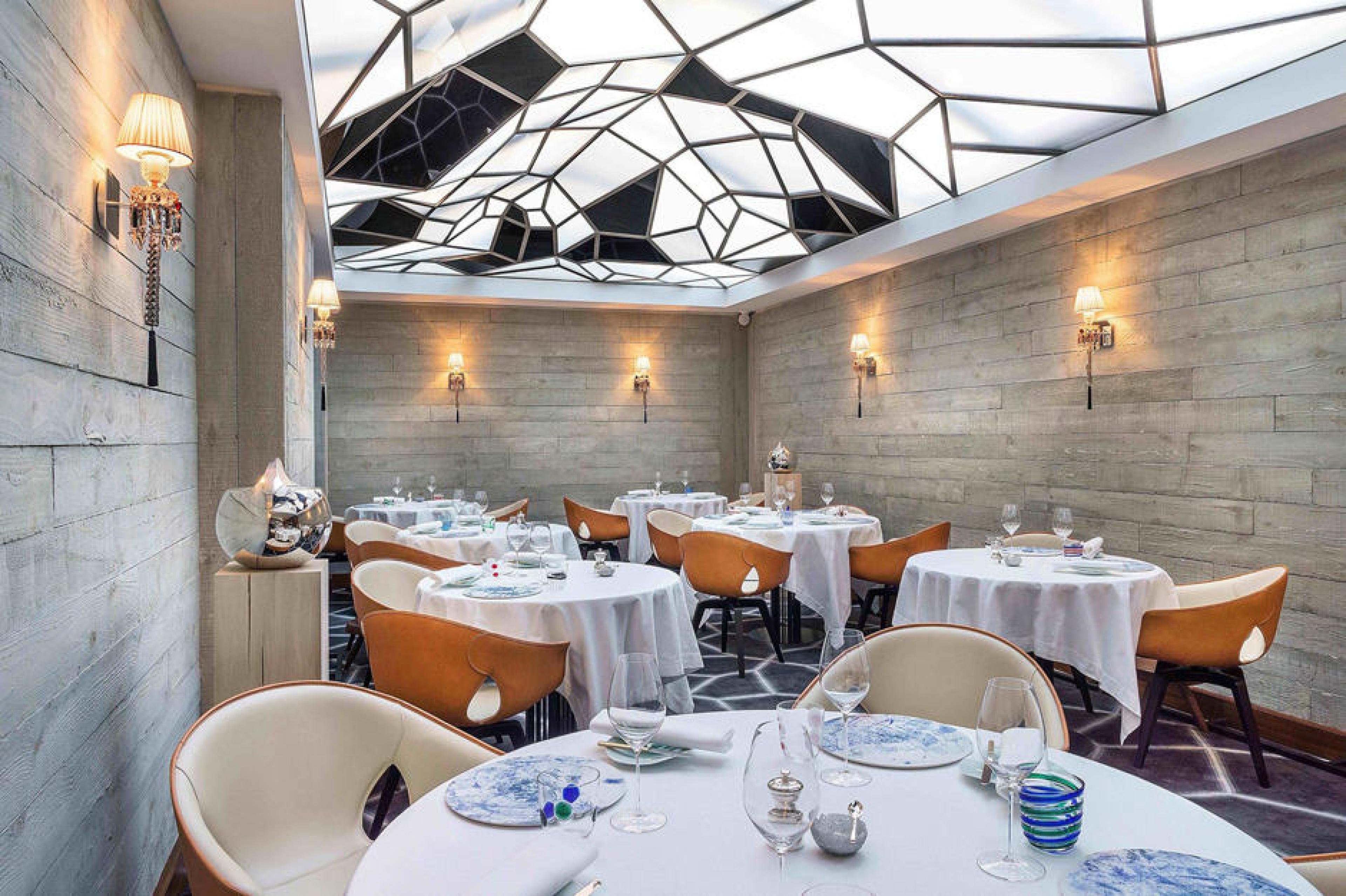
<h2>Where Modernism Sets the Table</h2><p>The 8th arrondissement has long been the address of institutional French dining, a neighbourhood where grand hotels and centuries-old reputation tend to anchor the culinary conversation. Within that context, Le Grand Restaurant at 7 Rue d'Aguesseau occupies an interesting position: a few steps from the Élysée presidential palace, it operates with the seriousness and ambition of a grande maison while making a deliberate argument for the contemporary. From the carpet to the ceiling, the interior prioritises modernism over nostalgia. The glassware is overscale and considered. Nothing here gestures toward the Belle Époque.</p><p>That physical clarity sets up the meal accurately. This is not a restaurant where tradition is the frame of reference; it is a room where the chef's creative position is the frame of reference, and the space has been designed to hold that weight.</p><h2>Jean-François Piège and the Logic of the Auteur Kitchen</h2><p>Paris's two-Michelin-star tier is occupied by a range of kitchens, each with a different proposition. Some emphasise the classical French canon; others, like <a href="https://www.enprimeurclub.com/restaurants/plenitude-paris-restaurant">Plénitude</a>, work at the intersection of classical rigour and ingredient purity. The most interesting restaurants in this bracket tend to have a distinct internal logic, a point of view that makes the menu legible beyond individual dishes.</p><p>At Le Grand Restaurant, that logic belongs to Jean-François Piège, whose Gault & Millau score of 19.5 and five chef's hats represent among the highest marks awarded by that guide in France. The kitchen produces combinations that read as precisely authored: Norway lobster worked with an infusion of East Indian cherry flour; sweetbreads set against crispy artichokes and a truffle reduction; a succession of vegetables constructed with the kind of technical depth usually reserved for protein-centred courses. The approach to what the kitchen calls modern stews, a format Piège has developed into a recurring signature, suggests a chef interested in transforming the familiar rather than abandoning it.</p><p>That position, contemporary without being iconoclastic, places Le Grand Restaurant in a different peer set from maximalist creative kitchens like Alléno Paris au Pavillon Ledoyen, and equally apart from the classicist rigour of L'Ambroisie. It sits in a middle lane that is harder to occupy than either extreme: demanding enough in execution to hold two Michelin stars, coherent enough in identity to score 97 points on La Liste's 2026 ranking.</p><h2>Recognition and Peer Context</h2><p>The award profile here is worth reading carefully. Two Michelin stars held across consecutive years, 2024 and 2025, indicate a kitchen operating with sustained consistency rather than a single exceptional moment. La Liste's 97-point placement in 2026 puts Le Grand Restaurant in the narrow bracket of restaurants that score above 95, a tier that globally contains fewer than two dozen addresses. Opinionated About Dining, the data-driven ranking that draws on a broad base of experienced critical diners rather than a single inspection body, placed the restaurant at number 42 in its Classical in Europe list in 2023, moving to 50 by 2025, a trajectory worth noting in a category where positions are contested and rarely ceded.</p><p>The sommelier programme has received its own recognition: Gault & Millau awarded Baptiste Cavagna the title of Sommelier of the Year, a signal that the wine service operates at a level equivalent to the kitchen. In Paris's top tier, where the gap between food and wine service can be significant, that parity matters.</p><p>For context on how this fits within France's broader two-star and three-star conversation, the country's highest-rated addresses span very different geographic and stylistic registers. <a href="https://www.enprimeurclub.com/restaurants/mirazur-menton-restaurant">Mirazur in Menton</a>, <a href="https://www.enprimeurclub.com/restaurants/flocons-de-sel-megeve-restaurant">Flocons de Sel in Megève</a>, and <a href="https://www.enprimeurclub.com/restaurants/troisgros-le-bois-sans-feuilles-ouches-restaurant">Troisgros in Ouches</a> each represent different expressions of the French kitchen's capacity for invention. Within Paris itself, the contemporary French category is crowded at the leading: <a href="https://www.enprimeurclub.com/restaurants/alain-ducasse-au-plaza-athenee-paris-restaurant">Alain Ducasse au Plaza Athénée</a>, Le Cinq at the Four Seasons George V, and <a href="https://www.enprimeurclub.com/restaurants/sur-mesure-paris-restaurant">Sur Mesure</a> all occupy proximate price and prestige territory. Le Grand Restaurant distinguishes itself through the specificity of Piège's authorial voice, which reads clearly across the menu without the theatrical framework some of those addresses deploy.</p><h2>The 8th and Its Dining Weight</h2><p>The 8th arrondissement concentrates more starred dining per square kilometre than almost any district in Europe. That density creates both credibility and pressure. A restaurant here is measured against immediate neighbours and the broader expectation that the address carries. The proximity to the Élysée is not incidental background; it reflects the neighbourhood's function as a stage for serious French hospitality, a character that goes back generations and shapes the clientele, the service register, and the unspoken expectations in the room.</p><p>Within that context, Le Grand Restaurant reads as a deliberate response to tradition rather than a product of it. The design choices, the scale of the ambition, and the award positioning all suggest a kitchen that is aware of its neighbourhood's weight and has chosen to engage with it on its own terms.</p><p>Readers planning a broader Paris dining itinerary across that tier might also consider <a href="https://www.enprimeurclub.com/restaurants/neige-d-ete-paris-restaurant">Neige d'Eté</a> and <a href="https://www.enprimeurclub.com/restaurants/maison-sota-atsumi-paris-restaurant">Maison Sota Atsumi</a> for kitchens working adjacent territory with different cultural inflections. France's classical tradition is also well represented beyond Paris at addresses like <a href="https://www.enprimeurclub.com/restaurants/paul-bocuse-lauberge-du-pont-de-collonges-collonges-au-mont-dor-restaurant">Paul Bocuse's Auberge du Pont de Collonges</a>, <a href="https://www.enprimeurclub.com/restaurants/bras-laguiole-restaurant">Bras in Laguiole</a>, and <a href="https://www.enprimeurclub.com/restaurants/auberge-de-lill-illhaeusern-restaurant">Auberge de l'Ill in Illhaeusern</a>, each of which represents a different chapter in how French haute cuisine has evolved regionally. Contemporary French cooking outside Paris also surfaces at <a href="https://www.enprimeurclub.com/restaurants/abbaye-de-la-celle-alain-ducasse-la-celle-en-provence-restaurant">Abbaye de la Celle</a> and <a href="https://www.enprimeurclub.com/restaurants/auberge-du-pere-bise-talloires-montmin-restaurant">Auberge du Père Bise</a>, both worth considering for a broader French itinerary.</p><h2>Planning Your Visit</h2><p>Le Grand Restaurant operates on a deliberately contained schedule. Dinner runs Tuesday through Friday from 6 to 10 pm; lunch is available Thursday and Friday only, with a single seating between 12:30 and 1:30 pm. The restaurant is closed Saturday and Sunday. That compressed service window, particularly the ninety-minute Friday lunch, reflects a kitchen managing quality across a tight frame rather than maximising covers. At this price point and recognition level, advance booking is advisable; the lunch slots in particular fill quickly given their scarcity.</p><p>The address is 7 Rue d'Aguesseau, 75008 Paris, within the 8th arrondissement's core and accessible from multiple Métro lines serving the Madeleine and Champs-Élysées corridors. Google review data across 468 responses sits at 4.4, consistent with a room that generates strong satisfaction among guests who have sought it out deliberately.</p><p>For further context on the Paris dining scene at this tier, see <a href="https://www.enprimeurclub.com/restaurants/paris">our full Paris restaurants guide</a>. For accommodation, <a href="https://www.enprimeurclub.com/hotels/paris">our Paris hotels guide</a> covers properties across the city. The city's bar scene, wine culture, and curated experiences are mapped in <a href="https://www.enprimeurclub.com/bars/paris">our Paris bars guide</a>, <a href="https://www.enprimeurclub.com/wineries/paris">our Paris wineries guide</a>, and <a href="https://www.enprimeurclub.com/experiences/paris">our Paris experiences guide</a>.</p><p><strong>Quick reference:</strong> Le Grand Restaurant, 7 Rue d'Aguesseau, 75008 Paris. Dinner Tue–Fri 6–10 pm; lunch Thu–Fri 12:30–1:30 pm. Closed Sat–Sun. Price range: €€€€.</p><h2>Frequently Asked Questions</h2><h3>What dish is Le Grand Restaurant famous for?</h3><p>Le Grand Restaurant does not anchor its identity to a single signature dish in the way some starred addresses do. The kitchen, awarded two Michelin stars and a Gault & Millau score of 19.5, is associated with a set of recurring creative directions: Norway lobster prepared with an infusion of East Indian cherry flour; sweetbreads paired with crispy artichokes and truffle reduction; and a format Piège has developed around modern stews, updating a deep-rooted French culinary tradition with precise contemporary technique. The Gault & Millau citation also references a treatment of vegetables given the same technical attention as the meat and fish courses. These combinations, rather than a single plated dish, define what the kitchen is known for among the critical guides and ranking bodies that have consistently recognised it.</p>
Know before you go
- Dress code
- smart_casual
- Reservations
- essential
- Payment
- credit_card
Frequently asked
When can I go to Le Grand Restaurant?
Hours at Le Grand Restaurant: Hours: Monday 6–10 pm Tuesday 6–10 pm Wednesday 6–10 pm Thursday 12:30–1:30 pm, 7–10 pm Friday 12:30–1:30 pm, 7–10 pm Saturday Closed Sunday Closed.
Who is the chef connected to Le Grand Restaurant?
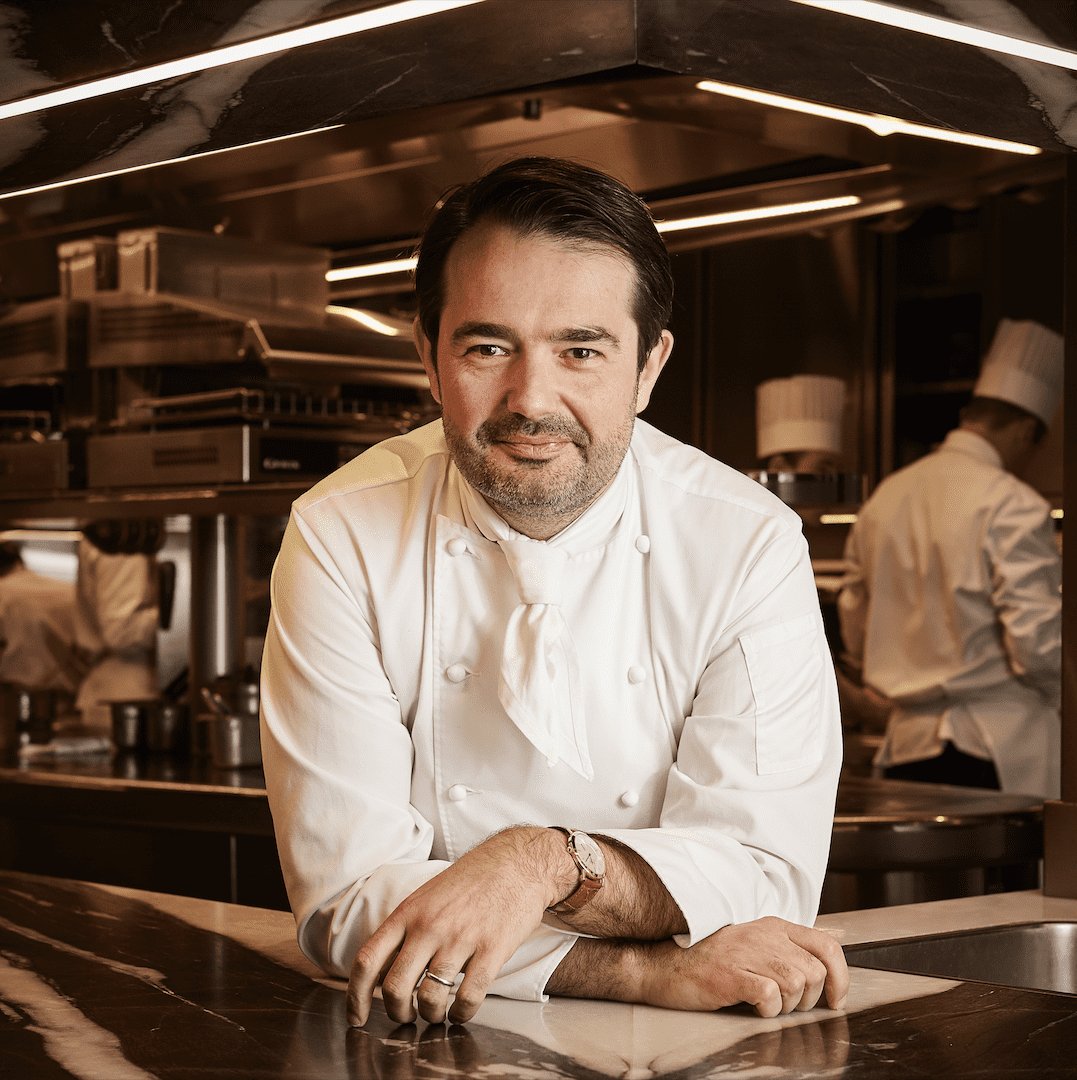
The chef associated with Le Grand Restaurant is Jean-François Piège.
What dish is Le Grand Restaurant famous for?
Le Grand Restaurant does not anchor its identity to a single signature dish. Jean-François Piège's kitchen, holding two Michelin stars consecutively through 2024 and 2025 and rated 19.5 by Gault & Millau, builds its reputation on combinations such as Norway lobster with an infusion of East Indian cherry flour, sweetbreads with crispy artichokes and truffle reduction, and what Gault & Millau describes as modern stews whose preparation Piège keeps closely guarded. The kitchen's logic is authorial rather than monument-driven: the menu shifts with Piège's current obsessions rather than a fixed house centrepiece.
Is Le Grand Restaurant focused on a specific cuisine style?
Le Grand Restaurant is categorized in our database as Contemporary French.
What's the price range at Le Grand Restaurant?
Pricing at Le Grand Restaurant is listed as €€€€.
What's the address for Le Grand Restaurant?
Le Grand Restaurant is located at 7 Rue d'Aguesseau, 75008 Paris, France, Paris.
Is Le Grand Restaurant award-winning?
Le Grand Restaurant has received recognition including: Only a few steps from the Elysée presidential palace in Paris, Le Grand Restaurant is one of the major works from Chef Jean-François Piège. The well-known chef has built his reputation and ’savoir-fai...; La Liste Top Restaurants (2026): 97….
Address
7 Rue d'Aguesseau, 75008 Paris, France
Golden Triangle
How it compares
- Cuisine
- Contemporary French
- Awards
- Only a few steps from the Elysée presidential palace in Paris, Le Grand Restaurant is one of the major works from Chef Jean-François Piège. The well-known chef has built his reputation and ’savoir-fai...; La Liste Top Restaurants (2026): 97pts; From plate to ceiling, from the carpet to the gigantic contemporary glassware, modernism reigns supreme. Just like the dishes of Jean-François Piège who, with 5 chef's hats and 19.5, belong to the top of Gault & Millau. The guide also gave the title of "Sommelier of the year" to sommelier Baptiste Cavagna. In the kitchen the chef creates combinations such as Norway lobster with an infusion of East Indian cherry flour; sweetbreads with crispy artichokes and reduction of truffle or also a thousand and one vegetables and other delicacies such as the modern stews of which he kept the secret.; Opinionated About Dining Classical in Europe Ranked #50 (2025); Chef: Jean-François Piège document.addEventListener("DOMContentLoaded", function() { var el = document.getElementById("Achievements_chefs"); if (el && el.parentNode) { el.parentNode.removeChild(el); } });; Michelin 2 Stars (2025); Opinionated About Dining Classical in Europe Ranked #45 (2024); Michelin 2 Stars (2024); Opinionated About Dining Classical in Europe Ranked #42 (2023)
- Notes
- This venue
Alléno Paris au Pavillon Ledoyen
- Cuisine
- Creative
- Awards
- Michelin 3 Star, World's 50 Best
- Notes
- Creative, €€€€
- Cuisine
- Contemporary French, Modern Cuisine
- Awards
- Michelin 3 Star, World's 50 Best
- Notes
- Contemporary French, Modern Cuisine, €€€€
- Cuisine
- French, Classic Cuisine
- Awards
- Michelin 3 Star, World's 50 Best
- Notes
- French, Classic Cuisine, €€€€
Le Cinq - Four Seasons Hôtel George V
- Cuisine
- French, Modern Cuisine
- Awards
- Michelin 3 Star, World's 50 Best
- Notes
- French, Modern Cuisine, €€€€
- Cuisine
- Contemporary French
- Awards
- Michelin 3 Star, World's 50 Best
- Notes
- Contemporary French, €€€€
In residence
Similar places
Vegetable-Focused French Fine Dining
Arpège
Paris, France
★★★ · 50 Best
Contemporary French Terroir
La Grenouillère
Paris, France
★★ · 50 Best
Avant-Garde French Fine Dining
Pierre Gagnaire
Paris, France
★★★ · 50 Best
Classic and Modern French Fine Dining
Le Taillevent
Paris, France
★★ · 50 Best
Classic French Fine Dining
Guy Savoy
Paris, France
★★ · 50 Best
Modern French Sauce-Led Fine Dining
Plénitude
Paris, France
★★★ · 50 Best