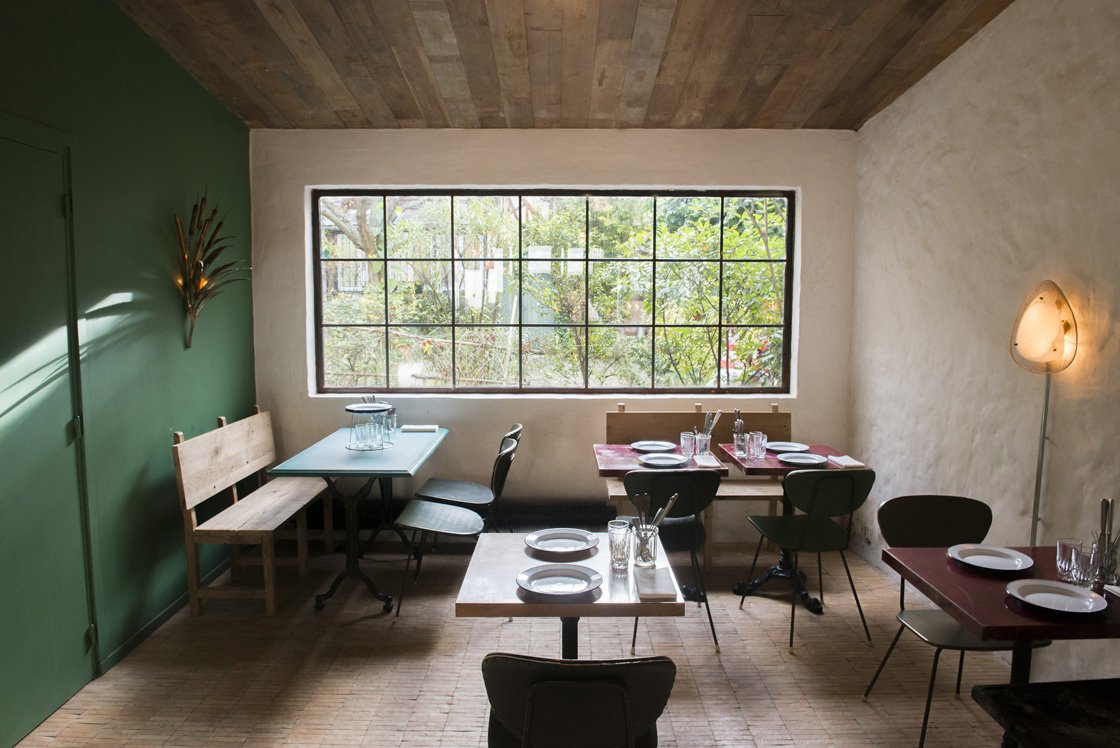
Restaurant
l'Impératif d'Éole
Sited within the Chant d'Éole wine estate in rural Hainaut, l'Impératif d'Éole earned its first Michelin star in 2025 under chef Daniel Zeindlhofer. The rooftop dining room, with its gilded sculptural tree and glass-fronted wine cellar, frames a Franco-Belgian wine list alongside contemporary French cooking that draws on North Sea produce and broader global reference points. At the €€€ price tier, it occupies a distinctive position among Belgium's Michelin-starred restaurant circuit.
- 1 Michelin Star
At a glance
- Cuisine
- Modern French Contemporary
- Price
- $$$$
- Per person
- $130
- Hours
- Mon: Closed; Tue: Closed; Wed: 7–9 PM; Thu: 12–2:30 PM, 7–9 PM; Fri: 12–2:30 PM, 7–9 PM; Sat: 7–9 PM; Sun: 12–2:30 PM
- Neighborhood
- Quévy-le-Grand
- Rating
- 4.5 (74)
<h2>A Wine Estate Dining Room With Something to Prove</h2><p>The approach to l'Impératif d'Éole sets expectations that the kitchen then has to meet. Passing through the Chant d'Éole estate, visitors move by barrels of maturing wine before reaching the rooftop dining room — a space announced by a gold-toned sculptural tree and a glazed wine cellar that doubles as both aesthetic statement and working storage. In Belgian fine dining, the pairing of estate winery and destination restaurant is not common outside the larger Flemish properties; finding it in the Hainaut countryside, at Grand Route 58 in Quévy-le-Grand, makes this one of the more architecturally considered dining rooms in the region's €€€ tier.</p><p>That setting is not incidental. The Chant d'Éole estate is particularly associated with its sparkling wines, and the Franco-Belgian wine list that accompanies chef Daniel Zeindlhofer's menus is built directly from that estate identity. The relationship between land, cellar, and plate here is structural rather than decorative — the wine programme is not an afterthought curated from a regional distributor, but the primary produce of the ground the restaurant sits on.</p><h2>Terroir as a Starting Point, Not a Constraint</h2><p>What makes the cooking at l'Impératif d'Éole editorially interesting is that it operates from a terroir-anchored base while refusing to treat geography as a limit. Belgian fine dining has historically split between hyper-regional kitchens , rooted in Flemish or Walloon produce with minimal external reference , and internationalist menus that use Belgian ingredients as interchangeable components in a broader European contemporary idiom. Zeindlhofer's approach sits between those poles.</p><p>North Sea shrimp appears on the menu as a marker of coastal Belgian identity, the same produce that anchors kitchens from [Bartholomeus in Heist](https://www.enprimeurclub.com/restaurants/bartholomeus-heist-restaurant) to [Willem Hiele in Oudenburg](https://www.enprimeurclub.com/restaurants/willem-hiele-oudenburg-restaurant). But alongside it, Asian-influenced tuna preparations signal a broader reach. The willingness to move between regional specificity and global reference, within a single menu, is characteristic of a generation of European chefs for whom travel is a legitimate source of culinary vocabulary rather than a distraction from local identity. Zeindlhofer is explicit about that connection: the menu reflects the sourcing instincts developed through time spent cooking across different food cultures.</p><p>The sauces reinforce this reading. Smoked eel sauce flanking lacquered eel and quickly seared foie gras is not a neutral technique , it is a deliberate layering of North Sea product, classical French preparation, and intensive reduction work. That combination of ingredient provenance and technical ambition is a reasonable summary of what this kitchen is attempting at the Michelin one-star tier it entered in 2025.</p><h2>Where This Restaurant Sits in Belgian Fine Dining</h2><p>Belgium's Michelin-starred restaurant circuit is denser than its international reputation suggests. At the leading of the price range, kitchens like [Boury in Roeselare](https://www.enprimeurclub.com/restaurants/boury-roeselare-restaurant) operate at three stars and €€€€ pricing, while [Castor in Beveren](https://www.enprimeurclub.com/restaurants/castor-beveren-restaurant), [Cuchara in Lommel](https://www.enprimeurclub.com/restaurants/cuchara-lommel-restaurant), and [De Jonkman in Sint-Kruis](https://www.enprimeurclub.com/restaurants/de-jonkman-sint-kruis-restaurant) all hold two stars at the €€€€ tier. L'Impératif d'Éole at one star and €€€ represents a different access point to serious cooking , not a second-tier option, but a specific tier where ambition and value can coexist more comfortably than at the upper end of the range.</p><p>The comparison with [d'Eugénie à Emilie in Baudour](https://www.enprimeurclub.com/restaurants/deugnie-emilie-baudour-restaurant) is geographically logical given both restaurants' location in Hainaut province. Within Wallonia more broadly, the one-star tier at €€€ pricing is where most destination restaurants in this part of Belgium operate, making the peer set one defined less by proximity and more by format discipline and wine programme quality.</p><p>For context outside Belgium, [Odette in Singapore](https://www.enprimeurclub.com/restaurants/odette-singapore-restaurant) and [Amber in Hong Kong](https://www.enprimeurclub.com/restaurants/amber-hong-kong-restaurant) represent how the French Contemporary category operates at the leading of the international range, where multi-star recognition and metropolitan positioning combine with estate-level wine programmes. L'Impératif d'Éole is not competing in that bracket, but the category comparison is useful for travellers who follow French Contemporary cooking across geographies and want to calibrate expectations before visiting.</p><h2>The Wine Programme as the Differentiator</h2><p>Chant d'Éole's sparkling wines are the estate's signature, and the restaurant's wine list is built around that identity. Belgian sparkling wine occupies a smaller international profile than its quality merits , production volumes are modest, distribution is limited, and the category does not yet carry the shorthand recognition that Champagne or Franciacorta provides to diners who are not already familiar with Belgian appellations.</p><p>In that context, a restaurant that gives estate sparkling wine the same structural weight as the food programme is making a specific argument: that Hainaut sparkling wine can carry a fine-dining occasion. The Franco-Belgian composition of the broader wine list , extending beyond the estate's own production to reference points across France and Belgium , gives diners calibration without abandoning the estate emphasis. For wine-led travellers, this is worth factoring into the decision to visit: the cellar is a genuine part of the experience, not a backdrop.</p><p>For those wanting to explore the regional wine context further, [our full Quévy-le-Grand wineries guide](https://www.enprimeurclub.com/wineries/quevy-le-grand) covers the estate and its production in more detail.</p><h2>Planning a Visit</h2><p>L'Impératif d'Éole is at Grand Route 58, 7040 Quévy, in a rural section of Hainaut that requires a car or pre-arranged transfer from Mons, the nearest city of scale. The restaurant's Google rating sits at 4.4 across 58 reviews , a sample size that reflects its positioning as a destination rather than a high-traffic urban venue, and a score consistent with its Michelin one-star status awarded in the 2025 guide. Given the 2025 star recognition, advance booking is advisable; demand for newly starred restaurants in Belgium typically increases sharply in the months following announcement. The website and phone details are not currently listed in public records, so booking through the estate directly or via the Chant d'Éole contact channels is the most reliable approach.</p><p>The rooftop location and the overall format , wine estate, tasting-menu-adjacent cooking, formal dining room , place this outside the casual family dining bracket. It functions as a destination occasion restaurant for two to four covers, or for groups with a specific interest in Belgian wine and contemporary French cooking.</p><p>For broader trip planning in the area, [our full Quévy-le-Grand restaurants guide](https://www.enprimeurclub.com/restaurants/quevy-le-grand), [hotels guide](https://www.enprimeurclub.com/hotels/quevy-le-grand), [bars guide](https://www.enprimeurclub.com/bars/quevy-le-grand), and [experiences guide](https://www.enprimeurclub.com/experiences/quevy-le-grand) cover the wider locality. For those extending into Brussels, [Bozar Restaurant](https://www.enprimeurclub.com/restaurants/bozar-restaurant-brussels-restaurant) represents the capital's own intersection of cultural setting and serious cooking. Further afield in Wallonia, [L'Air du Temps in Liernu](https://www.enprimeurclub.com/restaurants/lair-du-temps-liernu-restaurant) operates in the two-star tier with a similarly terroir-conscious approach, offering a useful point of comparison for those building a multi-stop itinerary through Belgium's southern fine-dining circuit. [Zilte in Antwerp](https://www.enprimeurclub.com/restaurants/zilte-antwerp-restaurant) and [Hof van Cleve in Kruishoutem](https://www.enprimeurclub.com/restaurants/hof-van-cleve-floris-van-der-veken-kruishoutem-restaurant) extend the Belgian fine-dining map into Flanders for those covering more ground.</p><h2>Frequently Asked Questions</h2><h3>Would l'Impératif d'Éole be comfortable with kids?</h3><p>At the €€€ price point in a formal rooftop estate dining room in rural Hainaut, this is not a practical choice for young children.</p><h3>What's the overall feel of l'Impératif d'Éole?</h3><p>Quévy-le-Grand is agricultural Hainaut, not a destination that generates casual footfall , which means l'Impératif d'Éole operates entirely as a deliberate choice. The 2025 Michelin star and the €€€ price tier frame this as a serious occasion restaurant rather than a neighbourhood regular: a glazed wine cellar, a rooftop room, estate sparkling wines, and cooking with both regional rootedness and global reference points. It is the kind of place that repays the drive.</p><h3>What's the must-try dish at l'Impératif d'Éole?</h3><p>Order the eel preparation. Chef Daniel Zeindlhofer's lacquered eel with seared foie gras and smoked eel sauce appears in the Michelin recognition as a signature of the kitchen's technical range , it is where the French Contemporary cooking (a cuisine defined by classical technique applied to ingredient-driven menus) is most precisely expressed, and where the one-star credential is most legible on the plate.</p>
Know before you go
- Dress code
- smart_casual
- Reservations
- essential
- Parking
- on_site_lot
- Payment
- credit_card
- Outdoor seating
- Yes
Frequently asked
Would l'Impératif d'Éole be comfortable with kids?
This is a formal rooftop dining room on a wine estate, priced at €€€ and awarded a Michelin star in 2025. The setting, pace, and format are calibrated for adult guests, and the rural Hainaut location offers no obvious fallback if the evening goes sideways. Young children would find little accommodation here.
What's the overall feel of l'Impératif d'Éole?
The room is architectural rather than cosy: a glazed wine cellar and a gold ornamental tree anchor the interior, and the rooftop position looks out over the Chant d'Éole estate. Quévy-le-Grand generates no casual footfall, so every table has made a deliberate journey to be there. The tone is focused and occasion-driven rather than convivial.
What awards or recognition does l'Impératif d'Éole have?
l'Impératif d'Éole has received recognition including: Michelin 1 Star (2025); The impressive Chant d’Éole wine estate is particularly famous for its excellent sparkling wines. Benoît Neusy also offers visitors the chance of a gourmet experience in a luxurious rooftop location, where an ornamen….
What's the must-try dish at l'Impératif d'Éole?
The Michelin inspectors single out the lacquered eel with seared foie gras and smoked eel sauce as a benchmark preparation, and it earns that attention. It encapsulates what Chef Daniel Zeindlhofer does with French technique and North Sea produce in a single plate. Order it if it appears on the menu.
Address
Grand Route 58, 7040 Quévy, Belgium
Quévy-le-Grand
How it compares
- Cuisine
- French Contemporary
- Price
- €€€
- Awards
- Michelin 1 Star (2025); The impressive Chant d’Éole wine estate is particularly famous for its excellent sparkling wines. Benoît Neusy also offers visitors the chance of a gourmet experience in a luxurious rooftop location, where an ornamental gold-coloured tree and a glazed wine cellar immediately catch the eye. On your way into the restaurant, you will see the estate’s wines maturing in barrels. The Franco-Belgian wine list is perfectly paired with the chef’s versatile craftsmanship, which finds its source in his travels abroad. A dish of shrimps bears witness to his love of North Sea produce, while the Asian-inspired tuna demonstrates his passion for more exotic fare. An establishment which never fails to deliver a knockout blend of creativity and knowhow. The sauces are similarly inspired, like the smoked eel sauce that flanks lacquered eel and quickly seared foie gras. Generosity is at the core of this Michelin starred restaurant.
- Notes
- This venue
- Cuisine
- Modern Frlemish, Creative French
- Price
- €€€€
- Awards
- Michelin 3 Star
- Notes
- Modern Frlemish, Creative French, €€€€
- Cuisine
- French - Belgian, Classic Cuisine
- Price
- €€€€
- Awards
- Michelin 1 Star, World's 50 Best
- Notes
- French - Belgian, Classic Cuisine, €€€€
- Cuisine
- Modern Flemish, Creative
- Price
- €€€€
- Awards
- Michelin 2 Star
- Notes
- Modern Flemish, Creative, €€€€
- Cuisine
- French, Modern French
- Price
- €€€€
- Awards
- Michelin 2 Star
- Notes
- French, Modern French, €€€€
- Cuisine
- French-Belgian, Creative
- Price
- €€€€
- Awards
- Michelin 2 Star
- Notes
- French-Belgian, Creative, €€€€
In residence
Similar places
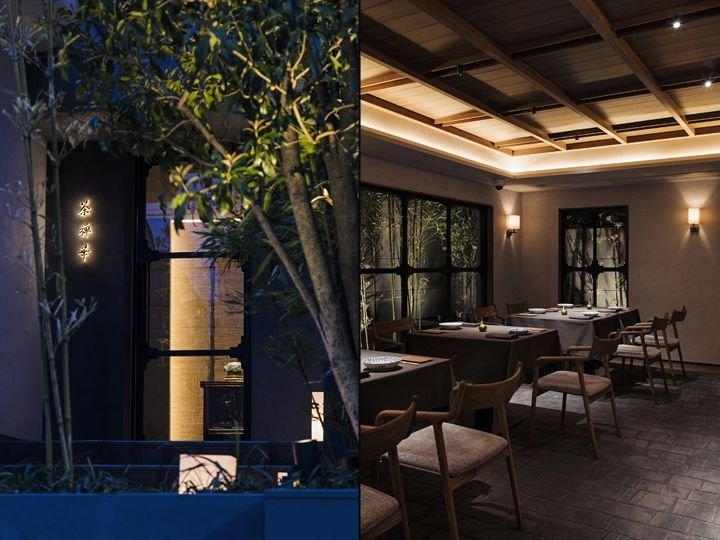
Modern Chinese Fine Dining
Sazenka
Tokyo, Japan
★★★ · 50 Best
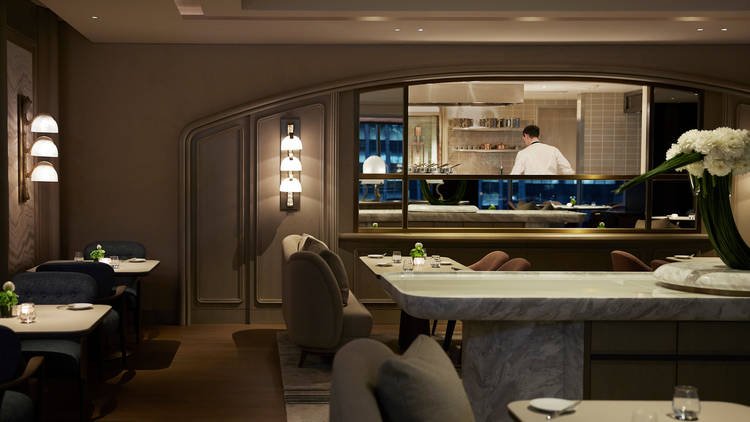
Sézanne
Tokyo, Japan
★★★ · 50 Best
Japanese-influenced Californian Kaiseki
Single Thread Farm
Healdsburg, United States
★★★ · 50 Best
French Seafood Fine Dining
Le Bernardin
New York City, United States
★★★ · 50 Best
Modern Korean Tasting Menu
Atomix
New York City, United States
★★ · 50 Best
Contemporary Plant-Based Fine Dining
Eleven Madison Park
New York City, United States
★★★ · 50 Best