Restaurant
Muromachi Wakuden
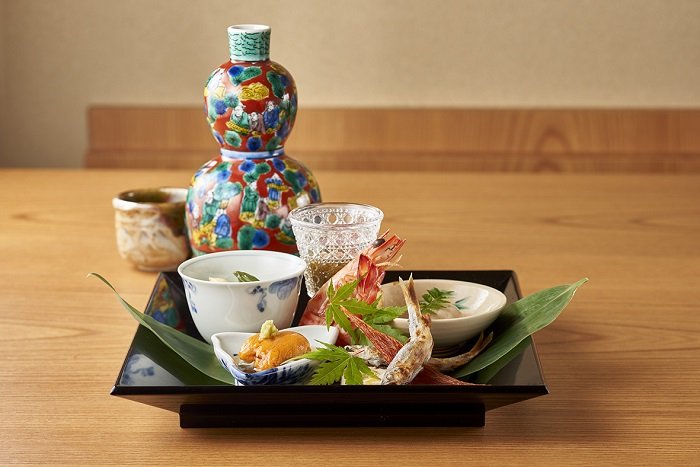
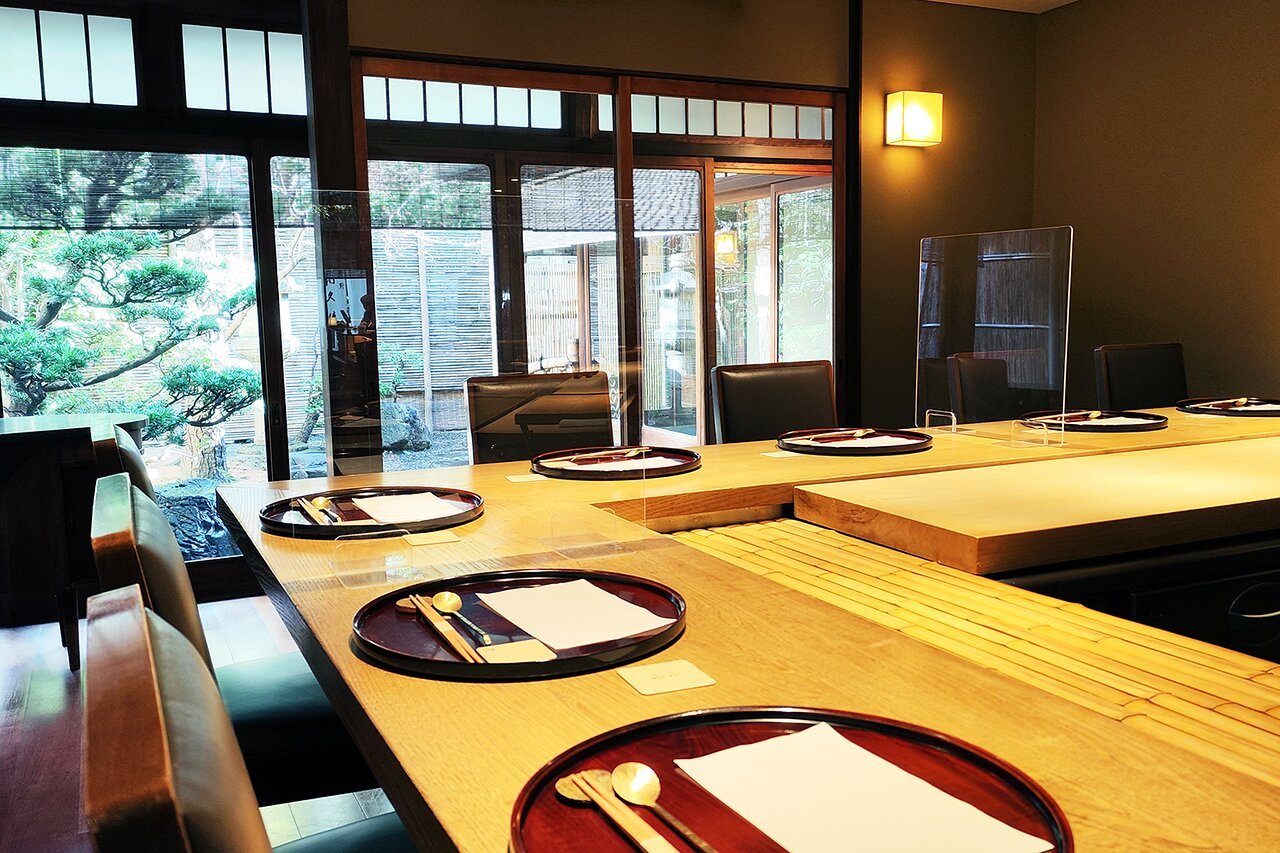
Established in 1870, Muromachi Wakuden occupies a Kyoto machiya townhouse in Nakagyo Ward, holding a Michelin star and consecutive Tabelog Bronze Awards from 2017 through 2026. The 50-seat room splits between a 15-seat counter and four private rooms, with kaiseki menus anchored to earthen charcoal braziers and seasonal produce from Kyotango. Lunch offers the more accessible entry point; dinner pushes toward the full ceremonial register.
- 1 Michelin Star
At a glance
- Cuisine
- Modern Kyoto Kaiseki Omakase
- Price
- $$$$
- Per person
- $130
- Hours
- Mon: 11:30 AM–3 PM, 5:30–10 PM; Tue: 11:30 AM–3 PM, 5:30–10 PM; Wed: Closed; Thu: 11:30 AM–3 PM, 5:30–10 PM; Fri: 11:30 AM–3 PM, 5:30–10 PM; Sat: 11:30 AM–3 PM, 5:30–10 PM; Sun: 11:30 AM–3 PM, 5:30–10 PM
- Neighborhood
- Nakagyo Ward
- Rating
- 4.5 (289)
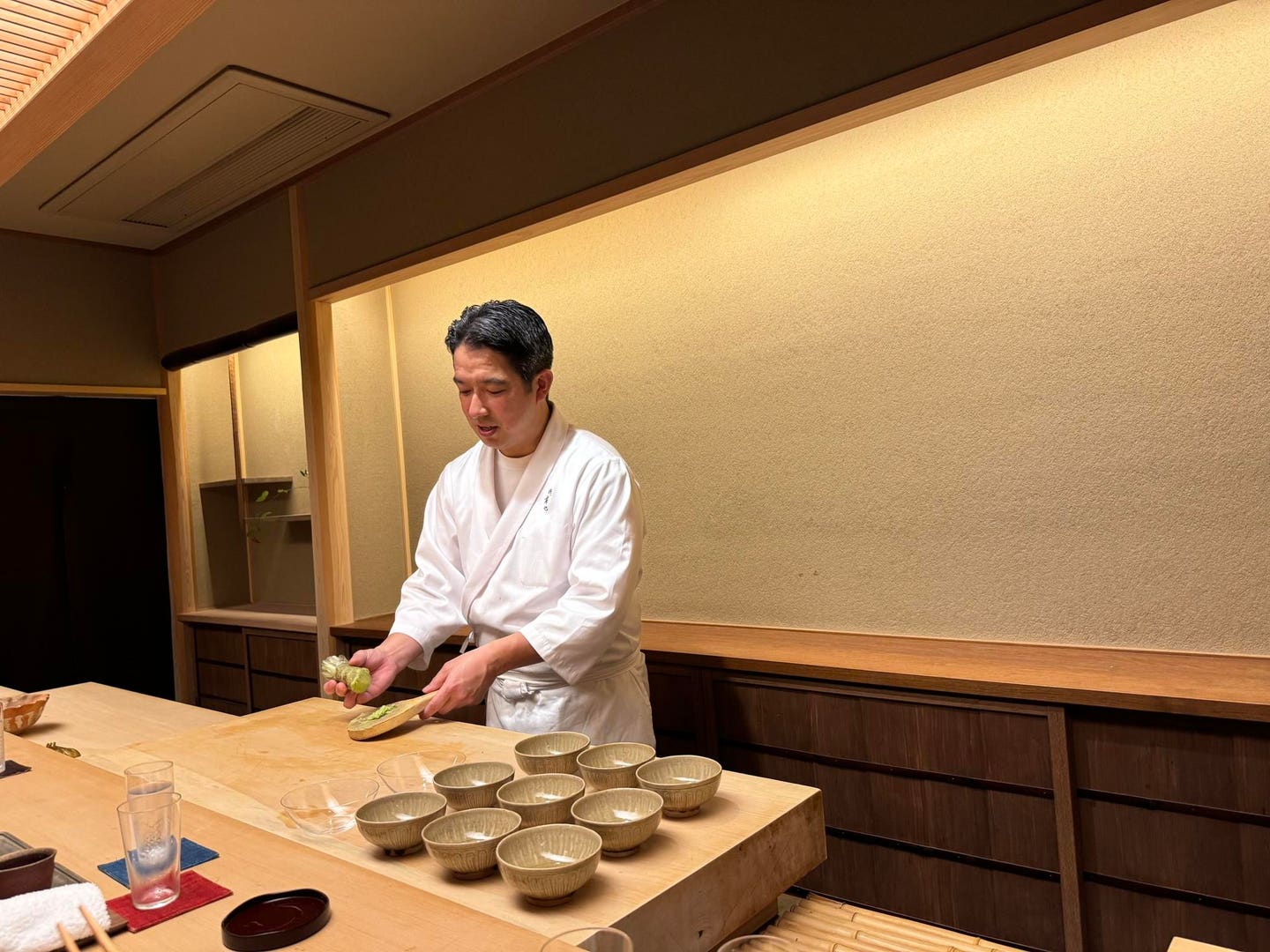
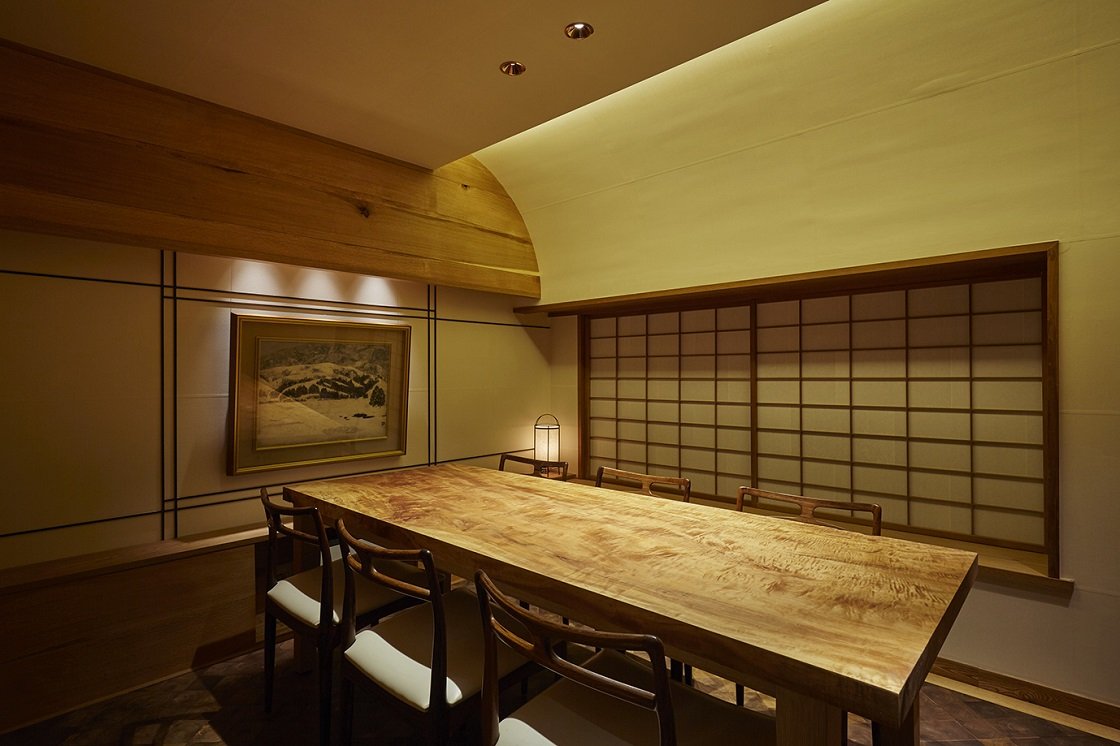
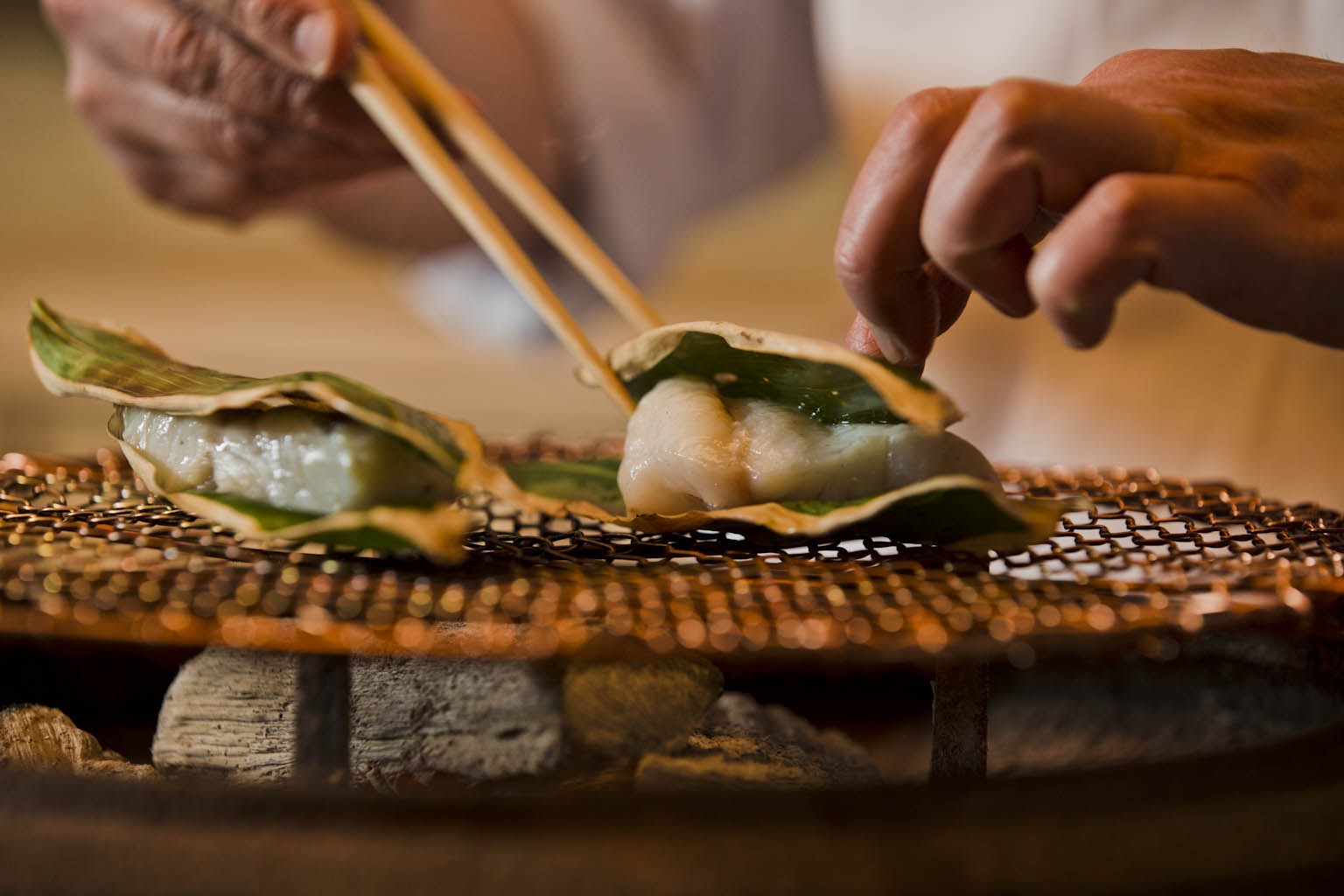
<h2>A Machiya Counter in Nakagyo: The Setting Before the First Course</h2><p>The kaiseki tradition in Kyoto has always been inseparable from architecture. The room frames the meal before a single dish appears, and at Muromachi Wakuden the room is a restored machiya townhouse on Sakaimachi-dori, a few minutes' walk east from Karasuma Oike station. The street itself is understated by Gion standards, which places this address in a quieter register than the high-profile corridors where many of the city's better-known ryotei compete for the same international reservation lists. Inside, 15 counter seats face the kitchen directly, where chefs work over earthen charcoal braziers in view of the room. Four fully enclosed private rooms accommodate groups of four to twenty. The configuration is typical of the mid-tier Kyoto ryotei format: a counter that rewards solo diners and couples with an unobstructed view of technique, and private rooms that suit corporate and family occasions where the food is secondary to the gathering.</p><h2>Established in 1870: What Longevity Signals in Kyoto Kaiseki</h2><p>Kyoto's kaiseki hierarchy is not principally a Michelin construct. The city's dining culture predates Western rating systems by centuries, and the restaurants that local diners place at the leading of the format, places like <a href="https://www.enprimeurclub.com/restaurants/hyotei-kyoto-restaurant">Hyotei</a> and <a href="https://www.enprimeurclub.com/restaurants/kikunoi-honten-kyoto-restaurant">Kikunoi Honten</a>, tend to carry institutional weight that awards bodies merely confirm. Muromachi Wakuden, founded in 1870, belongs to that category of restaurant where longevity is itself a credential. The Wakuden name has operated across multiple sites and formats in the city; the Muromachi address is the ryotei branch, positioned as the more formal, full-service expression of the house. A Michelin star held in 2024 and a Tabelog score of 4.18 (2026 cycle) place it inside the recognised tier without reaching the ¥¥¥¥ price bracket occupied by peers such as <a href="https://www.enprimeurclub.com/restaurants/gion-sasaki-kyoto-restaurant">Gion Sasaki</a> or Ifuki. That pricing gap is relevant: Muromachi Wakuden occupies the functional middle ground between entry-level kaiseki and the city's most expensive counters, which makes it a practical reference point when mapping the format's value range.</p><p>The awards record reinforces that positioning. Consecutive Tabelog Bronze Awards from 2017 through 2026 represent consistent peer-reviewed recognition over nearly a decade, a duration that filters out anomaly years and reflects structural quality rather than a single strong season. Selection for the Tabelog Japanese Cuisine WEST "Tabelog 100" in 2021, 2023, and 2025 adds a second data layer: this is not a venue riding a single cycle of attention. The Opinionated About Dining ranking placed it at number 143 among Japanese restaurants nationally in 2023, moving to 268 in 2025 — a shift that reflects the density of competition in the format more than any decline in the kitchen's output.</p><h2>Lunch Versus Dinner: Where the Real Decision Lies</h2><p>The question for most visitors to Kyoto's kaiseki tier is not whether to go, but which service to book. Muromachi Wakuden runs lunch from 11:30 with a last seating at 13:00, and dinner from 17:30 with a last seating at 19:30. The pricing gap between the two services is measurable: lunch runs JPY 15,000 to JPY 19,999 on the listed tariff, while dinner sits at JPY 20,000 to JPY 29,999. Review-based spending data suggests the actual dinner bill often reaches JPY 30,000 to JPY 39,999, likely reflecting drink additions and optional courses, while lunch averages closer to JPY 10,000 to JPY 14,999 in practice.</p><p>That gap matters because kaiseki at this level is structured around seasonal progression through eight to twelve courses, and the core architecture of the meal does not compress significantly between lunch and dinner. What changes is register: lunch service in a Kyoto ryotei tends to carry a lighter social weight, attracting a local business clientele and visitors who want the format without the full evening commitment. Dinner, by contrast, carries the ceremonial dimension that defines kaiseki in its classical sense — the slower pace, the deeper sake pairing engagement, and the full expression of the charcoal brazier cooking that the kitchen centres its identity around. For visitors making a single visit, dinner delivers more of the ritual context that distinguishes this format from other Japanese fine dining approaches. For those building a multi-day kaiseki itinerary across Kyoto, lunch here opens a cost-effective comparison point against the dinner pricing at <a href="https://www.enprimeurclub.com/restaurants/mizai-kyoto-restaurant">Mizai</a> or <a href="https://www.enprimeurclub.com/restaurants/gion-maruyama-kyoto-restaurant">Gion Maruyama</a>.</p><h2>The Kitchen's Approach: Earthen Braziers, Clay Pots, and Kyotango Produce</h2><p>Kaiseki in its current form has diverged into two broad schools: kitchens that emphasise plating precision and visual architecture borrowed from French technique, and those that hold to a more grounded reading of the format, where fire, seasonal produce, and restraint in presentation carry the weight. Muromachi Wakuden describes its guiding principle as "rustic beauty and cultured refinement" , a phrase that aligns it with the second school. Charcoal brazier cooking is performed in view of counter diners, and clay pot rice using grain sourced from Kyotango forms a structural element of the meal. Kyotango, on Kyoto Prefecture's northern coast, produces rice in a cooler microclimate; the detail is specific enough to indicate supply chain intentionality rather than generic locality sourcing. The kitchen's emphasis on fish and vegetables, with noted attention to seasonal produce, places crab as a recurring feature in the appropriate months, which the Tabelog category listing reflects directly.</p><p>This approach positions the counter differently from the more architecturally driven kaiseki work being done at places like <a href="https://www.enprimeurclub.com/restaurants/ryugin">RyuGin</a> in Tokyo or <a href="https://www.enprimeurclub.com/restaurants/kanda-tokyo-restaurant">Kanda</a>, both of which operate in the same kaiseki genre but with distinctly different visual and technical registers. For diners whose reference points extend further , to <a href="https://www.enprimeurclub.com/restaurants/hajime-osaka-restaurant">HAJIME in Osaka</a>, <a href="https://www.enprimeurclub.com/restaurants/akordu-nara-restaurant">akordu in Nara</a>, or <a href="https://www.enprimeurclub.com/restaurants/harutaka-tokyo-restaurant">Harutaka in Tokyo</a> , Muromachi Wakuden reads as the more traditional pole of the contemporary Japanese fine dining spectrum.</p><h2>Planning Your Visit: Logistics and Practical Comparison</h2><p>The restaurant operates Tuesday through Sunday (closed Wednesday), with both lunch and dinner services. Reservations are required, and the cancellation policy carries an 80% charge for same-day or prior-day cancellations, which is standard across Kyoto's reservation-only ryotei tier and worth noting for itinerary planning. English menus are available, and the drink programme pays deliberate attention to sake and wine selection. Counter seating is restricted to junior high school students and above; families with younger children are directed to the private rooms, which accommodate four to twenty guests and are available for full private buyouts up to fifty people.</p><p>From a transport perspective, the address sits approximately 342 metres from Karasuma Oike station on the Kyoto Municipal Subway Karasuma Line , five minutes on foot from exit 3-1. No dedicated parking is available, but coin parking and municipal underground parking are accessible nearby. Credit cards (Visa, Mastercard, JCB, Amex, Diners) are accepted; electronic money and QR code payments are not.</p><table><thead><tr><th>Venue</th><th>Cuisine Tier</th><th>Price Range (Dinner)</th><th>Counter Available</th><th>Tabelog Score</th></tr></thead><tbody><tr><td>Muromachi Wakuden</td><td>Kaiseki, ¥¥¥</td><td>JPY 20,000–29,999</td><td>Yes (15 seats)</td><td>4.18</td></tr><tr><td><a href="https://www.enprimeurclub.com/restaurants/gion-sasaki-kyoto-restaurant">Gion Sasaki</a></td><td>Kaiseki, ¥¥¥¥</td><td>Above JPY 30,000</td><td>Yes</td><td>N/A listed</td></tr><tr><td>Ifuki</td><td>Kaiseki, ¥¥¥¥</td><td>Above JPY 30,000</td><td>Yes</td><td>N/A listed</td></tr><tr><td><a href="https://www.enprimeurclub.com/restaurants/kikunoi-honten-kyoto-restaurant">Kikunoi Honten</a></td><td>Kaiseki, ¥¥¥¥</td><td>Above JPY 30,000</td><td>Yes</td><td>N/A listed</td></tr></tbody></table><h2>Frequently Asked Questions</h2><h3>What do regulars order at Muromachi Wakuden?</h3><p>The kaiseki format here is set-menu only, so the question of what to order resolves into when to visit and which service to book. Among the kitchen's consistent reference points are the charcoal brazier dishes prepared at the counter, the clay pot rice using Kyotango-sourced grain, and the crab preparations that feature when the season supports them , crab appears explicitly in the Tabelog category classification, which reflects its recurrence in the kitchen's seasonal rotation. The sake programme receives specific attention in the venue's own materials, and diners who engage with it at dinner will find it adds meaningfully to the bill relative to the listed tariff. For those visiting once, dinner at the counter gives the fullest access to the kitchen's live technique; for those building a broader kaiseki comparison across the city, the lunch pricing makes it a useful reference point alongside higher-tariff houses.</p><p>For broader context on where Muromachi Wakuden sits within the city's dining scene, see our <a href="https://www.enprimeurclub.com/restaurants/kyoto">full Kyoto restaurants guide</a>. Planning a longer stay? Our <a href="https://www.enprimeurclub.com/hotels/kyoto">Kyoto hotels guide</a>, <a href="https://www.enprimeurclub.com/bars/kyoto">Kyoto bars guide</a>, <a href="https://www.enprimeurclub.com/wineries/kyoto">Kyoto wineries guide</a>, and <a href="https://www.enprimeurclub.com/experiences/kyoto">Kyoto experiences guide</a> cover the full range of the city's premium options. Beyond Kyoto, comparable kaiseki and Japanese fine dining reference points include <a href="https://www.enprimeurclub.com/restaurants/goh-fukuoka-restaurant">Goh in Fukuoka</a>, <a href="https://www.enprimeurclub.com/restaurants/1000-yokohama-restaurant">1000 in Yokohama</a>, and <a href="https://www.enprimeurclub.com/restaurants/6-okinawa-restaurant">6 in Okinawa</a>.</p>
Know before you go
- Dress code
- smart_casual
- Reservations
- essential
- Payment
- credit_card
- Groups
- Welcomed
Frequently asked
Where do I go for Muromachi Wakuden?
Muromachi Wakuden is located at 679 Marukizaimokucho, Nakagyo Ward, Kyoto, 604-8106, Japan, Kyoto.
What kind of cuisine does Muromachi Wakuden serve?
Muromachi Wakuden is categorized in our database as Kaiseki, Japanese.
Is Muromachi Wakuden award-winning?
Muromachi Wakuden has received recognition including: {"Year":"2026","Award Source":"Tabelog","Award Type":"The Tabelog Award","Award Group":"bronze","Award Group Rank":"298","Restaurant Name":"Muromachi Wakuden","Score":"4.18","Budget":"Dinner: JPY 20,000 - JPY 29,999; Lunch: JPY 15,000 - JPY….
What do regulars order at Muromachi Wakuden?
The format is set-menu kaiseki only, so the choice is in timing rather than dishes. The kitchen is known for earthen charcoal brazier preparations and rice steamed in clay pots using Kyotango-grown grain, both cooked in front of guests. Dinner runs JPY 20,000–29,999 per person by posted pricing, with review data suggesting some meals reach JPY 30,000–39,999; lunch offers an accessible entry at JPY 10,000–14,999 by the same review benchmarks.
What's the pricing like at Muromachi Wakuden?
Pricing at Muromachi Wakuden is listed as ¥¥¥.
When is Muromachi Wakuden open?
Hours at Muromachi Wakuden: Hours: Monday 11:30 am–3 pm, 5:30–10 pm Tuesday 11:30 am–3 pm, 5:30–10 pm Wednesday Closed Thursday 11:30 am–3 pm, 5:30–10 pm Friday 11:30 am–3 pm, 5:30–10 pm Saturday 11:30 am–3 pm, 5:30–10 pm Sunday 11:30 am–3 pm, 5:30–10 pm.
Address
679 Marukizaimokucho, Nakagyo Ward, Kyoto, 604-8106, Japan
Nakagyo Ward
How it compares
- Price
- ¥¥¥
- Notes
- This venue
- Price
- ¥¥¥¥
- Notes
- Kaiseki, Japanese, ¥¥¥¥
- Price
- ¥¥¥
- Notes
- Italian, ¥¥¥
- Price
- ¥¥¥¥
- Notes
- Kaiseki, ¥¥¥¥
- Price
- ¥¥¥¥
- Notes
- Japanese, ¥¥¥¥
- Price
- ¥¥¥
- Notes
- Chinese, ¥¥¥