Restaurant
Shokudo Akari
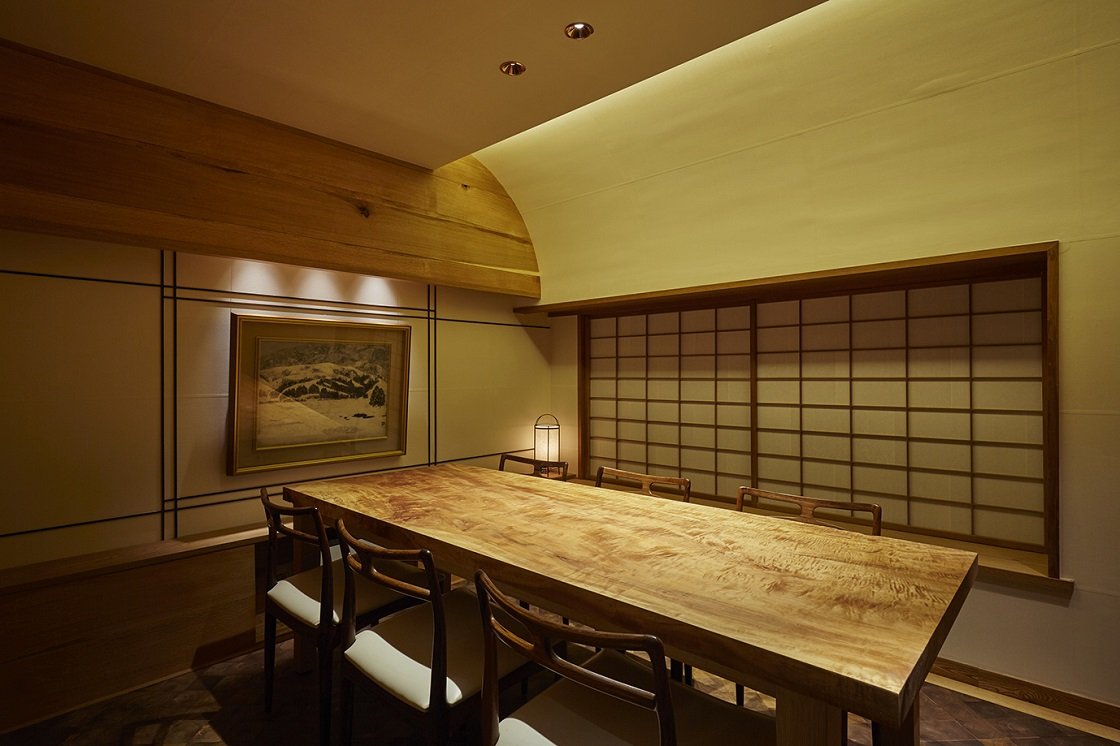
A Michelin Bib Gourmand izakaya in Osaka's Kita-Shinchi entertainment district, Shokudo Akari draws from the grilling traditions of Wakayama prefecture, using Kishu Bincho charcoal as the kitchen's backbone. The menu moves between regional comfort food and seasonal ingredients, anchored by a striking interior of criss-crossing wooden poles that reference the Oto Fire Festival. Google reviewers rate it 4.6 across 85 responses.
- Michelin Bib Gourmand
At a glance
- Cuisine
- Seasonal Wakayama Izakaya Omakase
- Price
- $$
- Per person
- $75
- Hours
- Mon: 6 PM–12 AM; Tue: 6 PM–12 AM; Wed: 6 PM–12 AM; Thu: 6 PM–12 AM; Fri: 6 PM–12 AM; Sat: 6–11 PM; Sun: Closed
- Neighborhood
- Sonezakishinchi, Kita-ku
- Rating
- 4.7 (94)
<h2>A Room Shaped by Ritual</h2><p>The first thing that registers on entering Shokudo Akari is the ceiling. Dozens of wooden poles cross and interlock overhead in a configuration that has nothing to do with structural engineering and everything to do with ceremony. They represent the handheld pine torches carried through the night at the Oto Fire Festival in Wakayama prefecture, one of Japan's oldest fire rituals, held every February 6 at Gobo City's Kamikura Shrine. In a city like Osaka, where izakayas frequently fall back on lanterns and wooden slats as shorthand for warmth, this is a more specific visual argument: the space is encoding a regional identity before a single dish arrives.</p><p>Kita-Shinchi, the entertainment district that surrounds the venue, is among the most concentrated eating-and-drinking zones in western Japan. Salarymen, late-night regulars, and visiting diners circulate between hundreds of counters and table-service rooms within a few city blocks. Izakayas at this address compete on atmosphere and kitchen precision in roughly equal measure. The 2025 Michelin Bib Gourmand recognition places Shokudo Akari in the upper band of value-to-quality performers in that crowd, a cohort defined by food that punches above its price tier rather than by ceremony or formality. The ¥¥ price range confirms the positioning: this is serious cooking at accessible spend.</p><h2>What the Menu Reveals</h2><p>Izakaya menus in Japan carry a structural logic that differs from the tasting-course model dominating the city's higher price brackets. At venues such as <a href="https://www.enprimeurclub.com/restaurants/hajime-osaka-restaurant">Hajime</a> or La Cime, the kitchen controls the sequence and the guest follows. An izakaya inverts that relationship: the table orders what it wants, when it wants, at a pace it sets. The menu is therefore a map of the kitchen's range rather than a curated argument. What distinguishes one izakaya from another, at any serious level, is whether that range has coherence or simply breadth.</p><p>At Shokudo Akari, the coherence comes from Wakayama. The menu holds recognisable izakaya staples — gingered chicken liver, potato salad, deep-fried horse mackerel — alongside seasonal preparations that shift with availability. What ties the familiar to the variable is the use of Kishu Bincho charcoal, the dense white charcoal produced from ubame oak in Wakayama's Kishū region and regarded as the reference-grade fuel for Japanese grilling. It burns at high, consistent heat with minimal smoke and no foreign flavour transfer, which means the ingredients carry without interference. This is not a decorative detail about provenance; it is a technical choice that shapes every dish that passes over the fire, from the humble to the seasonal.</p><p>The menu architecture here is less about hierarchy (starter, main, dessert) and more about register: there are comfort anchors you return to, and there are seasonal reasons to come back at different points in the year. That dual-track structure is common across Osaka's mid-range izakaya tier, but the Wakayama grounding gives this version a geographic specificity that most lack. Where a venue like <a href="https://www.enprimeurclub.com/restaurants/izakaya-tokitame-osaka-restaurant">Izakaya Tokitame</a> or <a href="https://www.enprimeurclub.com/restaurants/jizakeya-iwatsuki-osaka-restaurant">Jizakeya Iwatsuki</a> draws from the broader Kansai pantry, Shokudo Akari keeps returning to one prefecture's produce and technique as its organising principle.</p><h2>Osaka's Izakaya Tier: Where Akari Sits</h2><p>Osaka's dining identity is often framed around its enthusiasm for eating, but the more useful frame is its layered price structure. The city runs an unusually dense band of high-performing mid-range venues alongside the kaiseki and French fine-dining rooms that collect Michelin stars at the higher price points. <a href="https://www.enprimeurclub.com/restaurants/kannomiho-osaka-restaurant">Kannomiho</a>, <a href="https://www.enprimeurclub.com/restaurants/benikurage-osaka-restaurant">Benikurage</a>, and <a href="https://www.enprimeurclub.com/restaurants/daidokoro-kamiya-osaka-restaurant">Daidokoro Kamiya</a> each occupy corners of that mid-range band with different cuisine profiles. Shokudo Akari fits within it as the izakaya option with a demonstrable regional identity and Michelin recognition, which in Osaka's competitive field is a meaningful differentiator.</p><p>For comparison, the Bib Gourmand designation sits below the starred tier but above the general recommendations list , it specifically targets value, identifying kitchens where the quality-to-price ratio is notably strong. In a city with the restaurant density of Osaka, receiving it in 2025 confirms consistent performance rather than a single standout visit. Google's 4.6 rating from 85 reviews supports that consistency from a broader audience sample.</p><p>Visitors coming from other major Japanese cities will find useful points of contrast. The high-precision omakase culture of Tokyo, represented at venues such as <a href="https://www.enprimeurclub.com/restaurants/harutaka-tokyo-restaurant">Harutaka</a>, operates at an entirely different register , controlled sequence, high spend, formal service. Kyoto's kaiseki-dominant dining scene, anchored by places like <a href="https://www.enprimeurclub.com/restaurants/gion-sasaki-kyoto-restaurant">Gion Sasaki</a>, prioritises seasonal formality. Osaka's izakaya culture is the counterpoint to both: informal ordering, moderate price, a kitchen that has to earn repeat visits through consistency rather than ceremony. Those travelling the Kansai circuit alongside a Nara stop at <a href="https://www.enprimeurclub.com/restaurants/akordu-nara-restaurant">akordu</a> will find Shokudo Akari a useful register shift , same regional ingredients, different format discipline.</p><p>For reference on how the izakaya format translates beyond Japan, <a href="https://www.enprimeurclub.com/restaurants/berangkat-kyoto-restaurant">Berangkat in Kyoto</a> runs a hybrid take on the style, while <a href="https://www.enprimeurclub.com/restaurants/cube-by-mika-schwerin-restaurant">Cube by Mika in Schwerin</a> shows how the format has migrated internationally. Neither competes directly with a Kita-Shinchi original, but the comparison clarifies what makes an izakaya in its native context different from its exported interpretations.</p><h2>The Fire Festival Connection</h2><p>The Oto Fire Festival reference embedded in the interior design is not simply decorative. Every February 6, the chef makes the journey back to Wakayama to take part in the ritual itself. That annual return functions as a kind of calendar anchor for the restaurant's identity, tying the cooking to a living regional tradition rather than to a static aesthetic choice. It also means the Kishu Bincho charcoal, the Wakayama ingredients, and the fire-torch ceiling are parts of the same argument rather than unconnected design and sourcing decisions. For the diner, that coherence is legible even before reading a menu.</p><h2>Planning Your Visit</h2><p>Shokudo Akari is located on the second floor of the Jay Pride Kita-Shinchi 3rd Building at 1-6-27 Sonezaki-Shinchi, Kita Ward, Osaka 530-0002. The Kita-Shinchi area is walkable from Osaka Station and Umeda, making it a natural endpoint for an evening that starts elsewhere in the northern part of the city. Phone and booking method are not currently listed in the EP Club database; checking via a hotel concierge or a Japan-based reservation platform is advisable if you are visiting at peak evening hours on weekends.</p><table><thead><tr><th>Venue</th><th>Cuisine</th><th>Price Tier</th><th>Michelin Recognition</th><th>Booking Approach</th></tr></thead><tbody><tr><td>Shokudo Akari</td><td>Izakaya</td><td>¥¥</td><td>Bib Gourmand 2025</td><td>Contact details not listed</td></tr><tr><td>Kannomiho</td><td>Japanese</td><td>¥¥</td><td>Not listed</td><td>Check venue directly</td></tr><tr><td>Benikurage</td><td>Japanese</td><td>¥¥</td><td>Not listed</td><td>Check venue directly</td></tr><tr><td>Daidokoro Kamiya</td><td>Japanese</td><td>¥¥¥</td><td>Not listed</td><td>Check venue directly</td></tr></tbody></table><p>For a broader view of where Shokudo Akari sits in the city's dining field, see <a href="https://www.enprimeurclub.com/restaurants/osaka">our full Osaka restaurants guide</a>. If you are building a wider Osaka itinerary, <a href="https://www.enprimeurclub.com/hotels/osaka">our Osaka hotels guide</a>, <a href="https://www.enprimeurclub.com/bars/osaka">bars guide</a>, <a href="https://www.enprimeurclub.com/wineries/osaka">wineries guide</a>, and <a href="https://www.enprimeurclub.com/experiences/osaka">experiences guide</a> cover the full picture. For dining further afield in Japan, <a href="https://www.enprimeurclub.com/restaurants/goh-fukuoka-restaurant">Goh in Fukuoka</a>, <a href="https://www.enprimeurclub.com/restaurants/1000-yokohama-restaurant">1000 in Yokohama</a>, and <a href="https://www.enprimeurclub.com/restaurants/6-okinawa-restaurant">6 in Okinawa</a> offer reference points across the country's dining range.</p><h2>Frequently Asked Questions</h2><dl><dt><strong>What do people recommend at Shokudo Akari?</strong></dt><dd>The Michelin Bib Gourmand listing and the kitchen's documented use of Kishu Bincho charcoal point toward the grilled dishes as the core of the menu. The venue's Wakayama identity is embedded in the sourcing: the charcoal is the region's reference-grade fuel, and the chef returns annually to the Oto Fire Festival, suggesting grilled preparations are where the kitchen's regional commitment is most legible. Alongside those, the menu includes established comfort dishes such as gingered chicken liver, potato salad, and deep-fried horse mackerel, which function as the reliable anchors across any visit. Seasonal preparations rotate with availability.</dd><dt><strong>Do I need a reservation for Shokudo Akari?</strong></dt><dd>Kita-Shinchi is one of Osaka's densest dining districts, and a Michelin Bib Gourmand recognition in 2025 increases demand at a ¥¥ price point where walk-in competition is highest. Booking ahead is advisable, particularly on weekday evenings when the area draws significant post-work traffic. Phone and website details are not currently listed in the EP Club database; a hotel concierge or a Japan-based restaurant reservation platform is the practical route to securing a table.</dd></dl>
Know before you go
- Dress code
- casual
- Reservations
- essential
- Payment
- credit_card
Frequently asked
What type of food is Shokudo Akari known for?
Shokudo Akari is categorized in our database as Izakaya.
How much does it cost to eat at Shokudo Akari?
Pricing at Shokudo Akari is listed as ¥¥.
Does Shokudo Akari have a Michelin star or similar recognition?
Shokudo Akari has received recognition including: Akari shines out of a detached house in the entertainment district. The nest of criss-crossing wooden poles hung from the ceiling represent the handheld pine torches of the Oto Fire Festival in Wakayama, as well as the flame of the chef’s p….
What do people recommend at Shokudo Akari?
The kitchen covers a range running from gingered chicken liver and potato salad to deep-fried horse mackerel, alongside rotating seasonal dishes. Grilled items are the consistent draw: the chef uses Kishu Bincho charcoal, a hardwood charcoal from Wakayama prized for its steady, high heat and minimal smoke. The Michelin Bib Gourmand recognition in 2025 reflects the kitchen's consistency across that full spread, not a single signature dish.
Where do I go for Shokudo Akari?
Shokudo Akari is located at Japan, 〒530-0002 Osaka, Kita Ward, 6, 曽根崎新地1-6-27 ジェイプライド北新地3rdビル 2F, Osaka.
Who is the chef at Shokudo Akari?
The chef associated with Shokudo Akari is Kyle Connaughton.
Do I need a reservation for Shokudo Akari?
Shokudo Akari sits on the second floor of a building in Kita-Shinchi, Osaka's densest concentration of evening dining and drinking venues, where foot traffic peaks sharply on weekends and public holidays. At the ¥¥ price tier, Bib Gourmand recognition reliably increases demand beyond walk-in capacity. Booking ahead is advisable; the venue's contact details are not currently listed publicly, so reservations are best arranged through your hotel concierge or a local dining platform.
Address
Japan, 〒530-0002 Osaka, Kita Ward, 6, 曽根崎新地1-6-27 ジェイプライド北新地3rdビル 2F
Sonezakishinchi, Kita-ku
How it compares
- Cuisine
- Izakaya
- Awards
- Akari shines out of a detached house in the entertainment district. The nest of criss-crossing wooden poles hung from the ceiling represent the handheld pine torches of the Oto Fire Festival in Wakayama, as well as the flame of the chef’s passion for cooking. Expect everything from familiar favourites such as gingered chicken liver, potato salad and deep-fried horse mackerel, to seasonal flavours. Naturally, this true son of Wakayama takes pride in grilling with Kishu Bincho charcoal. Every February 6, the chef returns to his native prefecture to take part in the Fire Festival.; Michelin Bib Gourmand (2025); Akari shines out of a detached house in the entertainment district. The nest of criss-crossing wooden poles hung from the ceiling represent the handheld pine torches of the Oto Fire Festival in Wakayama, as well as the flame of the chef’s passion for cooking. Expect everything from familiar favourites such as gingered chicken liver, potato salad and deep-fried horse mackerel, to seasonal flavours. Naturally, this true son of Wakayama takes pride in grilling with Kishu Bincho charcoal. Every February 6, the chef returns to his native prefecture to take part in the Fire Festival.
- Notes
- This venue
- Cuisine
- French, Innovative
- Awards
- Michelin 3 Star, World's 50 Best
- Notes
- French, Innovative, ¥¥¥¥
- Cuisine
- French
- Awards
- Michelin 2 Star, World's 50 Best
- Notes
- French, ¥¥¥¥
- Cuisine
- Japanese
- Awards
- Michelin 3 Star
- Notes
- Japanese, ¥¥¥
- Cuisine
- Kaiseki, Japanese
- Awards
- Michelin 3 Star
- Notes
- Kaiseki, Japanese, ¥¥¥
- Cuisine
- Innovative
- Awards
- Michelin 2 Star
- Notes
- Innovative, ¥¥¥¥
In residence
Similar places
Avant-Garde Japanese Fine Dining
HAJIME
Osaka, Japan
★★★ · 50 Best
Modern French with Japanese Ingredients
La Cime
Osaka, Japan
★★ · 50 Best
Seasonal Kaiseki Omakase
Kashiwaya Osaka Senriyama
Osaka, Japan
★★★
Michelin-Starred Modern Cantonese
Sawada
Osaka, Japan
★
Traditional Kaiseki
Honkogetsu
Osaka, Japan
Edomae Omakase Sushi
Sushi Sanshin
Osaka, Japan
★