Restaurant
Divellec
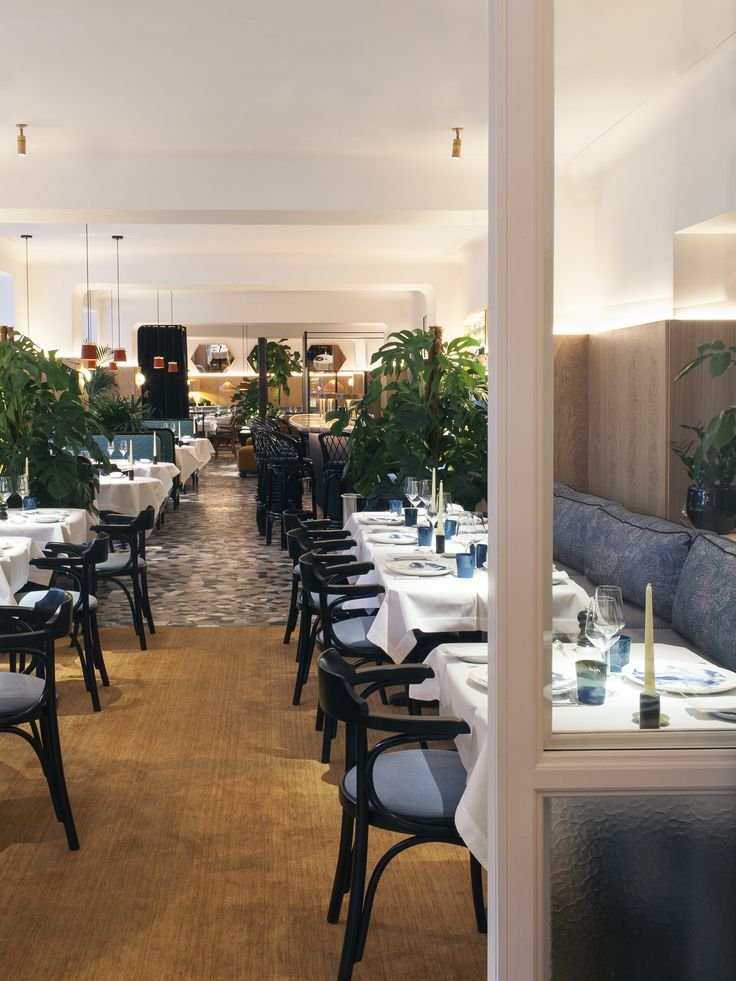
Divellec has anchored Paris's serious seafood conversation since 1983, first under Jacques Le Divellec and now under Michelin-starred Mathieu Pacaud. The 7th arrondissement address on Rue Fabert keeps faith with Atlantic-sourced produce — wild Breton turbot, small-boat sole meunière — while a recently expanded winter garden room adds a quieter register to the classic dining room overlooking the Esplanade des Invalides.
- 1 Michelin Star
At a glance
- Cuisine
- Modern French Seafood
- Price
- $$$$
- Per person
- $150
- Hours
- Mon: Closed; Tue: 12–10 PM; Wed: 12–10 PM; Thu: 12–10 PM; Fri: 12–10 PM; Sat: 12–10 PM; Sun: Closed
- Neighborhood
- Invalides
- Rating
- 4.3 (588)
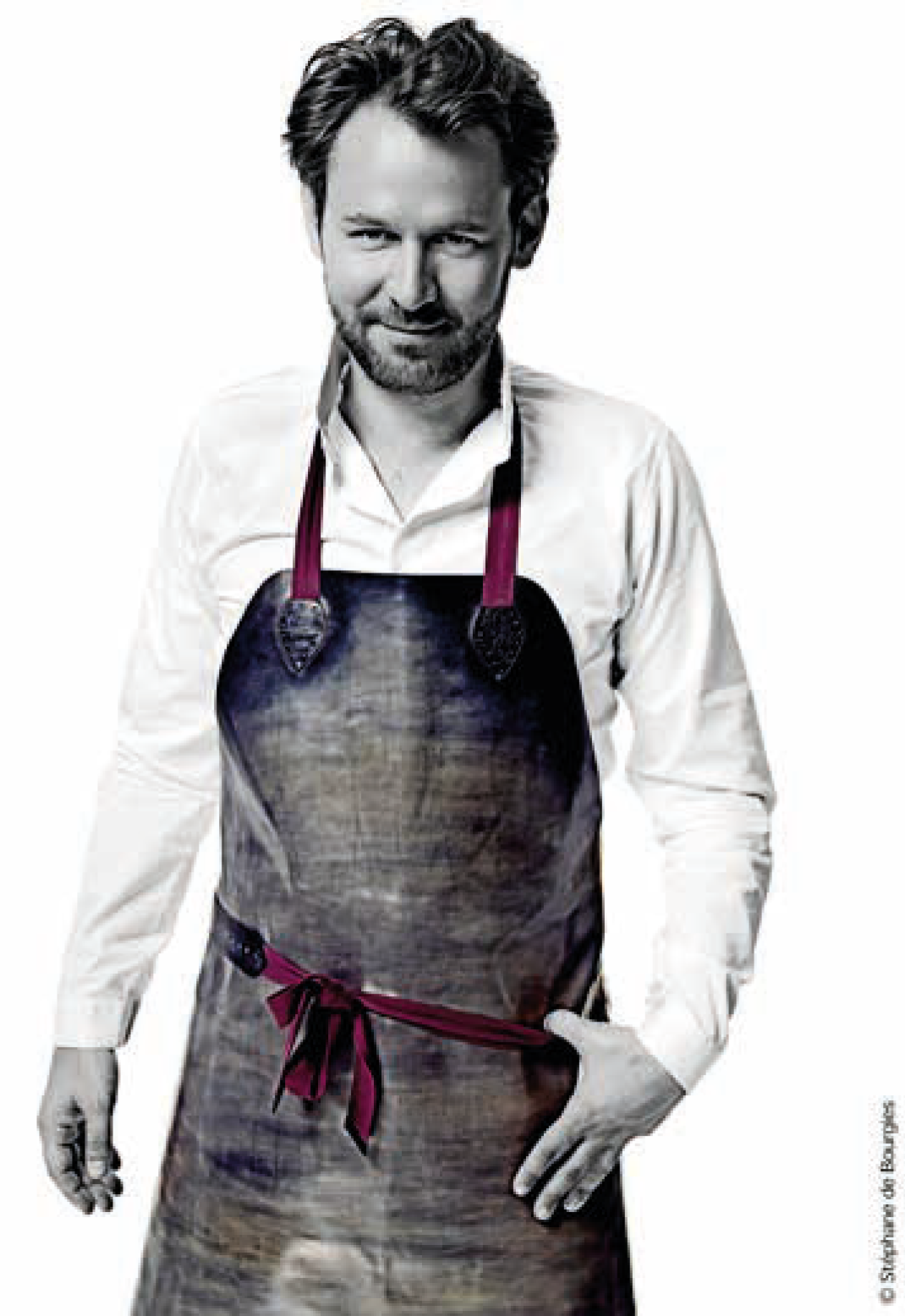
<h2>Where the Atlantic Arrives in the 7th</h2><p>There is a particular discipline to serious seafood cooking in Paris, a city with no coastline of its own. The leading rooms in this category do not merely serve fish — they maintain sourcing relationships with named waters, specific boat sizes, and seasonal migration patterns. Divellec, at 18 Rue Fabert in the 7th arrondissement, operates in that tradition. Its address, a short walk from the Esplanade des Invalides, places it among the quieter, more formal reaches of Left Bank dining, and the room reflects that geography: composed, unshowy, with a view across one of Paris's most considered open spaces.</p><p>The restaurant opened in 1983 under Jacques Le Divellec, a figure who helped define what Atlantic-focused haute cuisine could mean in a landlocked capital. That forty-year lineage is not incidental. It positions Divellec in a category of Parisian institutions where the cooking has outlasted individual chefs and the sourcing philosophy has accrued something like institutional memory. The waters referenced on the menu — Brittany, the Atlantic shelf, the smaller inshore boats that supply wild specimens rather than farmed stock , are a consistent thread across both eras of the restaurant's history.</p><h2>Atlantic Sourcing as Editorial Commitment</h2><p>The distinction between Atlantic and Mediterranean seafood is not simply geographic preference. Cold Atlantic waters, particularly off the Breton coast and the Bay of Biscay, produce fish with firmer flesh and more pronounced mineral character than their warmer-water counterparts. Wild turbot from Brittany, for instance, develops differently from farmed equivalents: tighter texture, more varied diet, and a fat distribution that responds well to classical preparation. The Opinionated About Dining guide, which ranked Divellec #392 in its Classical Europe list for 2025, notes the wild young turbot from Brittany specifically, alongside sole meunière from small boats finished with hazelnut butter , both dishes that make the sourcing argument through technique rather than description.</p><p>Small-boat sourcing is a meaningful qualifier in this context. Industrial trawlers operate at a scale and method that affects fish quality differently than artisanal day boats, which typically handle smaller catches, ice them immediately, and deliver within hours. In practical terms, this means the fish arriving at a kitchen like Divellec's is likely to show different characteristics than commodity-sourced alternatives , not always better in every dimension, but more consistent with classical French preparation methods that require a specific texture response to heat and butter.</p><p>This sourcing orientation places Divellec in a distinct peer set among Paris seafood houses. <a href="https://www.enprimeurclub.com/restaurants/le-duc-paris-restaurant">Le Duc</a>, also in Paris, has maintained a similar Atlantic focus with an even stricter minimalist approach to preparation. <a href="https://www.enprimeurclub.com/restaurants/le-petit-nice-marseille-restaurant">Le Petit Nice in Marseille</a> operates from a Mediterranean register that is fundamentally different , warmer water species, different texture profiles, a cuisine shaped by proximity to the Provençal coast rather than the Breton one. And internationally, <a href="https://www.enprimeurclub.com/restaurants/le-bernardin">Le Bernardin in New York City</a> shares the French haute-seafood lineage but has evolved toward a lighter, more contemporary treatment of similar Atlantic species. Divellec's commitment to classical preparation sets it apart from that trajectory.</p><h2>Mathieu Pacaud and the Continuity Question</h2><p>When a restaurant changes hands after three decades, the question is always whether the transition is cosmetic or substantive. At Divellec, Mathieu Pacaud's tenure has maintained the Atlantic sourcing framework while operating within the formal conventions of the original address. The Michelin one-star recognition in 2024 reflects a kitchen that is cooking at a serious level without the radical repositioning that sometimes follows a generational change. The Opinionated About Dining recommendation (2023) and subsequent ranking (#392 Classical Europe, 2025) confirm that the room is being tracked by the specialist critical community, not just general guides.</p><p>Pacaud's presence also connects Divellec to the broader conversation about high-end French cooking in Paris, a city where the €€€€ tier is occupied by some exceptionally concentrated competition. The three-Michelin-star houses , <a href="https://www.enprimeurclub.com/restaurants/alleno-paris-au-pavillon-ledoyen-paris-restaurant">Alléno Paris au Pavillon Ledoyen</a>, <a href="https://www.enprimeurclub.com/restaurants/kei-paris-restaurant">Kei</a>, and <a href="https://www.enprimeurclub.com/restaurants/lambroisie-paris-restaurant">L'Ambroisie</a> , occupy the same price bracket but different culinary registers. Divellec is not competing with creative or contemporary French formats; it competes on the specific ground of classical seafood execution, where the peer set is smaller and the comparison points are different.</p><h2>The Room and Its Recent Expansion</h2><p>The physical environment at Divellec has changed in a notable way. The restaurant expanded into an adjacent former bookshop, creating a winter garden room distinguished by woven wicker panels. This detail is more significant than a simple capacity increase: it adds an interior register that differs from the classical dining room facing the Esplanade. The wicker panel treatment and winter garden framing create a space that reads as lighter and more botanical without abandoning the formality of the original address.</p><p>The view over the Esplanade des Invalides from the main dining room is a genuine spatial asset in a city where restaurant outlooks are frequently onto narrow streets or internal courtyards. The Esplanade is one of Paris's widest and least obstructed urban vistas, and a lunchtime or early evening meal at Divellec benefits from that context in a way that is difficult to replicate elsewhere in the 7th.</p><h2>Divellec in the Wider French Dining Picture</h2><p>Paris operates as the capital of an extremely varied national dining culture, and Divellec's positioning makes most sense against that larger picture. The classical French seafood tradition it represents is one strand within a broader field that includes the mountain cooking of <a href="https://www.enprimeurclub.com/restaurants/flocons-de-sel-megeve-restaurant">Flocons de Sel in Megève</a>, the Mediterranean modernism of <a href="https://www.enprimeurclub.com/restaurants/mirazur-menton-restaurant">Mirazur in Menton</a>, the regional rootedness of <a href="https://www.enprimeurclub.com/restaurants/auberge-de-lill-illhaeusern-restaurant">Auberge de l'Ill in Illhaeusern</a>, the produce philosophy of <a href="https://www.enprimeurclub.com/restaurants/bras-laguiole-restaurant">Bras in Laguiole</a>, and the institutional weight of <a href="https://www.enprimeurclub.com/restaurants/paul-bocuse-lauberge-du-pont-de-collonges-collonges-au-mont-dor-restaurant">Paul Bocuse - L'Auberge du Pont de Collonges</a>. Each occupies a different axis of French culinary identity. Divellec's axis , Atlantic produce, classical technique, formal Parisian setting , is specific and consistent.</p><p>For visitors whose Paris itinerary runs toward the more contemporary end, the contrast is worth understanding. <a href="https://www.enprimeurclub.com/restaurants/arpege-paris-restaurant">Arpège</a> and the creative tier represent a different negotiation with French cooking's past. Divellec is not attempting that negotiation; it is working within a defined tradition and testing how well that tradition holds against current critical expectations. The OAD ranking and Michelin recognition suggest it holds reasonably well.</p><p>Those planning broader Paris dining exploration can consult <a href="https://www.enprimeurclub.com/restaurants/paris">our full Paris restaurants guide</a>, and <a href="https://www.enprimeurclub.com/restaurants/troisgros-le-bois-sans-feuilles-ouches-restaurant">Troisgros - Le Bois sans Feuilles in Ouches</a> offers a useful point of comparison for how classical French institutions have handled reinvention on different terms. For the full Paris picture beyond restaurants, <a href="https://www.enprimeurclub.com/hotels/paris">our Paris hotels guide</a>, <a href="https://www.enprimeurclub.com/bars/paris">bars guide</a>, <a href="https://www.enprimeurclub.com/wineries/paris">wineries guide</a>, and <a href="https://www.enprimeurclub.com/experiences/paris">experiences guide</a> cover the remaining categories.</p><div style="border: 1px solid #ccc; padding: 1.2em; margin: 2em 0;"><h3>Know Before You Go</h3><ul><li><strong>Address:</strong> 18 Rue Fabert, 75007 Paris, France</li><li><strong>Price range:</strong> €€€€</li><li><strong>Service hours:</strong> Lunch 12:00 PM – 1:30 PM, Dinner 7:00 PM – 9:30 PM, seven days a week</li><li><strong>Awards:</strong> Michelin 1 Star (2024); Opinionated About Dining Classical Europe #392 (2025); OAD Classical Europe Recommended (2023)</li><li><strong>Google rating:</strong> 4.3 from 567 reviews</li><li><strong>Chef:</strong> Mathieu Pacaud</li><li><strong>Neighbourhood context:</strong> 7th arrondissement, close to the Esplanade des Invalides and a short walk from Invalides metro</li><li><strong>Booking:</strong> Given Michelin recognition and the formal lunch window of 90 minutes, advance reservations are advisable, particularly for weekday lunch</li></ul></div><h2>Frequently Asked Questions</h2><h3>What is the signature dish at Divellec?</h3><p>The Opinionated About Dining guide identifies two preparations as representative of the kitchen's approach: sole meunière from small Atlantic boats, finished with hazelnut butter, and wild young turbot from Brittany. Both are classical French techniques applied to produce with specific provenance credentials , small-boat catch, Breton waters , and both appear consistently in critical accounts of the restaurant across the Mathieu Pacaud era. The sole meunière in particular connects directly to the Jacques Le Divellec period, making it as close to a through-line dish as the restaurant has. On the awards and sourcing evidence available, these two preparations most accurately reflect what Divellec is doing at its most characteristic. For the broader context of how Divellec's <a href="https://www.enprimeurclub.com/restaurants/paris">Paris cuisine</a> compares to its peers, the <a href="https://www.enprimeurclub.com/restaurants/le-duc-paris-restaurant">Le Duc</a> comparison is useful, as is the international reference point of <a href="https://www.enprimeurclub.com/restaurants/le-bernardin">Le Bernardin</a> for understanding where classical French seafood sits in a global context.</p>
Know before you go
- Dress code
- smart_casual
- Reservations
- essential
- Parking
- valet
- Payment
- credit_card
- Accessibility
- wheelchair_accessible
- Groups
- Welcomed
Frequently asked
How would you describe the cuisine at Divellec?
Divellec is categorized in our database as French Seafood, Seafood.
What's the pricing like at Divellec?
Pricing at Divellec is listed as €€€€.
Is Divellec Michelin-listed?
Divellec has received recognition including: Opinionated About Dining Classical in Europe Ranked #392 (2025); The famous restaurant of Jacques Le Divellec (1983-2013) is now the lair of Mathieu Pacaud. The culinary theme continues to demonstrate a seafaring slant and the food keeps pa….
What's the signature dish at Divellec?
Opinionated About Dining, which ranks Divellec among its Classical Europe recommendations for 2025, singles out two preparations as representative: sole meunière from small Atlantic boats, finished with hazelnut butter, and wild young turbot sourced from Brittany. Both reflect Mathieu Pacaud's commitment to cold-water Atlantic sourcing over farmed or Mediterranean alternatives. The kitchen's restraint with these dishes — letting the fish carry the composition — is consistent with the classical French seafood tradition the address has maintained since Jacques Le Divellec opened here in 1983.
Address
18 Rue Fabert, 75007 Paris, France
Invalides
How it compares
- Price
- €€€€
- Notes
- This venue
Alléno Paris au Pavillon Ledoyen
- Price
- €€€€
- Notes
- Creative, €€€€
- Price
- €€€€
- Notes
- Contemporary French, Modern Cuisine, €€€€
- Price
- €€€€
- Notes
- French, Classic Cuisine, €€€€
Le Cinq - Four Seasons Hôtel George V
- Price
- €€€€
- Notes
- French, Modern Cuisine, €€€€
- Price
- €€€€
- Notes
- Contemporary French, €€€€
In residence
Similar places
Vegetable-Focused French Fine Dining
Arpège
Paris, France
★★★ · 50 Best
Contemporary French Terroir
La Grenouillère
Paris, France
★★ · 50 Best
Avant-Garde French Fine Dining
Pierre Gagnaire
Paris, France
★★★ · 50 Best
Classic and Modern French Fine Dining
Le Taillevent
Paris, France
★★ · 50 Best
Classic French Fine Dining
Guy Savoy
Paris, France
★★ · 50 Best
Modern French Sauce-Led Fine Dining
Plénitude
Paris, France
★★★ · 50 Best