Restaurant
JAN
JAN holds three Michelin stars and ranks third in Europe on Opinionated About Dining (2025), placing it firmly in Germany's uppermost tier of creative fine dining. Chef Jan Hartwig's open-kitchen format on Luisenstraße 27 draws on classical French training and regional Bavarian ingredients, producing tasting menus that earn 97.5 points on La Liste and a place at number 84 on the World's 50 Best list (2024).
- 3 Michelin Stars
- World's 50 Best · #50
At a glance
- Cuisine
- Modern European Fine Dining
- Price
- $$$$
- Per person
- $355
- Hours
- Mon: Closed; Tue: 6:30–7 PM; Wed: 6:30–7 PM; Thu: 6:30–7 PM; Fri: 12–12:30 PM, 7–7:30 PM; Sat: Closed; Sun: Closed
- Neighborhood
- Maxvorstadt
- Rating
- 4.8 (303)
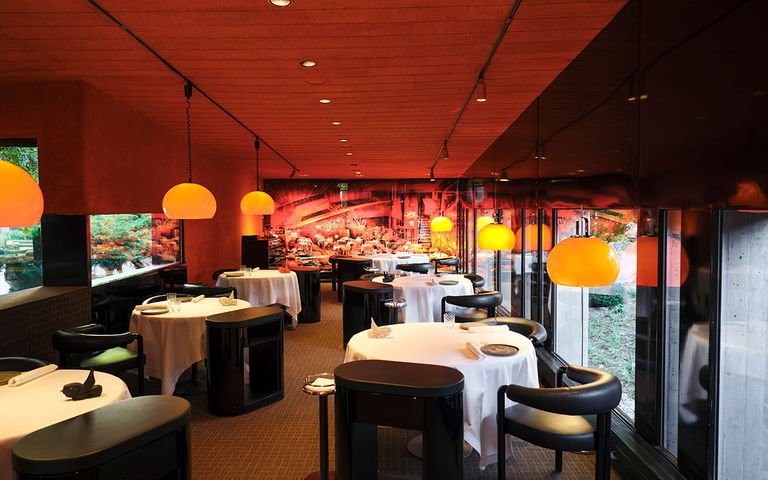
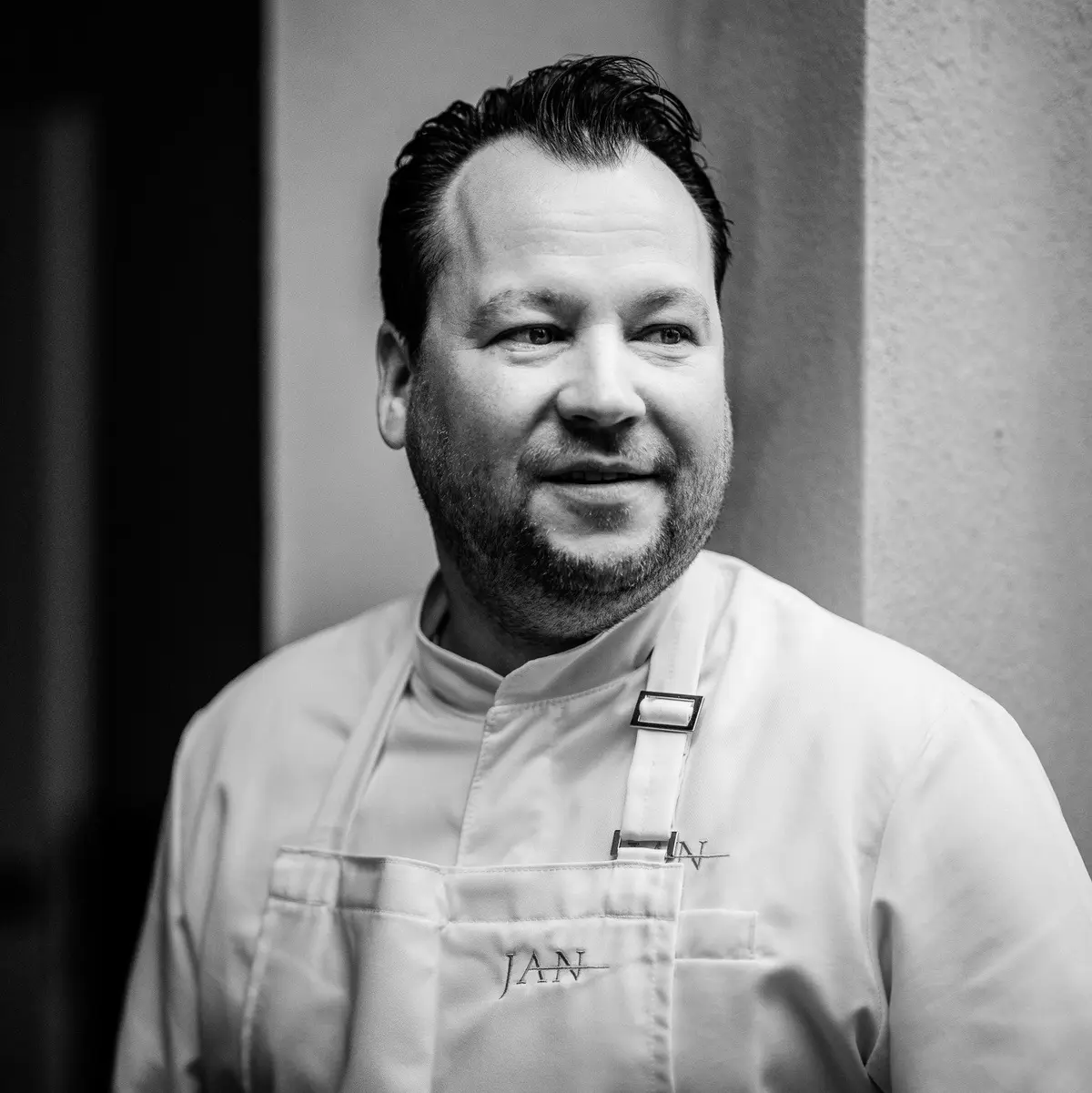
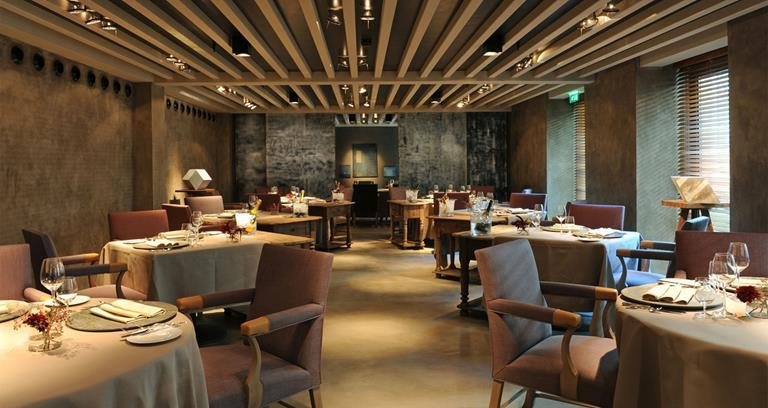
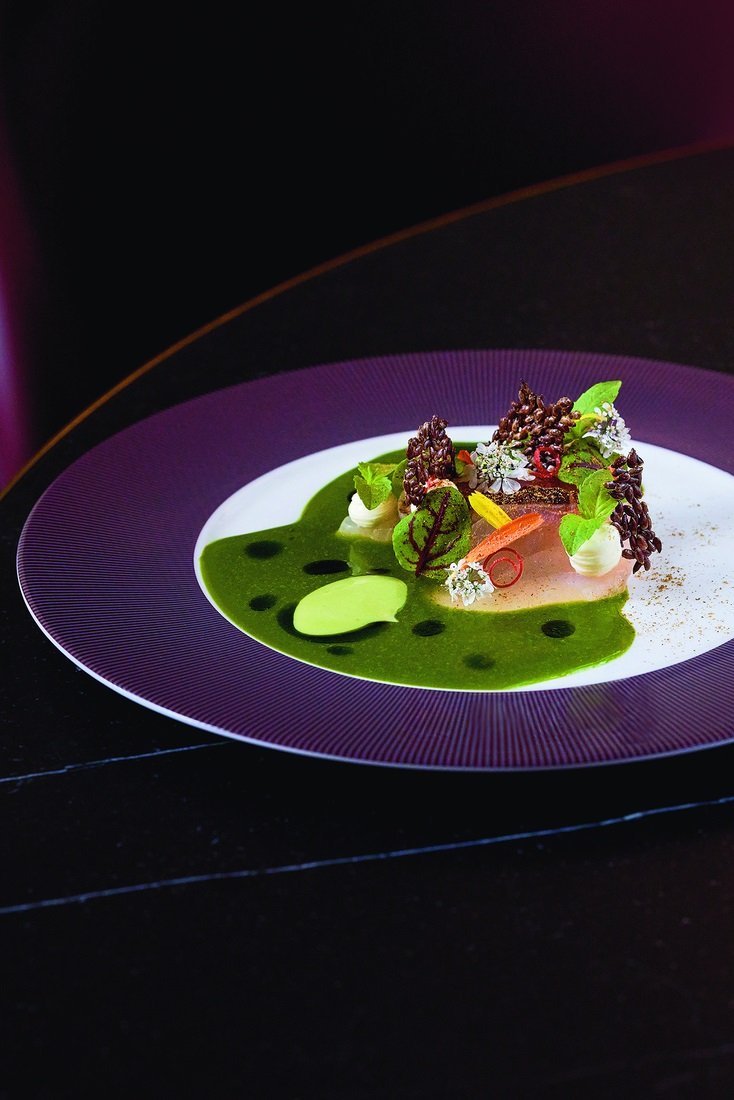
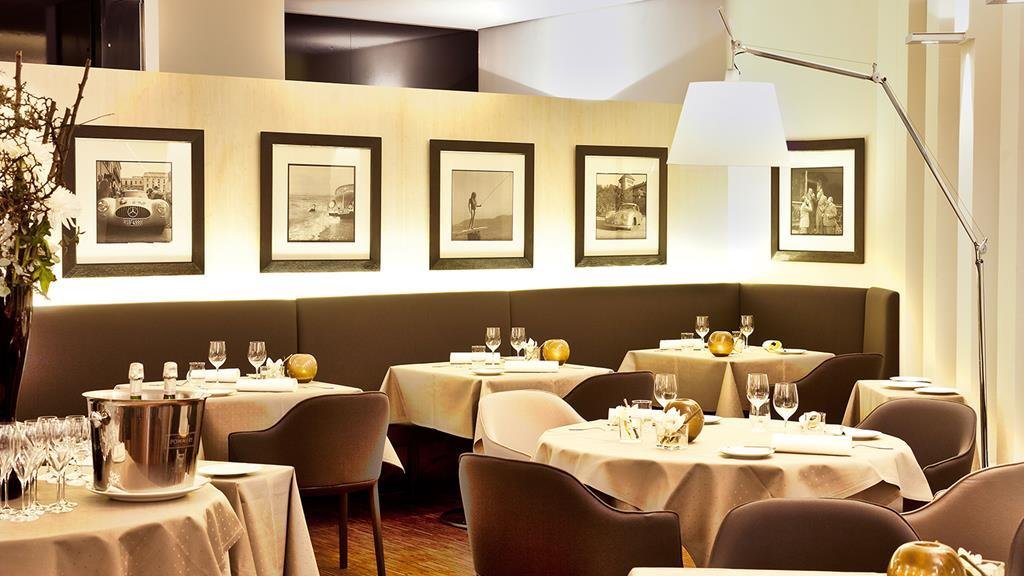
<h2>A Room That Works Before the First Course Arrives</h2><p>Munich's three-Michelin-star tier is small but unusually varied in character. <a href="https://www.enprimeurclub.com/restaurants/tantris-munich-restaurant">Tantris</a> carries the weight of a 1970s institution; Tohru in der Schreiberei runs a German-Japanese hybrid format. JAN, on a quiet stretch of Luisenstraße in Maxvorstadt, occupies a different position: a first solo venture from a chef who built his reputation elsewhere, opened as a deliberate statement of intent rather than a gradual accumulation of reputation. That origin shapes everything about the room and the service rhythm.</p><p>The dining space is minimalist and warmly lit, with artworks by South German artist Stefan Strumbel placed against a calm interior that opens directly onto the kitchen. The open-plan kitchen, which Hartwig calls his laboratory of love, is not a theatrical gesture in the conventional sense. It functions more as a declaration of process: diners can observe the work without the kitchen performing for them. That distinction matters in a city where high-end dining rooms often use open kitchens as spectacle. Here the kitchen is simply present, and the food earns the attention.</p><h2>Where JAN Sits in the European Creative Tier</h2><p>Germany's highest-ranked creative restaurants now operate across a wide geographic spread. <a href="https://www.enprimeurclub.com/restaurants/aqua-wolfsburg-restaurant">Aqua in Wolfsburg</a>, <a href="https://www.enprimeurclub.com/restaurants/schwarzwaldstube-baiersbronn-restaurant">Schwarzwaldstube in Baiersbronn</a>, <a href="https://www.enprimeurclub.com/restaurants/vendome-bergisch-gladbach-restaurant">Vendôme in Bergisch Gladbach</a>, and <a href="https://www.enprimeurclub.com/restaurants/restaurant-haerlin-hamburg-restaurant">Restaurant Haerlin in Hamburg</a> each hold three stars, and each occupies a distinct stylistic lane. JAN's position is defined by its emphasis on emotion-driven composition and regional sourcing within a classical French technical framework, a combination that has produced a set of credentials difficult to argue with: three Michelin stars (2025), third place on the Opinionated About Dining Leading Restaurants in Europe ranking for both 2024 and 2025, 97.5 points on La Liste (2025), number 84 on the World's 50 Best list (2024), and membership of Les Grandes Tables du Monde.</p><p>That peer comparison matters when assessing where to place JAN relative to European creative dining more broadly. Restaurants like <a href="https://www.enprimeurclub.com/restaurants/alleno-paris-au-pavillon-ledoyen-paris-restaurant">Alléno Paris au Pavillon Ledoyen</a> and <a href="https://www.enprimeurclub.com/restaurants/arpege-paris-restaurant">Arpège in Paris</a> anchor the French end of the creative spectrum. JAN's OAD score of third in Europe places it in conversation with that level, which for a restaurant that opened relatively recently is a signal worth taking seriously. The 2023 OAD ranking for leading new European restaurants at position 133 shows the speed of the ascent.</p><h2>The Menu's Internal Logic</h2><p>Creative tasting menus at this level can resolve in two directions: toward provocation, where surprise is the primary value, or toward precision, where each course is an argument made clearly and then concluded. JAN operates in the second mode. The menus change, but the structural logic is consistent: classical French technique applied to regional German ingredients, with compositions that carry biographical or emotional weight without announcing it.</p><p>Several dishes illustrate this approach. A tartlet of foie gras mousse with finger lime pearls and smoked maple syrup, layered with paper-thin pecan crisps, works through textural contrast and acidity rather than richness alone. Sea Urchin Louise, built around jellied oxtail, crème fraîche and chives, is named for Hartwig's daughter, which places personal reference inside a technically demanding construction rather than treating sentiment as a substitute for craft. Trout from Schliersee, a freshwater lake in the Alpine foothills near Munich, arrives with iceberg lettuce, jalapeño, kohlrabi, horseradish, pumpernickel, dill and sauerkraut beurre blanc. The construction maps regional geography onto a plate: Alpine provenance, North German references (pumpernickel, dill), and French technique in the beurre blanc.</p><p>Hartwig, raised in Lower Saxony in a family with a gastronomic background and trained in classical French technique, insists on cooking every sauce himself. That detail is not incidental. In a kitchen operating at three-star volume and pace, the head chef's direct involvement in sauce work signals where the kitchen's priorities are placed. Every menu change is driven by that same degree of personal involvement.</p><h2>The Lunch and Dinner Question</h2><p>Munich's three-star restaurants approach the lunch-versus-dinner divide differently. Some offer abbreviated formats at midday, with shorter menus and lower price points that function as access tiers. Others run the full tasting menu at both services, with the main variable being ambient energy rather than format. JAN's specific lunch and dinner service structures are not publicly detailed in available data, so the structural comparison cannot be confirmed here.</p><p>What can be observed is that the room's character, minimal, calm, open to the kitchen, tends to suit a slower service pace where observation and attention are central to the experience. That architecture does not change between services. What shifts is typically the mood the room absorbs from the time of day and the composition of the room. Dinner at this level in Munich carries a formality that lunch services in the same rooms sometimes dissolve, not because the food or service changes, but because evening bookings in the three-star tier tend to draw a different kind of deliberateness from the guest. For those considering which service to book, the practical calculation should account for the fact that evening reservations at JAN carry the fuller context of a room in its designed state.</p><p>Compared to peers in Munich's fine-dining tier, <a href="https://www.enprimeurclub.com/restaurants/alois-dallmayr-fine-dining-munich-restaurant">Alois at Dallmayr</a> (two Michelin stars, creative) and <a href="https://www.enprimeurclub.com/restaurants/mural-munich-restaurant">mural</a> offer alternative formats and price positions. <a href="https://www.enprimeurclub.com/restaurants/showroom-munich-restaurant">Showroom</a> and <a href="https://www.enprimeurclub.com/restaurants/zauberberg-munich-restaurant">Zauberberg</a> sit in adjacent brackets for those assembling a broader Munich dining itinerary. For the creative tasting menu format specifically, <a href="https://www.enprimeurclub.com/restaurants/essenz-grassau-restaurant">ES:SENZ in Grassau</a> and <a href="https://www.enprimeurclub.com/restaurants/coda-dessert-dining-berlin-restaurant">CODA Dessert Dining in Berlin</a> represent interesting comparison points at the experimental edge of German creative dining.</p><h2>Planning a Visit</h2><p>JAN is located at Luisenstraße 27, 80333 Munich, in the Maxvorstadt district, within walking distance of the Königsplatz U-Bahn station. The restaurant holds a 4.7 rating across 251 Google reviews, a figure that reflects consistent guest experience across a meaningful sample at this price tier. At the €€€€ price range, the reservation window for three-star restaurants in this category typically extends several weeks to months ahead, and JAN's OAD and La Liste placements suggest demand that rewards early planning. Specific booking methods and availability details should be confirmed directly with the restaurant, as no third-party booking platform data is confirmed in available records.</p><p>For those building a broader Munich visit around the meal, the city's food and hospitality offer across categories is detailed in <a href="https://www.enprimeurclub.com/restaurants/munich">our full Munich restaurants guide</a>, with complementary resources covering <a href="https://www.enprimeurclub.com/hotels/munich">hotels</a>, <a href="https://www.enprimeurclub.com/bars/munich">bars</a>, <a href="https://www.enprimeurclub.com/wineries/munich">wineries</a>, and <a href="https://www.enprimeurclub.com/experiences/munich">experiences</a>.</p><h2>What Should I Eat at JAN?</h2><p>The menu at JAN changes continuously, so any specific course available at the time of a visit cannot be guaranteed in advance. The structural approach, however, remains consistent: tasting menus that draw on classical French technique, regional Bavarian and German ingredients, and compositions with emotional or biographical anchors. Documented dishes from the current record include the foie gras tartlet with finger lime and smoked maple syrup, the Sea Urchin Louise with jellied oxtail and crème fraîche, and the Schliersee trout with sauerkraut beurre blanc and pumpernickel. These courses reflect the kitchen's general register: technically precise, regionally grounded, and constructed to reward attention rather than demand it. The OAD ranking of third in Europe (2025), three Michelin stars, and 97.5 La Liste points provide the credential context; the food provides the evidence.</p>
Know before you go
- Dress code
- smart_casual
- Reservations
- essential
- Parking
- street
Frequently asked
Which chef is JAN associated with?
The chef associated with JAN is Jan Hartwig.
What style of cooking does JAN do?
JAN is categorized in our database as Creative.
What should I eat at JAN?
The menu at JAN changes continuously, so no specific course can be guaranteed in advance. Hartwig's structural approach consistently draws on regional German ingredients interpreted through classical French technique — dishes have included trout from Schliersee with sauerkraut beurre blanc and a foie gras tartlet with finger lime and smoked maple syrup. Given the kitchen's emphasis on sauces and personal execution, courses built around protein and house-made preparations tend to represent the menu's deepest expression. Booking a full tasting menu rather than an abbreviated format gives the most complete picture of where Hartwig's cooking currently sits.
Is JAN more mid-range or high-end?
Pricing at JAN is listed as €€€€.
What's the address for JAN?
JAN is located at Luisenstraße 27, 80333 München, Germany, Munich.
Does JAN have a Michelin star or similar recognition?
JAN has received recognition including: La Liste Top Restaurants (2026): 97pts; Opinionated About Dining Classical in Europe Ranked #395 (2025); What makes it special? Jan is the first solo venture of chef Jan Hartwig, one of Germany’s most acclaimed young chefs, who redefines Ge….
Address
Luisenstraße 27, 80333 München, Germany
Maxvorstadt
How it compares
- Price
- €€€€
- Awards
- La Liste Top Restaurants (2026): 97pts; Opinionated About Dining Classical in Europe Ranked #395 (2025); What makes it special? Jan is the first solo venture of chef Jan Hartwig, one of Germany’s most acclaimed young chefs, who redefines German haute cuisine with bold creativity, precision and soul. His tasting menus showcase technical brilliance while honouring heritage and regional ingredients in original, emotion-driven ways. Labour of love: Minimalist, calm and warmly lit, the restaurant is adorned with artworks by South German artist Stefan Strumbel and opens directly onto Hartwig’s open-plan kitchen – also known as his “laboratory of love”. It’s a space where tradition and innovation meet, and diners can witness the culinary craftsmanship of a loyal and dedicated team. Craft and confidence: Raised in the north-German region of Lower Saxony in a family with a gastronomic background, Hartwig discovered his passion for cooking early. Trained in classical French technique, he is shaping a distinct culinary voice that is German at heart and global in reach. He insists on cooking every sauce himself and mastering every detail, resulting in ever-changing menus that are confident and deeply personal. What’s on the menu? Each course reflects deep thought and meticulous execution. A tartlet of foie gras mousse with finger lime pearls and smoked maple syrup is layered with paper-thin pecan crisps – a decadent burst of texture and taste. Sea Urchin Louise with jellied oxtail, crème fraîche and chives is a delicate, yet flavour-packed homage to his young daughter. Elsewhere, trout from Schliersee, an idyllic freshwater lake near Munich, with iceberg lettuce, jalapeño, kohlrabi, horseradish, pumpernickel, dill and sauerkraut beurre blanc, evokes alpine purity.; Les Grandes Tables Du Monde Award (2025); Opinionated About Dining Top Restaurants in Europe Ranked #3 (2025); La Liste Top Restaurants (2025): 97.5pts; Chef: Jan Hartwig document.addEventListener("DOMContentLoaded", function() { var el = document.getElementById("Achievements_chefs"); if (el && el.parentNode) { el.parentNode.removeChild(el); } });; Michelin 3 Stars (2025); World's 50 Best Best Restaurants #84 (2024); Opinionated About Dining Top Restaurants in Europe Ranked #3 (2024); Opinionated About Dining Top New Restaurants in Europe Ranked #133 (2023)
- Notes
- This venue
- Price
- €€€€
- Awards
- Michelin 2 Star, World's 50 Best
- Notes
- Modern French, French Contemporary, €€€€
- Price
- €€€€
- Awards
- Michelin 3 Star
- Notes
- Modern German - Japanese, Modern Cuisine, €€€€
- Price
- €€€€
- Awards
- Michelin 2 Star
- Notes
- Creative, €€€€
- Price
- €€€€
- Awards
- Michelin 2 Star
- Notes
- Creative French, €€€€
- Price
- €€€€
- Awards
- Michelin 1 Star
- Notes
- Italian - Mediterranean, Italian, €€€€
In residence
Similar places
Modern French Fine Dining
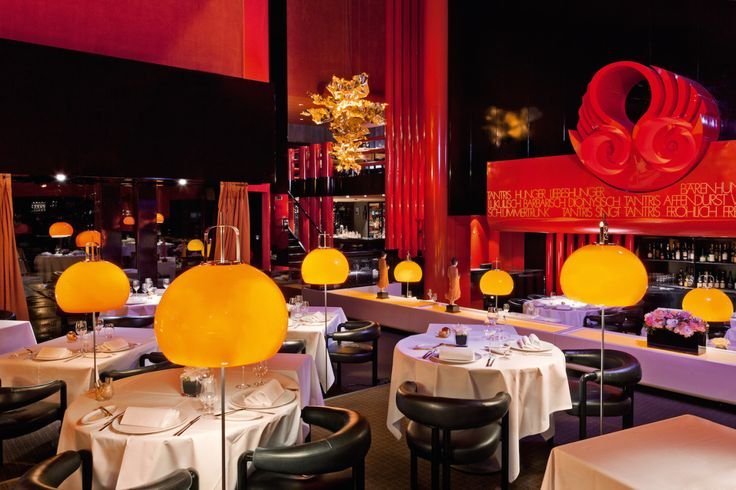
Tantris
Munich, Germany
★★ · 50 Best
Modern Japanese-European Fusion Fine Dining
Tohru in der Schreiberei
Munich, Germany
★★★
Modern German with Asian Influence
Atelier
Munich, Germany
★★
Modern Bavarian Fine Dining with French and Nordic Influences
Alois - Dallmayr Fine Dining
Munich, Germany
★★
Modern French Fine Dining
Les Deux
Munich, Germany
★
Modern French-Asian Fusion Fine Dining
KOMU
Munich, Germany
★★