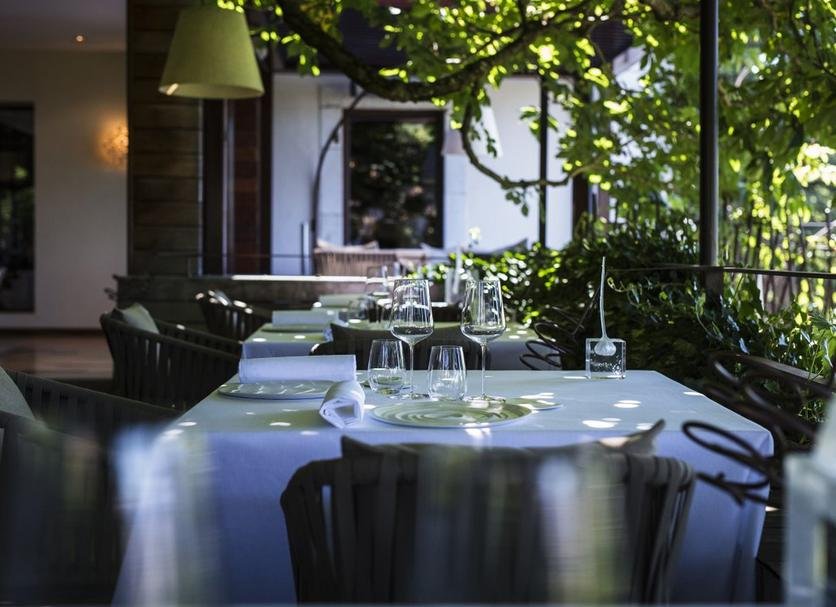
Restaurant
Le Clos des Sens
Le Clos des Sens holds three Michelin stars and a 95-point La Liste score in Annecy, placing it among the most decorated tables in the French Alps. Following a leadership transition in late 2022, chefs Thomas Lorival and Franck Derouet have deepened the restaurant's commitment to vegetable-forward, ecologically grounded cooking, drawing on the surrounding lakes, gardens, and regional producers.
- 3 Michelin Stars
At a glance
- Cuisine
- Lake-inspired French Fine Dining
- Price
- $$$$
- Per person
- $250
- Neighborhood
- Annecy-le-Vieux
- Rating
- 4.7 (993)
<h2>Where the Alps Meet the Plate</h2><p>Annecy occupies an unusual position in France's fine dining geography. It is a lakeside city in the Haute-Savoie, close enough to Lyon to feel the gravitational pull of that city's classical tradition, yet alpine enough to have developed its own supply logic: mountain producers, glacial-fed lakes, and a short growing season that concentrates flavour in ways the longer valleys to the south cannot replicate. Within that context, Le Clos des Sens at 13 Rue Jean Mermoz sits at the apex of what the region can produce. Three Michelin stars, a 95-point score on La Liste's 2025 and 2026 rankings, a place in the Opinionated About Dining Classical in Europe top 50 across three consecutive years (ranked 47th in 2023, 48th in 2024, and 44th in 2025), and membership in Les Grandes Tables du Monde position it in a peer set that includes [Flocons de Sel in Megève](https://www.enprimeurclub.com/restaurants/flocons-de-sel-megeve-restaurant) and [Mirazur in Menton](https://www.enprimeurclub.com/restaurants/mirazur-menton-restaurant) rather than anything operating at a lower tier in the same postcode.</p><h2>A Transition That Defined a Direction</h2><p>In the French three-star world, a change of leadership is rarely a neutral event. When founding chef Laurent Petit stepped away at the end of 2022, the risk to continuity was real. What followed was not a reinvention but a consolidation: two long-standing members of the house, chef Franck Derouet and Thomas Lorival, assumed control of the kitchen and the broader operation. The significance of that detail sits in what it says about institutional knowledge. Three-star kitchens that survive leadership transitions cleanly tend to be those where the philosophy has been absorbed by the team rather than residing solely in the departing chef. The vegetable-forward, ecologically grounded approach that defined Petit's tenure was not dismantled; it was taken over by people who had built it from the inside.</p><p>The OAD ranking improvement from 47th in 2023 to 44th in 2025 across the post-transition period suggests the change did not introduce a dip. La Liste's consistent 95-point score across both 2025 and 2026 supports the same reading. The kitchen's ability to retain its Michelin three-star status through the transition is itself a signal: inspectors treat team continuity differently from team replacement, and the outcome here indicates they found continuity of standard.</p><h2>The Collaborative Architecture of Service</h2><p>At the level Le Clos des Sens now occupies, the quality of cooking is, in a sense, a baseline. What separates the tables that hold three stars year after year from those that cycle is the integration of kitchen, sommelier, and front-of-house into a single coherent experience. The Relais and Châteaux affiliation, confirmed by the contact address on their network, signals something specific: member properties are evaluated on hospitality as a totality, not cooking alone. The hotel component means the team dynamic extends beyond a single service and into how guests are received across an entire stay.</p><p>In French alpine fine dining, this integration has particular relevance. The region's producers, from lake fishers to mountain herb growers to small-batch cheese makers, create an exceptionally local supply chain. Communicating that chain to guests across a full meal requires front-of-house fluency that matches the kitchen's sourcing knowledge. A sommelier pairing the Savoie's own appellations alongside selections from further afield, and a service team that can articulate why a specific ingredient arrived that week from a specific farm, is not a nicety at this level. It is the mechanism by which the kitchen's sourcing decisions become legible to the guest. Lorival and Derouet's background within the house gives them a natural advantage here: the relationships with suppliers were already in place.</p><h2>The Garden, the Lake, and the Plate</h2><p>French creative cooking at the three-star level has moved, over the past decade, toward a more explicit geography. Where an earlier generation of haute cuisine treated the leading available ingredient as a cosmopolitan category (white truffle from Alba, langoustine from Brittany, foie gras from the Landes), the current generation increasingly anchors menus to a specific place and its seasonal logic. [Bras in Laguiole](https://www.enprimeurclub.com/restaurants/bras-laguiole-restaurant) established an early template for this in France; [Troisgros - Le Bois sans Feuilles in Ouches](https://www.enprimeurclub.com/restaurants/troisgros-le-bois-sans-feuilles-ouches-restaurant) pursued a different but related geographic rootedness. Le Clos des Sens belongs to that lineage rather than to the more technique-display tradition represented by, say, [Alléno Paris au Pavillon Ledoyen in Paris](https://www.enprimeurclub.com/restaurants/alleno-paris-au-pavillon-ledoyen-paris-restaurant).</p><p>The garden attached to the property, the lakes of Annecy and Bourget within reach, and the network of regional farmers and suppliers that the kitchen has cultivated represent a sourcing infrastructure that took years to assemble. A kitchen with a clearly ecological orientation is not expressing a trend here so much as a structural commitment: the menu is constrained and shaped by what the immediate region can provide, and the discipline that imposes is, arguably, what gives the cooking its editorial character. Vegetables are treated as primary rather than subsidiary, which at three-star level in France still represents a position rather than a default.</p><h2>Annecy's Fine Dining Tier</h2><p>Annecy's restaurant scene is smaller than its reputation might suggest. At the leading of the price bracket, the city has a handful of serious addresses. [Maison Benoît Vidal](https://www.enprimeurclub.com/restaurants/maison-benoit-vidal-annecy-restaurant) operates in the same creative, high-price-point category. [L'Esquisse (Modern Cuisine)](https://www.enprimeurclub.com/restaurants/lesquisse-annecy-restaurant) and [La Rotonde des Trésoms (Modern Cuisine)](https://www.enprimeurclub.com/restaurants/la-rotonde-des-tresoms-annecy-restaurant) work at a comparable price tier with modern French approaches. [Black Bass (Modern Cuisine)](https://www.enprimeurclub.com/restaurants/black-bass-annecy-restaurant) brings a more focused lakeside identity at a slightly lower price point, while [ANTO (Modern Cuisine)](https://www.enprimeurclub.com/restaurants/anto-annecy-restaurant) operates at a more accessible price level. Le Clos des Sens is in a different category from all of them by award credential: three Michelin stars places it in a cohort that the rest of the city's dining scene, however accomplished, does not yet share.</p><p>In the broader French Alps context, the comparison set is narrow. [Flocons de Sel in Megève](https://www.enprimeurclub.com/restaurants/flocons-de-sel-megeve-restaurant) holds three stars in a similar alpine environment. Between those two addresses, the region accounts for a meaningful concentration of French fine dining at the highest level, which makes Annecy a more serious destination for this kind of travel than its size would otherwise suggest. For readers building an itinerary around France's three-star geography, Le Clos des Sens belongs alongside [Paul Bocuse — L'Auberge du Pont de Collonges in Collonges-au-Mont-d'Or](https://www.enprimeurclub.com/restaurants/paul-bocuse-lauberge-du-pont-de-collonges-collonges-au-mont-dor-restaurant) as a southeastern anchor, though the two represent very different cooking philosophies. For creative kitchens at a comparable level in other European cities, [Enrico Bartolini in Milan](https://www.enprimeurclub.com/restaurants/enrico-bartolini-milan-restaurant) and [JAN in Munich](https://www.enprimeurclub.com/restaurants/jan-munich-restaurant) offer useful reference points.</p><h2>Planning a Visit</h2><p>Le Clos des Sens is located at 13 Rue Jean Mermoz in the Annecy area, operating as part of a Relais and Châteaux property. At this level, reservations should be made well in advance, particularly for weekend services and during the summer season when Annecy draws significant visitor traffic to the lake. The restaurant can be contacted via clos-des-sens@relaischateaux.com or by telephone at +33 (0)4 50 23 07 90; full booking information is available at closdessens.com. The price range sits at the highest bracket (€€€€), which is consistent with the three-star tier across France. For those building a broader trip, the full picture of where to stay, drink, and explore in Annecy is available in our guides: [Annecy restaurants](https://www.enprimeurclub.com/restaurants/annecy), [Annecy hotels](https://www.enprimeurclub.com/hotels/annecy), [Annecy bars](https://www.enprimeurclub.com/bars/annecy), [Annecy wineries](https://www.enprimeurclub.com/wineries/annecy), and [Annecy experiences](https://www.enprimeurclub.com/experiences/annecy).</p><h2>Frequently Asked Questions</h2><h3>What do regulars order at Le Clos des Sens?</h3><p>Specific dish information is not available in verified form, and given the kitchen's creative, seasonally driven approach, the menu shifts with the region's supply. What the restaurant's awards and ecological positioning do indicate is that vegetables occupy a central rather than supporting role on the menu: regulars seeking the kitchen's most characteristic expressions should expect produce-led courses that reflect the garden and the alpine growing season rather than protein-centred set pieces. The OAD and Michelin credentials suggest the kitchen's cooking is consistent enough that returning guests are not chasing a single dish so much as a style that has earned its three-star standing across multiple consecutive years under two different leadership configurations.</p>
Know before you go
- Dress code
- smart_casual
- Reservations
- essential
- Parking
- on_site_lot
- Payment
- credit_card
- Outdoor seating
- Yes
Frequently asked
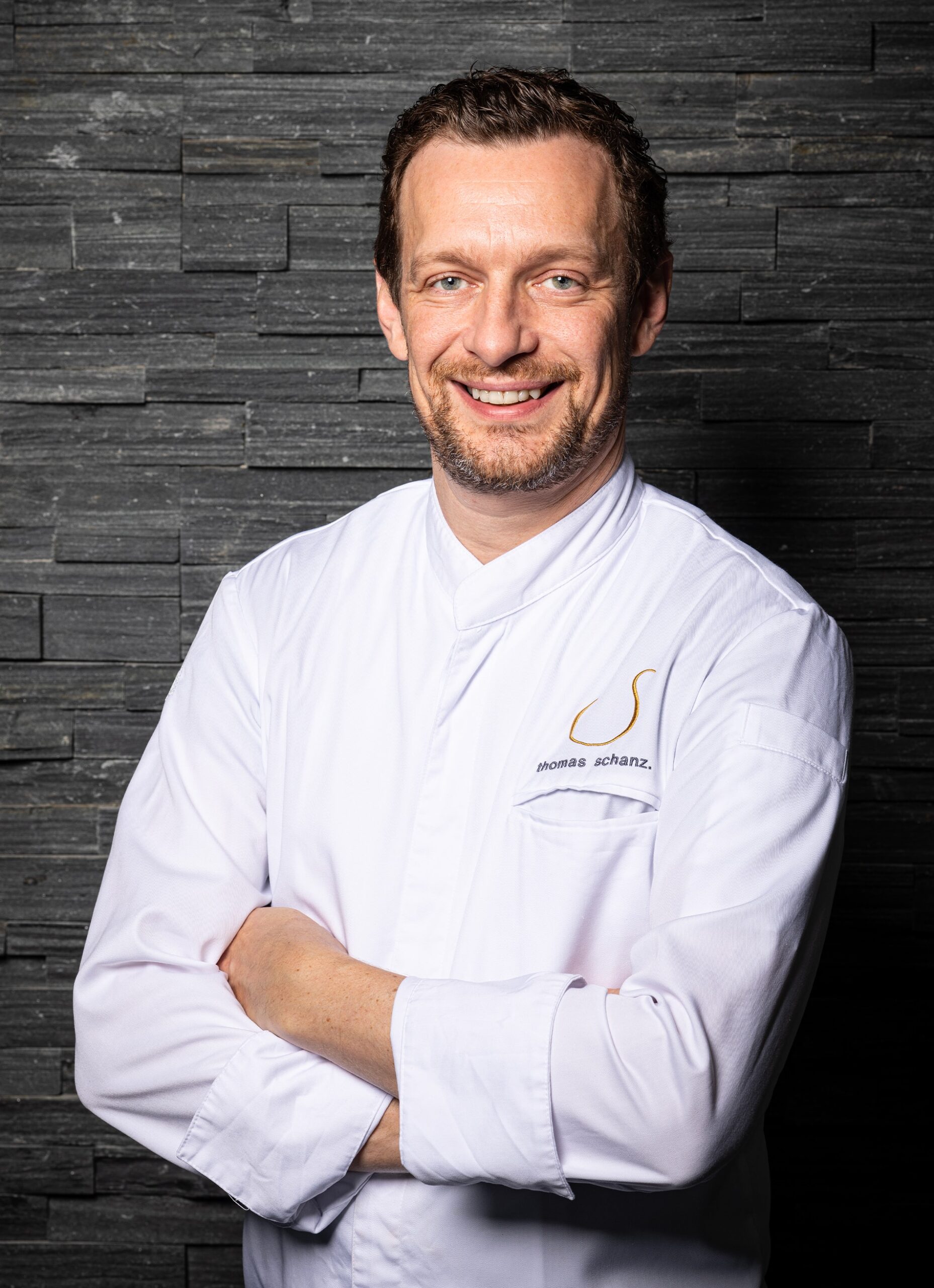
Who is the chef at Le Clos des Sens?
The chef associated with Le Clos des Sens is Thomas Schanz.
What type of food is Le Clos des Sens known for?
Le Clos des Sens is categorized in our database as Creative.
What do regulars order at Le Clos des Sens?
The kitchen operates on a seasonally driven creative menu, which means the specific dishes change with what the Haute-Savoie region supplies — the surrounding lakes, the on-site garden, and the local farming network all feed directly into what reaches the table. At a 3-Michelin-star address ranked 44th in Europe by Opinionated About Dining (2025), the menu is set rather than à la carte, so the question regulars face is less about individual dishes and more about timing their return to catch a different season's direction.
What should I budget for a meal at Le Clos des Sens?
Pricing at Le Clos des Sens is listed as €€€€.
How do I find Le Clos des Sens?
Le Clos des Sens is located at 13 Rue Jean Mermoz, 74940 Annecy, France, Annecy.
Address
13 Rue Jean Mermoz, 74940 Annecy, France
Annecy-le-Vieux
How it compares
- Cuisine
- Creative
- Awards
- La Liste Top Restaurants (2026): 95pts; There is big news! Chef Laurent Petit has bid farewell to Le Clos des Sens. 2 stalwarts of the house have taken over the establishment at the end of 2022, which makes us wait and see whether or not Thomas Lorival & chef Franck Derouet will make vegetables even more important to the many loyal guests. The garden, the nearby lakes, the nature, the many journeys and the farmers and suppliers from this region will help and inspire certainly the team. But also everything that happens in the hotel must be in the same ecological line. All details are important, also on your plate. We look forward to the follow-up...; Opinionated About Dining Classical in Europe Ranked #44 (2025); Category: Prestige; HIGHLIGHTS: • 3 MICHELIN STARS 2025 • CREATIVE COOKING DIRECTIONS & ACCESS: Website and contact information E-mail: clos-des-sens@relaischateaux.com Tel. : +33 (0)4 50 23 07 90; Les Grandes Tables Du Monde Award (2025); La Liste Top Restaurants (2025): 95pts; Michelin 3 Stars (2025); Opinionated About Dining Classical in Europe Ranked #48 (2024); Michelin 3 Stars (2024); Opinionated About Dining Classical in Europe Ranked #47 (2023)
- Notes
- This venue
- Cuisine
- Modern Cuisine
- Awards
- Michelin 1 Star
- Notes
- Modern Cuisine, €€€€
- Cuisine
- Creative
- Awards
- Michelin 2 Star
- Notes
- Creative, €€€€
- Cuisine
- Modern Cuisine
- Notes
- Modern Cuisine, €€
- Cuisine
- Modern Cuisine
- Notes
- Modern Cuisine, €€€
- Cuisine
- Traditional Cuisine
- Notes
- Traditional Cuisine, €€
In residence
Similar places
Savoie Fine Dining
Maison Benoît Vidal
Annecy, France
★★
Modern French Alpine
L'Esquisse
Annecy, France
★
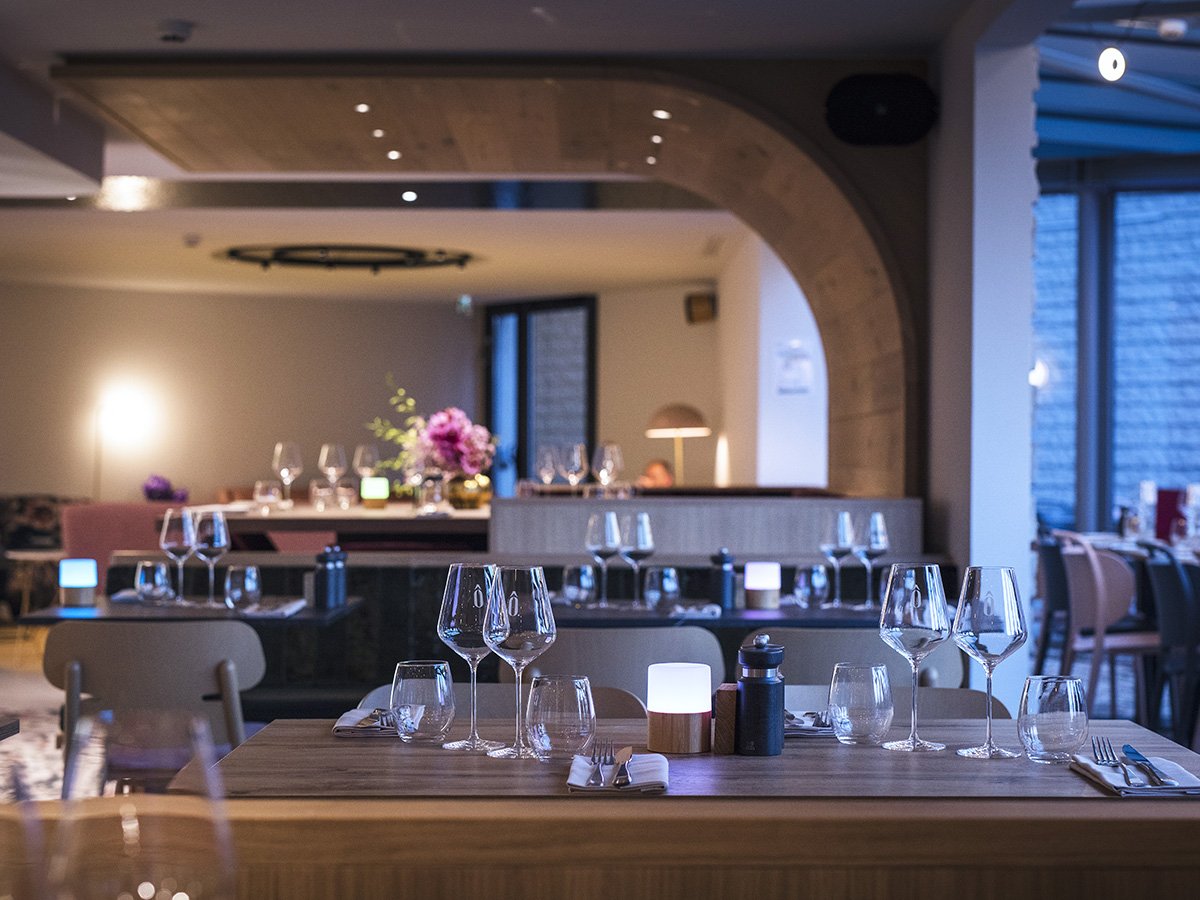
Modern French Fine Dining with Local Savoie Influences
La Rotonde des Trésoms
Annecy, France
★
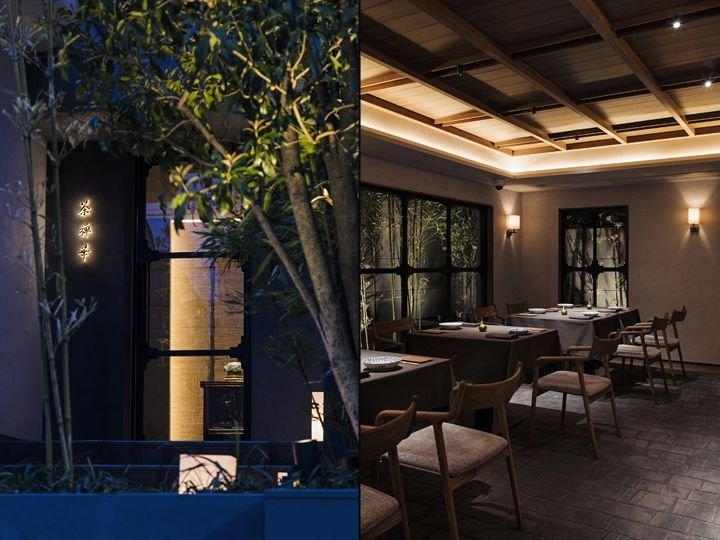
Modern Chinese Fine Dining
Sazenka
Tokyo, Japan
★★★ · 50 Best
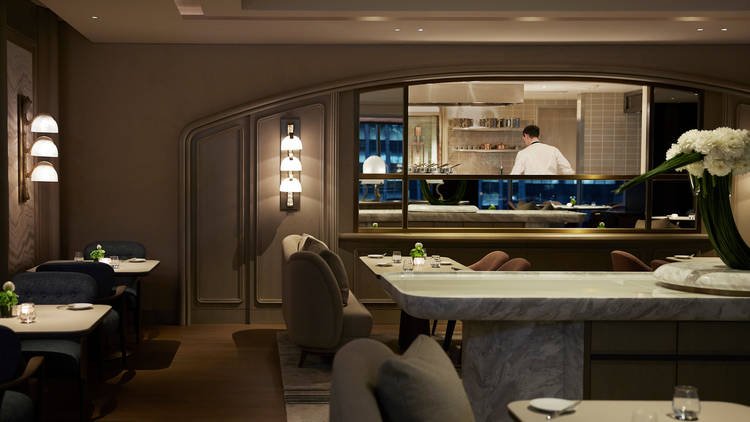
Sézanne
Tokyo, Japan
★★★ · 50 Best
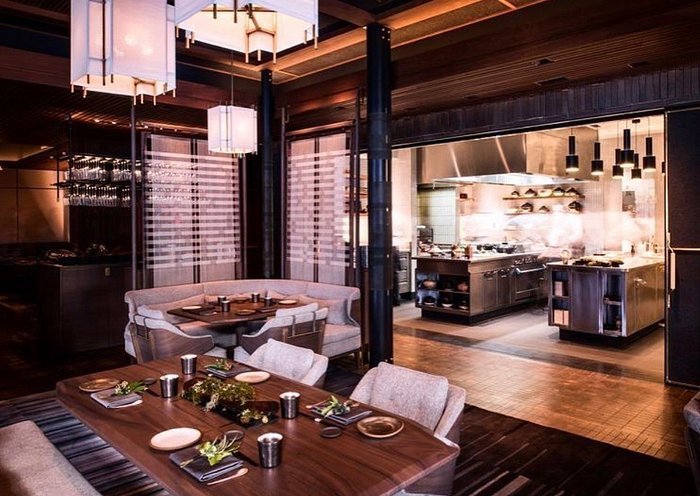
Japanese-influenced Californian Kaiseki
Single Thread Farm
Healdsburg, United States
★★★ · 50 Best